Editorial Book
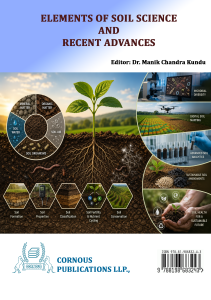
Book Title: Elements of Soil Science and Recent Advances
PAID ACCESS | Published on : 27-Feb-2026 | Pages: 133-144 | Doi : 10.37446/edibook222025/133-144
Soil Quality and Soil Resilience
- Kaushik Batabyal
- Department of Agricultural Chemistry and Soil Science, Bidhan Chandra Krishi Viswavidyalaya, West Bengal, India.
- Souvik Dey
- Department of Agricultural Chemistry and Soil Science, Bidhan Chandra Krishi Viswavidyalaya, West Bengal, India.
- Sujit Kumar Bhunia
- Department of Agricultural Chemistry and Soil Science, Bidhan Chandra Krishi Viswavidyalaya, West Bengal, India.
Abstract
Soil quality and soil resilience are complementary yet distinct concepts central to soil sustainability. Soil quality refers to the capacity of soil to perform ecosystem functions such as sustaining productivity, maintaining water and air quality, and promoting health. Soil resilience, on the other hand, reflects the soil’s ability to recover from disturbances and stresses, such as climatic variability or mismanagement, and return to a functional equilibrium. Over time, the concept of soil quality has evolved from a qualitative idea to a measurable framework of Soil Quality Index (SQI) using physical, chemical, and biological indicators. Selection of sensitive indicators is highly context-specific and varying across climatic and management systems. Soil resilience can be categorized into engineering, ecological, and evolutionary resilience, and its expression depends on climate, management, and inherent soil properties. Enhancing soil quality and resilience requires adopting conservation agriculture, integrated nutrient management, organic amendments, agroforestry, and other regenerative practices. This chapter provides a comprehensive synthesis of soil quality concepts, assessment methods, region- and system-specific indicators, soil resilience frameworks, and management strategies for building sustainable and climate-resilient soils.
Keywords
Soil quality, soil resilience, soil quality index, soil indicators, nutrient management systems, sustainable agriculture
References
Andrews, S. S., Karlen, D. L., & Cambardella, C. A. (2004). The soil management assessment framework: A quantitative soil quality evaluation method. Soil Science Society of America Journal, 68(6), 1945–1962. https://doi.org/10.2136/sssaj2004.1945
Arshad, M. A., & Martin, S. (2002). Identifying critical limits for soil quality indicators in agro-ecosystems. Agriculture, Ecosystems & Environment, 88(2), 153–160. https://doi.org/10.1016/S0167-8809(01)00252-3
Basak, N., Datta, A., Mandal, A., Ghosal, S. K., & Mandal, B. (2014). Improving quality and resilience of soils under rice-based cropping systems. Indian Farming, 64(10), 10–13.
Batabyal, K., Mandal, B., Sarkar, D., Murmu, S., Tamang, A., Das, I., Hazra, G. C., & Chattopadhyay, P. S. (2016). Comprehensive assessment of nutrient management technologies for cauliflower production under subtropical conditions. European Journal of Agronomy, 79, 1–13. https://doi.org/10.1016/j.eja.2016.04.009
Bünemann, E. K., Bongiorno, G., Bai, Z., Creamer, R. E., De Deyn, G. B., de Goede, R., Brussaard, L. (2018). Soil quality – A critical review. Soil Biology and Biochemistry, 120, 105–125. https://doi.org/10.1016/j.soilbio.2018.01.030
Chaudhury, J., Mandal, U. K., Sharma, K. L., Ghosh, H., & Mandal, B. (2005). Assessing soil quality under long-term rice-based cropping systems. Communications in Soil Science and Plant Analysis, 36(9–10), 1141–1161. https://doi.org/10.1081/CSS-200056901
Doran, J. W., & Parkin, T. B. (1994). Defining and assessing soil quality. In J. W. Doran, D. C. Coleman, D. F. Bezdicek, & B. A. Stewart (Eds.), Defining soil quality for a sustainable environment (pp. 3–21). Soil Science Society of America.
FAO. (2020). State of knowledge of soil biodiversity: Status, challenges and potentialities. Food and Agriculture Organization of the United Nations.
Fierer, N., & Jackson, R. B. (2006). The diversity and biogeography of soil bacterial communities. Proceedings of the National Academy of Sciences, 103(3), 626–631. https://doi.org/10.1073/pnas.0507535103
Ghosh, P. K., Ramesh, P., Bandyopadhyay, K. K., Tripathi, A. K., Hati, K. M., Misra, A. K., Acharya, C. L. (2012). Comparative effectiveness of organic manures and fertilizer-NPK on cropping systems in semi-arid tropics of India. Bioresource Technology, 83(2), 169–173. https://doi.org/10.1016/S0960-8524(01)00218-9
Karlen, D. L., Ditzler, C. A., & Andrews, S. S. (2003). Soil quality: Why and how? Geoderma, 114(3–4), 145–156. https://doi.org/10.1016/S0016-7061(03)00039-9
Karlen, D. L., Mausbach, M. J., Doran, J. W., Cline, R. G., Harris, R. F., & Schuman, G. E. (1997). Soil quality: A concept, definition, and framework for evaluation. Soil Science Society of America Journal, 61(1), 4–10. https://doi.org/10.2136/sssaj1997.03615995006100010001x
Ladha, J. K., Pathak, H., Krupnik, T. J., Six, J., & van Kessel, C. (2009). Efficiency of fertilizer nitrogen in cereal production: Retrospects and prospects. Advances in Agronomy, 87, 85–156. https://doi.org/10.1016/S0065-2113(05)87003-8
Lal, R. (2004). Soil carbon sequestration impacts on global climate change and food security. Science, 304(5677), 1623–1627. https://doi.org/10.1126/science.1097396
Lal, R. (2015). Restoring soil quality to mitigate soil degradation. Sustainability, 7(5), 5875–5895. https://doi.org/10.3390/su7055875
Lehmann, J., & Joseph, S. (2015). Biochar for environmental management: Science, technology and implementation. Routledge. https://doi.org/10.4324/9780203762264
Mandal, B., Majumder, B., Bandyopadhyay, P. K., Hazra, G. C., Gangopadhyay, A., Samantaray, R. N., Mishra, A. K., Chaudhury, J., Saha, M. N., & Kundu, S. (2007). Potential of cropping systems and soil amendments for carbon sequestration under long-term experiments in subtropical India. Global Change Biology, 13, 357–369. https://doi.org/10.1111/j.1365-2486.2006.01309.x
Nair, P. K. R., Kumar, B. M., & Nair, V. D. (2009). Agroforestry as a strategy for carbon sequestration. Journal of Plant Nutrition and Soil Science, 172(1), 10–23. https://doi.org/10.1002/jpln.200800030
Peoples, M. B., Herridge, D. F., & Ladha, J. K. (2009). Biological nitrogen fixation: An efficient source of nitrogen for sustainable agricultural production? Plant and Soil, 174(1), 3–28.
Pittelkow, C. M., Liang, X., Linquist, B. A., van Groenigen, K. J., Lee, J., Lundy, M. E., van Kessel, C. (2015). Productivity limits and potentials of conservation agriculture. Nature, 517(7534), 365–368. https://doi.org/10.1038/nature13809
Schoenholtz, S. H., Van Miegroet, H., & Burger, J. A. (2000). Chemical and physical properties as indicators of forest soil quality. Forest Ecology and Management, 138(1–3), 335–356. https://doi.org/10.1016/S0378-1127(00)00423-0
Seybold, C. A., Herrick, J. E., & Brejda, J. J. (1999). Soil resilience: A fundamental component of soil quality. Soil Science, 164(4), 224–234. https://doi.org/10.1097/00010694-199904000-00002
Singh, B., Singh, B. P., & Cowie, A. L. (2014). Characterisation and evaluation of biochars for soil amendment. Soil Research, 48(7), 516–525. https://doi.org/10.1071/SR10058
Six, J., Bossuyt, H., Degryze, S., & Denef, K. (2004). A history of research on the link between soil aggregates, biota and organic matter dynamics. Soil and Tillage Research, 79(1), 7–31. https://doi.org/10.1016/j.still.2004.03.008
Six, J., Elliott, E. T., & Paustian, K. (2000). Soil macroaggregate turnover and microaggregate formation: A mechanism for carbon sequestration. Soil Biology and Biochemistry, 32(14), 2099–2103. https://doi.org/10.1016/S0038-0717(00)00179-6
Smith, S. E., & Read, D. J. (2008). Mycorrhizal symbiosis (3rd ed.). Academic Press. https://doi.org/10.1016/B978-012370526-6.50001-8.
Indexing In




Types of Books We Publish




Uniqueness of our Publication

DOI Assignment

ISBN Registration

Online Publication

High Visibility

Open & Closed Access
DOI Assignment
ISBN Registration
Online Publication
High Visibility