Editorial Book
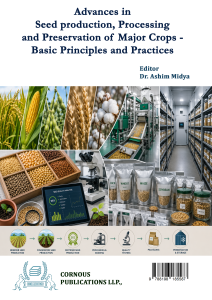
Book Title: Advances in Seed production, Processing and Preservation of Major Crops: Basic Principles and Practices
PAID ACCESS | Published on : 05-Jan-2026 | Pages: 11-16 | Doi : 10.37446/edibook032025/11-16
Seed Production Technology in Bajra (Pearl Millet)
- Shivani Sharma
- Faculty of Agriculture, Maharishi Markandeshwar (deemed to be) University, Mullana, Haryana, India.
- Deepak Sharma
- School of Agricultural Sciences, Baddi University of Emerging Science and Technology, Baddi, Himachal Pradesh, India.
- Jeenia Thalyari
- Department of Agriculture, DAV University, Jalandhar, Punjab, India.
Abstract
Seed production in Bajra (Pennisetum glaucum) is a critical aspect of ensuring a consistent and reliable supply of high-quality seeds for farmers, particularly in regions prone to drought and poor soil conditions. Bajra is a hardy and drought-tolerant crop, making it an important staple in many parts of Asia and Africa. Effective seed production involves the selection of high-yielding and disease-resistant varieties, proper seed handling, and adherence to quality standards. The process typically includes careful land preparation, selection of parent plants, controlled pollination for hybrid seed production, and proper harvesting techniques to ensure seed purity. Additionally, seed storage and management practices are essential for maintaining seed viability and preventing loss due to pests or environmental factors. Challenges in Bajra seed production include maintaining genetic purity, managing pest and disease pressures, and ensuring optimal seed storage conditions. However, with appropriate practices, Bajra seed production can contribute to increased crop yields and enhanced food security in areas where it is a major staple crop. The future prospects of Bajra seed production lie in improving the overall seed quality and availability to meet the growing demand, ensuring that Bajra continues to play an integral role in sustaining agricultural systems in dryland regions.
Keywords
Bajra, drought- tolerant, seed storage and harvesting, isolation distance
References
Agarwal, R. L. (2008). Seed Technology (2nd ed.). Oxford & IBH Publishing, New Delhi.
Agarwal, P. K. (2015). Principles of Seed Technology. Indian Council of Agricultural Research (ICAR), New Delhi.
Khare, D., & Bhale, M. S. (2000). Seed Technology. Scientific Publishers.
Indexing In




Types of Books We Publish




Uniqueness of our Publication

DOI Assignment

ISBN Registration

Online Publication

High Visibility

Open & Closed Access
DOI Assignment
ISBN Registration
Online Publication
High Visibility