Editorial Book
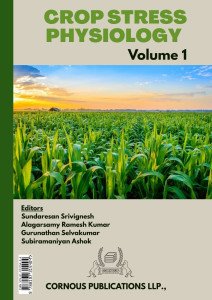
Book Title: Crop Stress Physiology (Volume 1)
PAID ACCESS | Published on : 15-Mar-2024 | Pages: 14-27 |
ROS and Autophagy as Coordinated Regulators of Plant Stress Survival
- Archana Devi E
- Department of Horticulture, School of Life Sciences, Central University of Tamil Nadu, Thiruvarur, Tamil Nadu, India.
- Divyabharathi M C
- Department of Horticulture, School of Life Sciences, Central University of Tamil Nadu, Thiruvarur, Tamil Nadu, India.
- Anbu Sezhian Ambethgar
- Department of Horticulture, School of Life Sciences, Central University of Tamil Nadu, Thiruvarur, Tamil Nadu, India.
- Arumugam Harish
- Department of Horticulture, School of Life Sciences, Central University of Tamil Nadu, Thiruvarur, Tamil Nadu, India.
- Srivignesh Sundaresan
- Department of Horticulture, School of Life Sciences, Central University of Tamil Nadu, Thiruvarur, Tamil Nadu, India.
Abstract
Plants are continuously exposed to a different environmental stress, such as drought, heat, cold, salt, heavy metal toxicity, nutrient deficiency, and pathogen attack., which reduced photosynthesis, poor water balance, membrane instability, oxidative damage, growth inhibition, and yield loss are all consequences of these stressors' disruption of regular physiological and metabolic processes. Reactive oxygen species (ROS) and autophagy are two of the main molecular mechanisms involved in stress adaptation that are closely related. Mitochondria, peroxisomes, chloroplasts, apoplastic, and plasma membrane-associated NADPH oxidases produce reactive oxygen species (ROS), which include hydrogen peroxide, hydroxyl radicals, superoxide radicals, and singlet oxygen. When present in moderation, ROS serve as signalling molecules that trigger defence mechanisms, antioxidant systems, hormone signalling, and adaptive gene regulation. On the other hand, oxidative damage to nucleic acids, pigments, lipids, proteins, and membranes results from excessive accumulation of ROS. To preserve cellular homeostasis under stress, autophagy functions as a conserved system for the degradation and recycling of oxidised macromolecules, damaged proteins, and damaged organelles. ROS and autophagy have an inverse relationship under stress. ROS can initiate autophagy, and autophagy reduces the oxidative burden by removing damaged ROS-producing organelles, such as mitochondria, peroxisomes, and chloroplasts. Plant survival, immunological modulation, senescence, programmed cell death, and stress recovery are all impacted by this ROS-autophagy interaction, which is significant in both biotic and abiotic stress responses. In addition to offering prospects for the development of crops that are climate-resilient through breeding, biotechnology, genome editing, and enhanced stress management techniques, an understanding of this interplay offers important insights into plant stress physiology.
Keywords
Reactive oxygen species, Autophagy, Plant stress, Oxidative stress, Abiotic stress, Biotic stress, Crop resilience
References
Agbemafle, W., Jayasinghe, V., and Bassham, D. C. (2025). Can autophagy enhance crop resilience to environmental stress. Philosophical transactions of the Royal Society of London. Series B, Biological sciences, 380(1927), 20240245. https://doi.org/10.1098/rstb.2024.0245
Avin-Wittenberg, T. (2019). Autophagy and its role in plant abiotic stress management. Plant, Cell & Environment, 42(3), 1045–1053. https://doi.org/10.1111/pce.13404.
Cadena-Ramos, A. I., Rodríguez-Piña, A. L., & De-la-Peña, C. (2025). ROS and autophagy in plant stress responses: adaptive partners in survival. Plant Physiology and Biochemistry, 110991.
https://doi.org/10.1016/j.plaphy.2025.110991
Chaves, M. M., Flexas, J., and Pinheiro, C. (2009). Photosynthesis under drought and salt stress: Regulation mechanisms from whole plant to cell. Annals of Botany, 103(4), 551–560.
https://doi.org/10.1093/aob/mcn125
Chen, H., Ma, X., Yang, C., and Wang, X. (2021). Autophagy in plant abiotic stress management. International Journal of Molecular Sciences, 22(8), 4075. https://doi.org/10.3390/ijms22084075
Gill, S. S., and Tuteja, N. (2010). Reactive oxygen species and antioxidant machinery in abiotic stress tolerance in crop plants. Plant Physiology and Biochemistry, 48(12), 909–930. https://doi.org/10.1016/j.plaphy.2010.08.016
Hofius, D., Lie, L., Hafrén, A., and Coll, N. S. (2018). Autophagy as an emerging arena for plant–pathogen interactions. Current Opinion in Plant Biology, 46, 117–123. https://doi.org/10.1016/j.pbi.2017.04.017
Krasensky, J., and Jonak, C. (2012). Drought, salt, and temperature stress-induced metabolic rearrangements and regulatory networks. Journal of Experimental Botany, 63(4), 1593–1608. https://doi.org/10.1093/jxb/err460
Li, Y., Chen, M., Wang, J., and Zhang, J. (2023). Mechanisms of autophagy function and regulation in plant response to environmental stresses. Plant Stress, 10, 100132. https://doi.org/10.1016/j.cj.2023.09.005
Luo, L., Zhang, P., Zhu, R., Fu, J., Su, J., Zheng, J., Wang, Z., Wang, D., and Gong, Q. (2017). Autophagy is rapidly induced by salt stress and is required for salt tolerance in Arabidopsis. Frontiers in Plant Science, 8, 1459. https://doi.org/10.3389/fpls.2017.01459
Martin, R. E., Kopperud, K., Chakraborty, S., and Benfey, P. N. (2022). Reactive oxygen species function as signaling molecules in controlling plant development and stress responses. Current Opinion in Plant Biology, 68, 102233. https://doi.org/10.1016/j.pbi.2022.102293
Mittler, R., Zandalinas, S. I., Fichman, Y., and Van Breusegem, F. (2022). Reactive oxygen species signalling in plant stress responses. Nature Reviews Molecular Cell Biology, 23(10), 663–679. https://doi.org/10.1038/s41580-022-00499-2
Pérez-Pérez, M. E., Lemaire, S. D., and Crespo, J. L. (2012). Reactive oxygen species and autophagy in plants and algae. Plant Physiology, 160(1), 156–164. https://doi.org/10.1104/pp.112.199992
Petersen, M., Hofius, D., & Petersen, B. L. (2024). Autophagy in plants. Emerging Topics in Life Sciences, 8(4), 319–330. https://doi.org/10.1080/27694127.2024.2395731
Signorelli, S., Tarkowski, Ł. P., Van den Ende, W., & Bassham, D. C. (2019). Linking autophagy to abiotic and biotic stress responses. Trends in Plant Science, 24(5), 413–430. https://doi.org/10.1016/j.tplants.2019.02.001
Sood, M. (2025). Reactive oxygen species (ROS): plant perspectives on oxidative signalling and biotic stress response. Discover Plants, 2(1), 187. https://doi.org/10.1007/s44372-025-00275-4
Su, T., Li, X., Yang, M., Shao, Q., Zhao, Y., Ma, C., and Wang, P. (2020). Autophagy: An intracellular degradation pathway regulating plant survival and stress response. Frontiers in Plant Science, 11, 164. https://doi.org/10.3389/fpls.2020.00164
Tripathy, B. C., and Oelmüller, R. (2012). Reactive oxygen species generation and signaling in plants. Plant Signaling & Behavior, 7(12), 1621–1633. https://doi.org/10.4161/psb.22455
Wang, P., Nolan, T. M., Clark, N. M., and Bassham, D. C. (2021). Plant autophagy: An intricate process controlled by various signaling pathways. Frontiers in Plant Science, 12, 754982. https://doi.org/10.3389/fpls.2021.754982
Wang, W., Chen, D., Zhang, X., Liu, D., Cheng, Y., Shen, F., and Xu, F. (2018). Role of plant respiratory burst oxidase homologs in stress responses. Free Radical Research, 52(8), 826–839. https://doi.org/10.1080/10715762.2018.1473572
Yu, Z., et al. (2025). Autophagy-mediated adaptation: Revealing the role of autophagy in plant abiotic stress responses. Genes, 16(12), 1461. https://doi.org/10.3390/genes16121461
Zheng, C., et al. (2025). Reactive oxygen species in plants: Metabolism, signaling transduction, and oxidative modification. Antioxidants, 14(6), 617. https://doi.org/10.3390/antiox14060617.
Indexing In




Types of Books We Publish




Uniqueness of our Publication

DOI Assignment

ISBN Registration

Online Publication

High Visibility

Open & Closed Access
DOI Assignment
ISBN Registration
Online Publication
High Visibility