Editorial Book
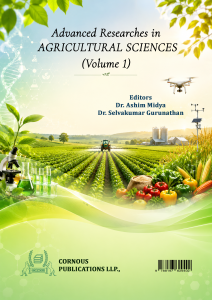
Book Title: Advanced Researches in Agricultural Sciences (Volume 1)
PAID ACCESS | Published on : 14-Jan-2026 | Pages: 264-275 | Doi : 10.37446/volbook092024/264-275
Role of Mycorrhizae in Sustainable Agriculture
- Somdatta Ghosh
- Mycorrhizae Lab., Department of Botany (UG & PG) Midnapore College (Autonomous), Midnapore, West Bengal, India.
- Suvashree Bhaumik
- Mycorrhizae Lab., Department of Botany (UG & PG) Midnapore College (Autonomous), Midnapore, West Bengal, India.
- Moumita Ghora
- Mycorrhizae Lab., Department of Botany (UG & PG) Midnapore College (Autonomous), Midnapore, West Bengal, India.
- Som Subhra Dutta
- Mycorrhizae Lab., Department of Botany (UG & PG) Midnapore College (Autonomous), Midnapore, West Bengal, India.
Abstract
In future, global food production will face a challenge to cater the increased human population as agricultural lands are decreasing for conversion to domestic and industrial purpose. Agricultural soil is losing its sustainability and productivity for improper management for long term perspective. To overcome these issues and maintain sustainability in production and soil, we need to focus on soil health, minimizing the chemical inputs and increasing the microbial input for ensuring healthy soil-plant-environment continuum. Mycorrhizae, specially, arbuscular mycorrhizae (AM) are applicable for most crops in low input fields. AM performs a lot of functions including nutrient uptake, water uptake, soil sustainability, pathogen resistance, stress management, soil remediation etc. They act as a consortium and microbial community dynamics with other beneficial microbes in soil and attract them to function altogether in soil –plant-environment system and thus play an important role in integrated plant nutrition for sustainable agricultural production.
Keywords
Arbuscular mycorrhiza, Disease Resistance, Nutrient Uptake, Sustainability
References
Abbott, L. K., & Johnson, N. C. (2017). Introduction: Perspectives on mycorrhizas and soil fertility. In Mycorrhizal mediation of soil (Chap. 6, pp. 93–105). Elsevier.
Allen, M. F. (2007). Mycorrhizal fungi: Highways for water and nutrients in arid soils. Vadose Zone Journal, 6(2), 291–297. https://doi.org/10.2136/vzj2006.0068
Amareshappa, D., Channabasava, R., Lakshman, H. C., & Jorquera, M. (2015). Effect of fungicides on association of arbuscular mycorrhizal fungus Rhizophagus fasciculatus and growth of proso millet (Panicum miliaceum L.). Journal of Soil Science and Plant Nutrition, 15, 35–45. https://doi.org/10.4067/S0718-95162015005000004
Augé, R. M., Toler, H. D., & Saxton, A. M. (2015). Arbuscular mycorrhizal symbiosis alters stomatal conductance of host plants more under drought than under amply watered conditions: A meta-analysis. Mycorrhiza, 25, 13–24. https://doi.org/10.1007/s00572-014-0585-4
Baskaran, K., Srinivas, K. V. N. S., & Kulkarni, R. N. (2013). Two induced macro-mutants of periwinkle with enhanced contents of leaf and root alkaloids and their inheritance. Industrial Crops and Products, 43, 701–703. https://doi.org/10.1016/j.indcrop.2012.08.035
Bencheri, K., Djaballah, Z., Brahimi, F., Boutekrabt, A., Dalpé, Y., & Lounès-Hadj Sahraoui, A. (2019). Arbuscular mycorrhizal fungi affect total phenolic content and antimicrobial activity of Tamarix gallica in natural semi-arid Algerian areas. South African Journal of Botany, 125, 39–45. https://doi.org/10.1016/j.sajb.2019.06.024
Berruti, A., Lumini, E., Balestrini, R., & Bianciotto, V. (2016). Arbuscular mycorrhizal fungi as natural biofertilizers: Let’s benefit from past successes. Frontiers in Microbiology, 6, 1559. https://doi.org/10.3389/fmicb.2015.01559
Bitterlich, M., Franken, P., & Graefe, J. (2018). Arbuscular mycorrhiza improves substrate hydraulic conductivity in the plant available moisture range under root growth exclusion. Frontiers in Plant Science, 9, 301. https://doi.org/10.3389/fpls.2018.00301
Chibuike, G. U., & Obiora, S. C. (2013). Bioremediation of hydrocarbon-polluted soils for improved crop performance. International Journal of Environmental Sciences, 4(3), 223–239.
Devi, N. O., Devi, R. K. T., Debbarma, M., Hajong, M., & Thokchom, S. (2022). Effect of endophytic Bacillus and arbuscular mycorrhizal fungi against Fusarium wilt of tomato caused by Fusarium oxysporum
Enkhtuya, B., & Vosátka, M. (2005). Interaction between grass and trees mediated by extraradical mycelium of symbiotic arbuscular mycorrhizal fungi. Symbiosis, 38, 261–277.
Fellbaum, C. R., Gachomo, E. W., Beesetty, Y., Choudhari, S., Strahan, G. D., Pfeffer, P. E., Kiers, E. T., & Bücking, H. (2012). Carbon availability triggers fungal nitrogen uptake and transport in arbuscular mycorrhizal symbiosis. Proceedings of the National Academy of Sciences, 109(7), 2666–2671. https://doi.org/10.1073/pnas.1118650109
f. sp. lycopersici. Egyptian Journal of Biological Pest Control, 32, Article 1. https://doi.org/10.1186/s41938-021-00499-y
Goicoechea, N. (2020). Mycorrhizal fungi as bioprotectors of crops against Verticillium wilt—A hypothetical scenario under changing environmental conditions. Plants, 9(11), 1468. https://doi.org/10.3390/plants9111468
Higo, M., Tatewaki, Y., Ida, K., Yokota, K., & Isobe, K. (2020). Amplicon sequencing analysis of arbuscular mycorrhizal fungal communities colonizing maize roots in different cover cropping and tillage systems. Scientific Reports, 10, 6039. https://doi.org/10.1038/s41598-020-58942-3
Howeler, R. H. (2012). Importance of mycorrhiza for phosphorus absorption by cassava. In R. H. Howeler (Ed.), The cassava handbook (pp. 497–523). CIAT.
Kaur, S., & Suseela, V. (2020). Unraveling arbuscular mycorrhiza-induced changes in plant primary and secondary metabolome. Metabolites, 10, 335. https://doi.org/10.3390/metabo10080335
Kuila, D., & Ghosh, S. (2022). Aspects, problems and utilization of arbuscular mycorrhizal application as biofertilizer in sustainable agriculture. Current Research in Microbial Sciences, 3, 100107. https://doi.org/10.1016/j.crmicr.2022.100107
Lehmann, A., & Rillig, M. C. (2015). Arbuscular mycorrhizal contribution to copper, manganese and iron nutrient concentrations in crops: A meta-analysis. Soil Biology and Biochemistry, 81, 147–158. https://doi.org/10.1016/j.soilbio.2014.11.013
Lenoir, I., Lounès-Hadj Sahraoui, A., & Fontaine, J. (2016). Arbuscular mycorrhizal fungal-assisted phytoremediation of soil contaminated with persistent organic pollutants: A review. European Journal of Soil Science, 67, 624–640. https://doi.org/10.1111/ejss.12375
Nichols, K. A., & Wright, S. F. (2004). Contributions of soil organic matter to agroecosystems. In F. Magdoff & R. R. Weil (Eds.), Soil organic matter in sustainable agriculture (pp. 179–198). CRC Press.
Parihar, M., Rakshit, A., Meena, V. S., Gupta, V. K., Rana, K., Choudhary, M., & Jatav, H. S. (2020). The potential of arbuscular mycorrhizal fungi in carbon cycling: A review. Archives of Microbiology, 202, 1581–1596. https://doi.org/10.1007/s00203-020-01898-5
Pawlowski, M. L., & Hartman, G. L. (2020). Impact of arbuscular mycorrhizal species on soybean cyst nematode (Heterodera glycines). Plant Disease. Advance online publication. https://doi.org/10.1094/PDIS-01-20-0102-RE
Pumplin, N., Zhang, X., Noar, R. D., & Harrison, M. J. (2012). Polar localization of a symbiosis-specific phosphate transporter is mediated by a transient reorientation of secretion. Proceedings of the National Academy of Sciences, 109(11), E665–E672. https://doi.org/10.1073/pnas.1110215109
Quiroga, G., Erice, G., Ding, L., Chaumont, F., Aroca, R., & Ruiz-Lozano, J. M. (2019). The arbuscular mycorrhizal symbiosis regulates aquaporin activity and improves root cell water permeability in maize plants subjected to water stress. Plant, Cell & Environment, 42(7), 2274–2290. https://doi.org/10.1111/pce.13541
Raklami, A., Bechtaoui, N., Tahiri, A., Anli, M., Meddich, A., & Oufdou, K. (2019). Use of rhizobacteria and mycorrhizae consortium in the open field as a strategy for improving crop nutrition, productivity and soil fertility. Frontiers in Microbiology, 10, 1106. https://doi.org/10.3389/fmicb.2019.01106.
Ren, C. G., Kong, C. C., Wang, S. X., & Xie, Z. H. (2019). Enhanced phytoremediation of uranium-contaminated soils by arbuscular mycorrhiza and rhizobium. Chemosphere, 217, 773–779. https://doi.org/10.1016/j.chemosphere.2018.11.087
Sanmartín Ortí, A., Ballesteros Guerra, J. C., Calderón Gómez, D., & Kuric Kardelis, S. (2020). De puertas adentro y de pantallas afuera: Jóvenes en confinamiento. Centro Reina Sofía sobre Adolescencia y Juventud–FAD. https://doi.org/10.5281/zenodo.4054836
Sawers, R. J. H., Svane, S. F., Quan, C., Grønlund, M., Wozniak, B., Gebreselassie, M. N., Gonzalez Munoz, E., Montes, R. A. C., Baxter, I., Goudet, J., Jakobsen, I., & Paszkowski, U. (2017). Phosphorus acquisition efficiency in arbuscular mycorrhizal maize is correlated with the abundance of root-external hyphae and the accumulation of transcripts encoding PHT1 phosphate transporters. New Phytologist, 214, 632–643. https://doi.org/10.1111/nph.14403
Sharma, S., Anand, G., Singh, N., & Kapoor, R. (2017). Arbuscular mycorrhiza augments arsenic tolerance in wheat (Triticum aestivum L.) by strengthening antioxidant defense system and thiol metabolism. Frontiers in Plant Science, 8, 906. https://doi.org/10.3389/fpls.2017.00906
Siani, N. G., Fallah, S., Pokhrel, L. R., & Rostamnejadi, A. (2017). Natural amelioration of zinc oxide nanoparticle toxicity in fenugreek (Trigonella foenum-graecum) by arbuscular mycorrhizal (Glomus intraradices) secretion of glomalin. Plant Physiology and Biochemistry, 112, 227–238. https://doi.org/10.1016/j.plaphy.2017.01.021
Singh, A. K., Zhu, X., Chen, C., Wu, J., Yang, B., Zakari, S., et al. (2020). The role of glomalin in mitigation of multiple soil degradation problems. Critical Reviews in Environmental Science and Technology, 50, 1–35. https://doi.org/10.1080/10643389.2020.1862561
Smith, S. E., Jakobsen, I., Grønlund, M., & Smith, F. A. (2011). Roles of arbuscular mycorrhizas in plant phosphorus nutrition: Interactions between pathways of phosphorus uptake in arbuscular mycorrhizal roots have important implications for understanding and manipulating plant phosphorus acquisition. Plant Physiology, 156(3), 1050–1057. https://doi.org/10.1104/pp.111.174581
Smith, S. E., & Smith, F. A. (2012). Fresh perspectives on the roles of arbuscular mycorrhizal fungi in plant nutrition and growth. Mycologia, 104(1), 1–13. https://doi.org/10.3852/11-229
Song, Y., Chen, D., Lu, K., Sun, Z., & Zeng, R. (2015). Enhanced tomato disease resistance primed by arbuscular mycorrhizal fungus. Frontiers in Plant Science, 6, 786. https://doi.org/10.3389/fpls.2015.00786
Song, Z., Bi, Y., Zhang, J., Gong, Y., & Yang, H. (2020). Arbuscular mycorrhizal fungi promote the growth of plants in mining-associated clay. Scientific Reports, 10, 59447. https://doi.org/10.1038/s41598-020-59447-9
Steinberg, P. D., & Rillig, M. C. (2003). Differential decomposition of arbuscular mycorrhizal fungal hyphae and glomalin. Soil Biology and Biochemistry, 35(1), 191–194. https://doi.org/10.1016/S0038-0717(02)00249-6
Talbi, S., Romero-Puertas, M. C., Hernández, A., Terrón, L., Ferchichi, A., & Sandalio, L. M. (2015). Drought tolerance in a Saharian plant Oudneya africana: Role of antioxidant defences. Environmental and Experimental Botany, 111, 114–126. https://doi.org/10.1016/j.envexpbot.2014.11.004
Tian, C., Kasiborski, B., Koul, R., Lammers, P. J., Bücking, H., & Shachar-Hill, Y. (2010). Regulation of the nitrogen transfer pathway in the arbuscular mycorrhizal symbiosis: Gene characterization and the coordination of expression with nitrogen flux. Plant Physiology, 153(3), 1175–1187. https://doi.org/10.1104/pp.110.157909
Vallejos-Torres, G., Espinoza, E., Marín-Díaz, J., Solis, R., & Arévalo, L. A. (2021). The role of arbuscular mycorrhizal fungi against root-knot nematode infections in coffee plants. Journal of Soil Science and Plant Nutrition, 21, 364–373. https://doi.org/10.1007/s42729-020-00366-z
Veresoglou, S. D., & Rillig, M. C. (2012). Suppression of fungal and nematode plant pathogens through arbuscular mycorrhizal fungi. Biology Letters, 8, 214–217. https://doi.org/10.1098/rsbl.2011.0874
Wang, Y., Yin, Q., Qu, Y., Li, G., & Hao, L. (2017). Arbuscular mycorrhiza-mediated resistance in tomato against Cladosporium fulvum-induced mould disease. Journal of Phytopathology, 166(1), 67–74. https://doi.org/10.1111/jph.12662
Wright, S. F., Green, V. S., & Cavigelli, M. A. (2007). Glomalin in aggregate size classes from three different farming systems. Soil and Tillage Research, 94, 546–549. https://doi.org/10.1016/j.still.2006.10.004
Yang, S. Y., Grønlund, M., Jakobsen, I., Grotemeyer, M. S., Rentsch, D., Miyao, A., Hirochika, H., Kumar, C. S., Sundaresan, V., Salamin, N., & Catausan, S. (2012). Nonredundant regulation of rice arbuscular mycorrhizal symbiosis by two members of the phosphate transporter 1 gene family. The Plant Cell, 24(10), 4236–4251. https://doi.org/10.1105/tpc.112.104901.
Indexing In




Types of Books We Publish




Uniqueness of our Publication

DOI Assignment

ISBN Registration

Online Publication

High Visibility

Open & Closed Access
DOI Assignment
ISBN Registration
Online Publication
High Visibility