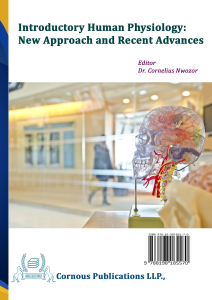
Editorial Book
Book Title: Introductory Human Physiology: New Approach and Recent Advances
OPEN ACCESS | Published on : 26-Dec-2025 | Pages: 64-77 | Doi : 10.37446/edibook172025/64-77
Recent Advances in Hormone Measurement
- Neha Rani Verma
- Assistant professor, Department of Biochemistry, AIIMS Raipur, India.
- Seema Shah
- Additional professor, Department of Biochemistry, AIIMS Raipur, India.
- Suprava Patel
- Professor, Department of Biochemistry, AIIMS Raipur, India.
- Eli Mohapatra
- Professor and HOD, Department of Biochemistry, AIIMS Raipur, India.
- Rachita Nanda
- Professor, Department of Biochemistry, AIIMS Raipur, India.
Abstract
Hormones play a crucial role in various physiological functions of body. They act as signaling molecules and are secreted by various glands. A minor imbalance in hormones leads to serious health implications, like diabetes, infertility, thyroid disorders, growth abnormalities etc. Analysis of hormone level is important to identify different diseases. Traditional methods for the hormone measurement are Radioimmunoassay (RIA) and Bioassay. Enzyme linked immunosorbent assay (ELISA), Flouroimmunoassay (FIA), and Chemiluminescence immunoassays CLIA are techniques, which are commonly used now a days. These methods are based on antigen antibody reactions and used in many labs. Limitations of these methods are cross reactivity with structurally similar molecules, interference due to difference in biological matrix interference. Recent techniques like mass spectrometry, biosensors and microfluidics are effective techniques with enhanced selectivity and specificity and decrease interference.
Keywords
Thyroid disorders, Diabetes, Mass spectrometry, Biosensors, Radioimmunoassay (RIA)
References
Behyar, M. B., Mirzaie, A., Hasanzadeh, M., & Shadjou, N. (2024). Advancements in biosensing of hormones: Recent progress and future trends. TrAC Trends in Analytical Chemistry, 173, 117600.
DiSanto, R. M., Subramanian, V., & Gu, Z. (2015). Recent advances in nanotechnology for diabetes treatment. Wiley Interdisciplinary Reviews: Nanomedicine and Nanobiotechnology, 7(4), 548–564.
Jin, Y., Zhai, T., Wang, Y., Li, J., Wang, T., & Huang, J. (2024). Recent advances in liquid chromatography–tandem mass spectrometry for the detection of thyroid hormones and thyroglobulin in clinical samples: A review. Journal of Separation Science, 47(18), 2400466.
Kim, J., Campbell, A. S., de Ávila, B. E., & Wang, J. (2019). Wearable biosensors for healthcare monitoring. Nature Biotechnology, 37(4), 389–406.
Laraib, U., Sargazi, S., Rahdar, A., Khatami, M., & Pandey, S. (2022). Nanotechnology-based approaches for effective detection of tumor markers: A comprehensive state-of-the-art review. International Journal of Biological Macromolecules, 195, 356–383.
Nikkhah, M., Karami, S., Khatami, S. H., Taheri-Anganeh, M., Savardashtaki, A., Mahmoodzadeh, A., Shabaninejad, Z., Vakili, O., Mousavi, P., Ghanizadeh Gerayeli, F., & Behrouj, H. (2023). Review of electrochemical and optical biosensors for testosterone measurement. Biotechnology and Applied Biochemistry, 70(1), 318–329.
Ozhikandathil, J., Badilescu, S., & Packirisamy, M. (2017). A brief review on microfluidic platforms for hormones detection. Journal of Neural Transmission, 124(1), 47–55.
Rizwan, M., Mohd-Naim, N. F., & Ahmed, M. U. (2018). Trends and advances in electrochemiluminescence nanobiosensors. Sensors, 18(1), 166.
Stanczyk, F. Z., & Clarke, N. J. (2010). Advantages and challenges of mass spectrometry assays for steroid hormones. The Journal of Steroid Biochemistry and Molecular Biology, 121(3–5), 491–495.
Indexing In




Types of Books We Publish




Uniqueness of our Publication

DOI Assignment

ISBN Registration

Online Publication

High Visibility

Open & Closed Access
DOI Assignment
ISBN Registration
Online Publication
High Visibility