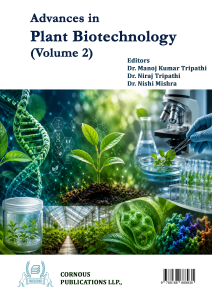
Editorial Book
Book Title: Advances in Plant Biotechnology (Volume 2)
PAID ACCESS | Published on : 24-Oct-2026 | Pages: 46-68 | Doi : https://doi.org/10.37446/vol2book032026/46-68
Plant Tissue Culture and Micropropagation: Principles, Applications, and Recent Advances
- Ranjith Kumar Sahu
- PhD Scholar, Department of Soil Science and Agricultural Chemistry, Jawaharlal Nehru Krishi Vishwa Vidyalaya (JNKVV), Jabalpur–482004, Madhya Pradesh, India.
- Abhishek Garhwal
- PhD Scholar, Department of Entomology, Jawaharlal Nehru Krishi Vishwa Vidyalaya (JNKVV), Jabalpur–482004, Madhya Pradesh, India.
- Gaurav Rathore
- Senior Research Fellow (SRF), Biotechnology Centre, Jawaharlal Nehru Krishi Vishwa Vidyalaya (JNKVV), Jabalpur–482004, Madhya Pradesh, India.
- Pramod Kumar
- Senior Research Fellow (SRF), Biotechnology Centre, Jawaharlal Nehru Krishi Vishwa Vidyalaya (JNKVV), Jabalpur–482004, Madhya Pradesh, India.
- Shashank Bhargava
- Biotechnology Centre, Jawaharlal Nehru Krishi Vishwa Vidyalaya (JNKVV), Jabalpur–482004, Madhya Pradesh, India.
- Nishi Mishra
- Research Associate, Biotechnology Centre, Jawaharlal Nehru Krishi Vishwa Vidyalaya (JNKVV), Jabalpur–482004, Madhya Pradesh, India.
- Manoj Kumar Tripathi
- Biotechnology Centre, Rajmata Vijayaraje Scindia Agricultural University (RVSKVV), Gwalior, Madhya Pradesh, India.
Abstract
Plant tissue culture has become one of the most significant tools in modern plant biotechnology, enabling rapid propagation, genetic improvement, conservation, and the sustainable use of plant genetic resources. Based on the principle of cellular totipotency, the technique enables the growth and regeneration of whole plants from isolated cells, tissues, or organs under aseptic, controlled conditions. This chapter traces the field's historical development from Haberlandt’s (1902) original hypothesis of totipotency to the establishment of standardized media and regeneration systems. It reviews the scientific principles, laboratory infrastructure, culture media, major tissue culture techniques, and the commercial applications of micropropagation across horticultural, agricultural, forestry, and medicinal crops. It further examines somatic embryogenesis, organogenesis, and plant regeneration protocols, together with recent technological advances in temporary immersion bioreactors, synthetic seed technology, genome editing, and automation, together with morphogenic regulators and tissue-culture-independent transformation that are beginning to reduce dependence on conventional regeneration, before discussing the principal challenges that continue to constrain the field and the prospects for its future development.
Keywords
Cellular totipotency, Cryopreservation, Genetic transformation, Micropropagation, Organogenesis, Somatic embryogenesis
References
Abdalla, N., El-Ramady, H., Seliem, M. K., El-Mahrouk, M. E., Taha, N., Bayoumi, Y., Shalaby, T. A., & Dobránszki, J. (2022). An academic and technical overview on plant micropropagation challenges. Horticulturae, 8(8), Article 677. https://doi.org/10.3390/horticulturae8080677
Abiri, R., Valdiani, A., Maziah, M., Shaharuddin, N. A., Sahebi, M., Yusof, Z. N. B., Atabaki, N., & Talei, D. (2016). A critical review of the concept of transgenic plants: Insights into pharmaceutical biotechnology and molecular farming. Current Issues in Molecular Biology, 18, 21–42. https://doi.org/10.21775/cimb.018.021
Acquaah, G. (2012). Principles of plant genetics and breeding (2nd ed.). Wiley-Blackwell. https://doi.org/10.1002/9781118313718
Adhikary, D., Kulkarni, M., El-Mezawy, A., Mobini, S., Elhiti, M., Gjuric, R., Ray, A., Polowick, P. L., Ślaski, J. J., Jones, M. P., & Bhowmik, P. (2021). Medical cannabis and industrial hemp tissue culture: Present status and future potential. Frontiers in Plant Science, 12, Article 627240. https://doi.org/10.3389/fpls.2021.627240
Agarwal, T., Gautam, N., Gupta, A. K., Harish, & Shekhawat, N. S. (2026). Stem thin disc (STD) based somatic embryogenesis and genetic homogeneity assessment in Alhagi maurorum Medik. Scientific Reports, 16(1), Article 16779. https://doi.org/10.1038/s41598-026-46320-4
Ahuja, A., Tripathi, M. K., Tiwari, S., Tripathi, N., Tiwari, G., Mishra, N., Bhargav, S., & Tiwari, S. (2021). Recent advancements on callus and cell suspension cultures: An effectual reserve for the production of pharmaceutically significant metabolites. Res Dev, 6, 96–111. https://doi.org/10.9734/bpi/caprd/v6/2260c
Algopishi, U. B., Abdelghffar, A. M., Aboud, N. M. A., Safhi, F. A., Fayad, E., Alharbi, K., AlJwaizea, N. I., & Hassanin, A. A. (2025). The genetic applications of plant cell and tissue culture techniques: Essential tools for genetic manipulation and crop improvement. Notulae Botanicae Horti Agrobotanici Cluj-Napoca, 53(3), Article 14718. https://doi.org/10.15835/nbha53314718
Altpeter, F., Springer, N. M., Bartley, L. E., Blechl, A. E., Brutnell, T. P., Citovsky, V., Conrad, L. J., Gelvin, S. B., Jackson, D. P., Kausch, A. P., Lemaux, P. G., Medford, J. I., Orozco-Cárdenas, M. L., Tricoli, D. M., Van Eck, J., Voytas, D. F., Walbot, V., Wang, K., Zhang, Z. J., & Stewart, C. N., Jr. (2016). Advancing crop transformation in the era of genome editing. The Plant Cell, 28(7), 1510–1520. https://doi.org/10.1105/tpc.16.00196
Bairu, M. W., Aremu, A. O., & Van Staden, J. (2011). Somaclonal variation in plants: Causes and detection methods. Plant Growth Regulation, 63(2), 147–173. https://doi.org/10.1007/s10725-010-9554-x
Bhojwani, S. S., & Dantu, P. K. (2013). Plant tissue culture: An introductory text. Springer India. https://doi.org/10.1007/978-81-322-1026-9
Bhojwani, S. S., & Razdan, M. K. (1996). Plant tissue culture: Theory and practice (Rev. ed.). Elsevier.
Biddington, N. L. (1992). The influence of ethylene in plant tissue culture. Plant Growth Regulation, 11(2), 173–187.
Cassells, A. C. (2012). Pathogen and biological contamination management in plant tissue culture: Phytopathogens, vitro pathogens, and vitro pests. In V. M. Loyola-Vargas & N. Ochoa-Alejo (Eds.), Plant cell culture protocols (3rd ed., pp. 57–80). Humana Press.
Chen, K., Wang, Y., Zhang, R., Zhang, H., & Gao, C. (2019). CRISPR/Cas genome editing and precision plant breeding in agriculture. Annual Review of Plant Biology, 70, 667–697.
Chu, C. C., Wang, C. C., Sun, C. S., Hsu, C., Yin, K. C., Chu, C. Y., & Bi, F. Y. (1975). Establishment of an efficient medium for anther culture of rice through comparative experiments on the nitrogen sources. Scientia Sinica, 18(5), 659–668.
Cocking, E. C. (1960). A method for the isolation of plant protoplasts and vacuoles. Nature, 187(4741), 962–963. https://doi.org/10.1038/187962a0
Costa, L. D., Malnoy, M., & Gribaudo, I. (2017). Breeding next generation tree fruits: Technical and legal challenges. Horticulture Research, 4, Article 17067. https://doi.org/10.1038/hortres.2017.67
Davey, M. R., Anthony, P., Power, J. B., & Lowe, K. C. (2005). Plant protoplasts: Status and biotechnological perspectives. Biotechnology Advances, 23(2), 131–171.
Davies, P. J. (Ed.). (2010). Plant hormones: Biosynthesis, signal transduction, action! (3rd ed.). Springer.
Debergh, P. C., & Maene, L. J. (1981). A scheme for commercial propagation of ornamental plants by tissue culture. Scientia Horticulturae, 14(4), 335–345.
Debergh, P. C., & Read, P. E. (1991). Micropropagation. In P. C. Debergh & R. H. Zimmerman (Eds.), Micropropagation: Technology and application (pp. 1–13). Kluwer Academic Publishers.
Debernardi, J. M., Tricoli, D. M., Ercoli, M. F., Hayta, S., Ronald, P., Palatnik, J. F., & Dubcovsky, J. (2020). A GRF–GIF chimeric protein improves the regeneration efficiency of transgenic plants. Nature Biotechnology, 38, 1274–1279. https://doi.org/10.1038/s41587-020-0703-0
Debnath, M., Malik, C. P., & Bisen, P. S. (2006). Micropropagation: A tool for the production of high quality plant-based medicines. Current Pharmaceutical Biotechnology, 7(1), 33–49.
Eeckhaut, T., Lakshmanan, P. S., Deryckere, D., Van Bockstaele, E., & Van Huylenbroeck, J. (2013). Progress in plant protoplast research. Planta, 238(6), 991–1003.
Eibl, R., Meier, P., Stutz, I., Schildberger, D., Hühn, T., & Eibl, D. (2018). Plant cell culture technology in the cosmetics and food industries: Current state and future trends. Applied Microbiology and Biotechnology, 102(20), 8661–8675. https://doi.org/10.1007/s00253-018-9279-8
Engelmann, F. (2011). Use of biotechnologies for the conservation of plant biodiversity. In Vitro Cellular & Developmental Biology – Plant, 47(1), 5–16. https://doi.org/10.1007/s11627-010-9327-2
Fehér, A. (2019). Callus, dedifferentiation, totipotency, somatic embryogenesis: What these terms mean in the era of molecular plant biology? Frontiers in Plant Science, 10, Article 536. https://doi.org/10.3389/fpls.2019.00536
Ferrie, A. M. R., & Caswell, K. L. (2011). Isolated microspore culture techniques and recent progress for haploid and doubled haploid plant production. Plant Cell, Tissue and Organ Culture, 104(3), 301–309.
Food and Agriculture Organization of the United Nations, International Fund for Agricultural Development, United Nations Children’s Fund, World Food Programme, & World Health Organization. (2023). The state of food security and nutrition in the world 2023: Urbanization, agrifood systems transformation and healthy diets across the rural–urban continuum. Food and Agriculture Organization of the United Nations. https://doi.org/10.4060/cc3017en
Forster, B. P., Heberle-Bors, E., Kasha, K. J., & Touraev, A. (2007). The resurgence of haploids in higher plants. Trends in Plant Science, 12(8), 368–375.
Gamborg, O. L., Miller, R. A., & Ojima, K. (1968). Nutrient requirements of suspension cultures of soybean root cells. Experimental Cell Research, 50(1), 151–158. https://doi.org/10.1016/0014-4827(68)90403-5
Garcia, C., de Almeida, A.-A. F., Costa, M. G. C., Britto, D., Valle, R. R., Royaert, S., & Marelli, J. (2019). Abnormalities in somatic embryogenesis caused by 2,4-D: An overview. Plant Cell, Tissue and Organ Culture, 137(2), 193–212. https://doi.org/10.1007/s11240-019-01569-8
Gautheret, R. J. (1939). Sur la possibilité de réaliser la culture indéfinie des tissus de tubercules de carotte. Comptes Rendus Hebdomadaires des Séances de l’Académie des Sciences, 208, 118–120.
George, E. F., Hall, M. A., & De Klerk, G.-J. (Eds.). (2008). Plant propagation by tissue culture (3rd ed.). Springer.
Georgiev, M. I., Pavlov, A. I., & Bley, T. (2007). Hairy root type plant in vitro systems as sources of bioactive substances. Applied Microbiology and Biotechnology, 74(6), 1175–1185. https://doi.org/10.1007/s00253-007-0856-5
Germanà, M. A. (2011). Anther culture for haploid and doubled haploid production. Plant Cell, Tissue and Organ Culture, 104(3), 283–300.
Guan, Y., Li, S.-G., Fan, X.-F., & Su, Z.-H. (2016). Application of somatic embryogenesis in woody plants. Frontiers in Plant Science, 7, Article 938. https://doi.org/10.3389/fpls.2016.00938
Guha, S., & Maheshwari, S. C. (1964). In vitro production of embryos from anthers of Datura. Nature, 204(4957), 497. https://doi.org/10.1038/204497a0
Guillon, S., Trémouillaux-Guiller, J., Pati, P. K., Rideau, M., & Gantet, P. (2006). Hairy root research: Recent scenario and exciting prospects. Current Opinion in Plant Biology, 9(3), 341–346.
Guru, G. R., Ramteke, P. W., Veres, C., & Vágvölgyi, C. (2025). Potential impacts of nanoparticles integration on micropropagation efficiency: Current achievements and prospects. Frontiers in Plant Science, 16, Article 1629548. https://doi.org/10.3389/fpls.2025.1629548
Gutierrez-Valdes, N., Häkkinen, S. T., Lemasson, C., Guillet, M., Oksman-Caldentey, K.-M., Ritala, A., & Cardon, F. (2020). Hairy root cultures–A versatile tool with multiple applications. Frontiers in Plant Science, 11, Article 33. https://doi.org/10.3389/fpls.2020.00033
Haberlandt, G. (1902). Culturversuche mit isolierten Pflanzenzellen. Sitzungsberichte der Mathematisch-Naturwissenschaftlichen Klasse der Kaiserlichen Akademie der Wissenschaften Wien, 111, 69–92.
Hellen, B. A., Alicai, T., & Emmanuel, O. (2021). Efficient conditions for in vitro establishment and regeneration of disease-free Ugandan farmer-preferred cassava genotypes. African Journal of Biotechnology, 20(9), 369–382. https://doi.org/10.5897/ajb2021.17361
Hesami, M., & Jones, A. M. P. (2020). Application of artificial intelligence models and optimization algorithms in plant cell and tissue culture. Applied Microbiology and Biotechnology, 104(22), 9449–9485. https://doi.org/10.1007/s00253-020-10888-2
Hesami, M., Condori-Apfata, J. A., Valderrama Valencia, M., & Mohammadi, M. (2020). Application of artificial neural network for modeling and studying in vitro genotype-independent shoot regeneration in wheat. Applied Sciences, 10(15), Article 5370. https://doi.org/10.3390/app10155370
Hesami, M., Naderi, R., Yoosefzadeh-Najafabadi, M., & Maleki, M. (2018). In vitro culture as a powerful method for conserving Iranian ornamental geophytes. BioTechnologia, 99(1), 73–81. https://doi.org/10.5114/bta.2018.73563
Hundessa, F., Meseret, T., & Jiregna, D. (2019). In vitro regeneration protocol through direct organogenesis for Jatropha curcas L. (Euphorbiaceae) accessions in Ethiopia. African Journal of Biotechnology, 18(31), 991–1003. https://doi.org/10.5897/ajb2018.16914
Idowu, P. E., Ibitoye, D. O., & Ademoyegun, O. T. (2009). Tissue culture as a plant production technique for horticultural crops. African Journal of Biotechnology, 8(16), 3782–3799. https://doi.org/10.4314/ajb.v8i16.62060
Ikeuchi, M., Ogawa, Y., Iwase, A., & Sugimoto, K. (2016). Plant regeneration: Cellular origins and molecular mechanisms. Development, 143(9), 1442–1451.
Ikeuchi, M., Sugimoto, K., & Iwase, A. (2013). Plant callus: Mechanisms of induction and repression. The Plant Cell, 25(9), 3159–3173.
Jiménez, V. M. (2005). Involvement of plant hormones and plant growth regulators on in vitro somatic embryogenesis. Plant Growth Regulation, 47(2–3), 91–110.
Jones, A. M. P., & Saxena, P. K. (2013). Inhibition of phenylpropanoid biosynthesis in Artemisia annua L.: A novel approach to reduce oxidative browning in plant tissue culture. PLOS ONE, 8(10), Article e76802. https://doi.org/10.1371/journal.pone.0076802
Larkin, P. J., & Scowcroft, W. R. (1981). Somaclonal variation–A novel source of variability from cell cultures for plant improvement. Theoretical and Applied Genetics, 60(4), 197–214. https://doi.org/10.1007/BF02342540
Lee, S.-Y., Kim, H.-H., Kim, Y.-K., Park, N.-I., & Park, S.-U. (2009). Plant regeneration of garlic (Allium sativum L.) via somatic embryogenesis. Scientific Research and Essays, 4(13), 1569–1574. https://doi.org/10.5897/sre.9000733
Leva, A., & Rinaldi, L. M. R. (Eds.). (2012). Recent advances in plant in vitro culture. IntechOpen. https://doi.org/10.5772/52760
Lin, C.-S., Hsu, C.-T., Yang, L.-H., Lee, L.-Y., Fu, J.-Y., Cheng, Q.-W., Wu, F.-H., Hsiao, H. C.-W., Zhang, Y., Zhang, R., Chang, W.-J., Yu, C.-T., Wang, W., Liao, L.-J., Gelvin, S. B., & Shih, M.-C. (2018). Application of protoplast technology to CRISPR/Cas9 mutagenesis: From single-cell mutation detection to mutant plant regeneration. Plant Biotechnology Journal, 16(7), 1295–1310.
Loberant, B., & Altman, A. (2010). Micropropagation of plants. In M. C. Flickinger (Ed.), Encyclopedia of industrial biotechnology (pp. 1–17). Wiley. https://doi.org/10.1002/9780470054581.eib442
Long, Y., Yang, Y., Pan, G., & Shen, Y. (2022). New insights into tissue culture plant-regeneration mechanisms. Frontiers in Plant Science, 13, Article 926752. https://doi.org/10.3389/fpls.2022.926752
Loyola-Vargas, V. M., & Ochoa-Alejo, N. (Eds.). (2018). Plant cell culture protocols (4th ed.). Humana Press. https://doi.org/10.1007/978-1-4939-8594-4
Maher, M. F., Nasti, R. A., Vollbrecht, M., Starker, C. G., Clark, M. D., & Voytas, D. F. (2020). Plant gene editing through de novo induction of meristems. Nature Biotechnology, 38, 84–89. https://doi.org/10.1038/s41587-019-0337-2
Mehrotra, S., Goel, M. K., Kukreja, A. K., & Mishra, B. N. (2007). Efficiency of liquid culture systems over conventional micropropagation: A progress towards commercialization. African Journal of Biotechnology, 6(13), 1484–1492. https://doi.org/10.4314/ajb.v6i13.57591
Méndez-Hernández, H. A., Ledezma-Rodríguez, M., Avilez-Montalvo, R. N., Juárez-Gómez, Y. L., Skeete, A., Avilez-Montalvo, J., De-la-Peña, C., & Loyola-Vargas, V. M. (2019). Signaling overview of plant somatic embryogenesis. Frontiers in Plant Science, 10, Article 77. https://doi.org/10.3389/fpls.2019.00077
Mishra, N., Tripathi, M. K., Tiwari, S., Tripathi, N., Sapre, S., Ahuja, A., & Tiwari, S. (2021). Cell suspension culture and in vitro screening for drought tolerance in soybean using polyethylene glycol. Plants, 10(3), Article 517. https://doi.org/10.3390/plants10030517
Mohapatra, P. P., & Batra, V. K. (2017). Tissue culture of potato (Solanum tuberosum L.): A review. International Journal of Current Microbiology and Applied Sciences, 6(4), 489–495. https://doi.org/10.20546/ijcmas.2017.604.058
Morel, G. (1960). Producing virus-free Cymbidiums. American Orchid Society Bulletin, 29, 495–497.
Morel, G., & Martin, C. (1952). Guérison de dahlias atteints d'une maladie à virus. Comptes Rendus de l'Académie des Sciences, 235, 1324–1325.
Mostafa, H. H. A., Wang, H., Song, J., & Li, X. (2020). Effects of genotypes and explants on garlic callus production and endogenous hormones. Scientific Reports, 10, Article 4867. https://doi.org/10.1038/s41598-020-61564-4
Muhae-Ud-Din, G., Ali, F., Hameed, A., Naqvi, S. A. H., Nizamani, M. M., Jabran, M., Sarfraz, S., & Wang, Y. (2024). CRISPR/Cas9-based genome editing: A revolutionary approach for crop improvement and global food security. Physiological and Molecular Plant Pathology, 129, Article 102191. https://doi.org/10.1016/j.pmpp.2023.102191
Murashige, T. (1974). Plant propagation through tissue cultures. Annual Review of Plant Physiology, 25, 135–166.
Murashige, T., & Skoog, F. (1962). A revised medium for rapid growth and bio assays with tobacco tissue cultures. Physiologia Plantarum, 15(3), 473–497. https://doi.org/10.1111/j.1399-3054.1962.tb08052.x
Murthy, H. N., Joseph, K. S., Paek, K. Y., & Park, S. Y. (2023). Bioreactor systems for micropropagation of plants: Present scenario and future prospects. Frontiers in Plant Science, 14, Article 1159588. https://doi.org/10.3389/fpls.2023.1159588
Narváez, I., Martín, C., Jiménez-Díaz, R. M., Mercado, J. A., & Pliego-Alfaro, F. (2019). Plant regeneration via somatic embryogenesis in mature wild olive genotypes resistant to the defoliating pathotype of Verticillium dahliae. Frontiers in Plant Science, 10, Article 1471. https://doi.org/10.3389/fpls.2019.01471
Nitsch, J. P., & Nitsch, C. (1969). Haploid plants from pollen grains. Science, 163(3862), 85–87. https://doi.org/10.1126/science.163.3862.85
Nobécourt, P. (1939). Sur la pérennité et l'augmentation de volume des cultures de tissus végétaux. Comptes Rendus des Séances de la Société de Biologie et de Ses Filiales, 130, 1270–1271.
Oseni, O. M., Pande, V., & Nailwal, T. K. (2018). A review on plant tissue culture, a technique for propagation and conservation of endangered plant species. International Journal of Current Microbiology and Applied Sciences, 7(7), 3778–3786. https://doi.org/10.20546/ijcmas.2018.707.438
Özyiğit, İ. İ., Doğan, İ., Hocaoğlu-Özyiğit, A., Yalçın, B., Erdoğan, A., Yalçın, İ. E., Cabi, E., & Kaya, Y. (2023). Production of secondary metabolites using tissue culture-based biotechnological applications. Frontiers in Plant Science, 14, Article 1132555. https://doi.org/10.3389/fpls.2023.1132555
Paula, W. M. (2012). The status of temporary immersion system (TIS) technology for plant micropropagation. African Journal of Biotechnology, 11(76). https://doi.org/10.5897/ajb12.1693
Pence, V. C. (2014). Tissue cryopreservation for plant conservation: Potential and challenges. International Journal of Plant Sciences, 175(1), 40–45.
Permadi, N., Nurzaman, M., Alhasnawi, A. N., Doni, F., & Julaeha, E. (2023). Managing lethal browning and microbial contamination in Musa spp. tissue culture: Synthesis and perspectives. Horticulturae, 9(4), Article 453. https://doi.org/10.3390/horticulturae9040453
Pierik, R. L. M. (1997). In vitro culture of higher plants. Kluwer Academic Publishers.
Polivanova, O. B., & Bedarev, V. A. (2022). Hyperhydricity in plant tissue culture. Plants, 11(23), Article 3313. https://doi.org/10.3390/plants11233313
Preece, J. E. (2010). Acclimatization of plantlets from in vitro to the ambient environment. In M. C. Flickinger (Ed.), Encyclopedia of industrial biotechnology (pp. 1–9). Wiley. https://doi.org/10.1002/9780470054581.eib593
Raghavan, V. (2003). One hundred years of zygotic embryo culture investigations. In Vitro Cellular & Developmental Biology – Plant, 39(5), 437–442.
Ramachandra Rao, S., & Ravishankar, G. A. (2002). Plant cell cultures: Chemical factories of secondary metabolites. Biotechnology Advances, 20(2), 101–153.
Redenbaugh, K., Slade, D., Viss, P., & Fujii, J. A. (1987). Encapsulation of somatic embryos in synthetic seed coats. HortScience, 22(5), 803–809.
Rogo, U., Fambrini, M., & Pugliesi, C. (2023). Embryo rescue in plant breeding. Plants, 12(17), Article 3106. https://doi.org/10.3390/plants12173106
Shi, J., Dong, Z., Song, C., Xie, B., Zheng, X., Song, S., Jiao, J., Wang, M., & Bai, T. (2021). Establishment of an efficient micropropagation system in enhancing rooting efficiency via stem cuttings of apple rootstock M9T337. Horticultural Science, 48(2), 63–72. https://doi.org/10.17221/106/2020-HORTSCI
Shyam, C., Tripathi, M. K., Tiwari, S., Tripathi, N., Solanki, R. S., Sapre, S., Ahuja, A., & Tiwari, S. (2021). In vitro production of somaclones with decreased erucic acid content in Indian mustard [Brassica juncea (Linn.) Czern & Coss]. Plants, 10(7), Article 1297. https://doi.org/10.3390/plants10071297
Sidik, N. J., Agha, H. M., Allaq, A. A., Alsayadi, M. M. S., & Mohammed, A. A. (2024). A mini review of plant tissue culture: The role of media optimization, growth regulators in modern agriculture, callus induction and the applications. AUIQ Complementary Biological System, 1(2), 96–109. https://doi.org/10.70176/3007-973x.1019
Skoog, F., & Miller, C. O. (1957). Chemical regulation of growth and organ formation in plant tissues cultured in vitro. Symposia of the Society for Experimental Biology, 11, 118–131.
Srivastava, S., & Srivastava, A. K. (2007). Hairy root culture for mass-production of high-value secondary metabolites. Critical Reviews in Biotechnology, 27(1), 29–43. https://doi.org/10.1080/07388550601173918
Sugiyama, M. (2015). Historical review of research on plant cell dedifferentiation. Journal of Plant Research, 128(3), 349–359.
Tekdal, D. (2021). Ovule-embryo culture in lentil (Lens culinaris Medikus). Acta Scientific Agriculture, 5(11), 9–11. https://doi.org/10.31080/ASAG.2021.05.1072
Testillano, P. S. (2019). Microspore embryogenesis: Targeting the determinant factors of stress-induced cell reprogramming for crop improvement. Journal of Experimental Botany, 70(11), 2965–2978.
Thành, N. Đ. (2020). Plant tissue and cell culture in Vietnam: Forty-five years of development and the future. Academia Journal of Biology, 42(3). https://doi.org/10.15625/2615-9023/v42n3.14824
Thorpe, T. A. (2007). History of plant tissue culture. Molecular Biotechnology, 37(2), 169–180. https://doi.org/10.1007/s12033-007-0031-3
Tripathi, M. K., Bele, D., Tiwari, S., Mishra, N., Tripathi, N., Tiwari, G., & Tiwari, S. (2022). Plantlet regeneration from cultured nodal segments in sandalwood (Santalum album Linn.). Research Developments in Science and Technology, 2, 1–21.
Tripathi, M. K., Mishra, N., Tiwari, S., Shyam, C., Singh, S., & Ahuja, A. (2019). Plant tissue culture technology: Sustainable option for mining high value pharmaceutical compounds. International Journal of Current Microbiology and Applied Sciences, 8(2), 1002–1010. https://doi.org/10.20546/ijcmas.2019.802.116
Tripathi, M. K., Tiwari, S., Tripathi, N., Tiwari, G., Bhatt, D., Vibhute, M., Gupta, N., Mishra, N., Parihar, P., Singh, P., Sharma, A., Ahuja, A., & Tiwari, S. (2021a). Plant tissue culture techniques for conservation of biodiversity of some plants appropriate propagation in degraded and temperate areas. Current Topics in Agricultural Sciences, 4, 30–60.
Tripathi, M. K., Tripathi, N., Tiwari, S., Tiwari, G., Mishra, N., Bele, D., Patel, R. P., Sapre, S., & Tiwari, S. (2021b). Optimization of different factors for initiation of somatic embryogenesis in suspension cultures in sandalwood (Santalum album L.). Horticulturae, 7(5), Article 118. https://doi.org/10.3390/horticulturae7050118
Verma, P., Mathur, A. K., Jain, S. P., & Mathur, A. (2012). In vitro conservation of twenty-three overexploited medicinal plants belonging to the Indian subcontinent. The Scientific World Journal, 2012, Article 929650. https://doi.org/10.1100/2012/929650
Wang, X., Cheng, Z., Zhi, S., & Xu, F. (2016). Breeding triploid plants: A review. Czech Journal of Genetics and Plant Breeding, 52(2), 41–54. https://doi.org/10.17221/151/2015-CJGPB
Wawrosch, C., & Zotchev, S. B. (2021). Production of bioactive plant secondary metabolites through in vitro technologies: Status and outlook. Applied Microbiology and Biotechnology, 105(18), 6649–6668. https://doi.org/10.1007/s00253-021-11539-w
White, P. R. (1934). Potentially unlimited growth of excised tomato root tips in a liquid medium. Plant Physiology, 9(3), 585–600. https://doi.org/10.1104/pp.9.3.585
White, P. R. (1939). Potentially unlimited growth of excised plant callus in an artificial nutrient. American Journal of Botany, 26(2), 59–64. https://doi.org/10.1002/j.1537-2197.1939.tb12867.x
Yarra, R., & Krysan, P. J. (2023). GRF-GIF duo and GRF-GIF-BBM: Novel transformation methodologies for enhancing regeneration efficiency of genome-edited recalcitrant crops. Planta, 257, Article 60. https://doi.org/10.1007/s00425-023-04096-1
Yasodha, R., Sumathi, R., & Gurumurthi, K. (2004). Micropropagation for quality propagule production in plantation forestry. Indian Journal of Biotechnology, 3(2), 159–170.
Indexing In




Types of Books We Publish




Uniqueness of our Publication

DOI Assignment

ISBN Registration

Online Publication

High Visibility

Open & Closed Access
DOI Assignment
ISBN Registration
Online Publication
High Visibility