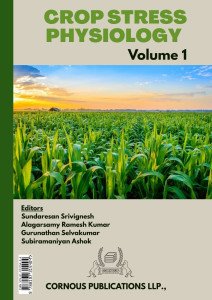
Editorial Book
Book Title: Crop Stress Physiology (Volume 1)
PAID ACCESS | Published on : 13-Sep-2024 | Pages: 106-123 |
Phytohormone Signalling Networks and Crosstalk Under Climate Change Stress
- V. Akhila
- akhilamarc2000@gmail.com
- Iniya Bharathi
- Department of Horticulture, School of Life Science, Central University of Tamil Nadu, Thiruvarur, Tamil Nadu, India.
- Pradeep M
- Department of Horticulture, School of Life Science, Central University of Tamil Nadu, Thiruvarur, Tamil Nadu, India.
- A. Ramesh Kumar
- Department of Horticulture, School of Life Science, Central University of Tamil Nadu, Thiruvarur, Tamil Nadu, India.
- Srivignesh Sundaresan
- Department of Horticulture, School of Life Science, Central University of Tamil Nadu, Thiruvarur, Tamil Nadu, India.
Abstract
Climate change is now having an increasing influence on the growth and production of plants under various biotic and abiotic stressors. The plants detect these environmental difficulties and respond to them via complex signalling networks in which phytohormones function as key regulators. This chapter looks at the signalling pathways of the main phytohormones that is gibberellins, auxins, jasmonic acid, salicylic acid, cytokinins, brassinosteroid, abscisic acid and ethylene and investigates how they interact in order to synchronize stress reactions in relation to climate change. The interaction between phytohormone modules is a dynamic regulatory system, the role of which is to coordinate responses to abiotic stressors by their effects the growth and development of plants in addition to the methods by which a combination of phytohormone mechanisms affect stress response and promote the balance between growth and defence are discussed. Understanding phytohormone crosstalk is central to the creation of crops that are climate-adaptive, as well as to guaranteeing sustainable production in light of food security and climate change.
Keywords
Climate change, phytohormones mechanisms, auxins, jasmonic acid
References
Altaf, M., Mahmood, S. R., Ahmad, O., Bashir, S., Bashir, A., Showkat, S., ... & Majid, B. (2025). The emerging role of phytohormone crosstalk in orchestrating plant stress tolerance. Plant Cell Biotechnology and Molecular Biology, 26(11–12), 152–165. https://doi.org/10.56557/pcbmb/2025/v26i11-1210023
Argueso, C. T., Ferreira, F. J., Epple, P., To, J. P., Hutchison, C. E., Schaller, G. E., ... & Kieber, J. J. (2012). Two-component elements mediate interactions between cytokinin and salicylic acid in plant immunity. PLoS Genetics, 8(1), e1002448. https://doi.org/10.1371/journal.pgen.1002448
Bai, G., Xie, H., Yao, H., Li, F., Chen, X., Zhang, Y., ... & Yang, D. H. (2019). Genome-wide identification and characterization of ABA receptor PYL/RCAR gene family reveals evolution and roles in drought stress in Nicotiana tabacum. BMC Genomics, 20(1), 575. https://doi.org/10.1186/s12864-019-5839-2
Castro-Camba, R., Sánchez, C., Vidal, N., & Vielba, J. M. (2022). Interactions of gibberellins with phytohormones and their role in stress responses. Horticulturae, 8(3), 241. https://doi.org/10.3390/horticulturae8030241
Chen, Z., Wu, Z., Dong, W., Liu, S., Tian, L., Li, J., & Du, H. (2022). MYB transcription factors becoming mainstream in plant roots. International Journal of Molecular Sciences, 23(16), 9262. https://doi.org/10.3390/ijms23169262
Chen, Z., Zheng, Z., Huang, J., Lai, Z., & Fan, B. (2009). Biosynthesis of salicylic acid in plants. Plant Signaling & Behavior, 4(6), 493–496. https://doi.org/10.4161/psb.4.6.8392
Cramer, G. R., Urano, K., Delrot, S., Pezzotti, M., & Shinozaki, K. (2011). Effects of abiotic stress on plants: A systems biology perspective. BMC Plant Biology, 11(1), 163. https://doi.org/10.1186/1471-2229-11-163
Das, S., Shil, S., Rime, J., Alice, A. K., Yumkhaibam, T., Mounika, V., ... & Singh, S. (2025). Phytohormonal signaling in plant resilience: Advances and strategies for enhancing abiotic stress tolerance. Plant Growth Regulation, 105(2), 329–360. https://doi.org/10.1007/s10725-025-01279-6
Delker, C., Quint, M., & Wigge, P. A. (2022). Recent advances in understanding thermomorphogenesis signaling. Current Opinion in Plant Biology, 68, 102231. https://doi.org/10.1016/j.pbi.2022.102231
Ding, Y., Shi, Y., & Yang, S. (2020). Molecular regulation of plant responses to environmental temperatures. Molecular Plant, 13(4), 544–564. https://doi.org/10.1016/j.molp.2020.02.004
Dündar, G., Ramirez, V. E., & Poppenberger, B. (2025). The heat shock response in plants: New insights into modes of perception, signaling, and the contribution of hormones. Journal of Experimental Botany, 76(7), 1970–1977. https://doi.org/10.1093/jxb/erae419
Emamverdian, A., Ding, Y., & Mokhberdoran, F. (2020). The role of salicylic acid and gibberellin signaling in plant responses to abiotic stress with an emphasis on heavy metals. Plant Signaling & Behavior, 15(7), 1777372. https://doi.org/10.1080/15592324.2020.1777372
Emenecker, R. J., & Strader, L. C. (2020). Auxin-abscisic acid interactions in plant growth and development. Biomolecules, 10(2), 281. https://doi.org/10.3390/biom10020281
Emery, R. N., & Kisiala, A. (2020). The roles of cytokinins in plants and their response to environmental stimuli. Plants, 9(9), 1158. https://doi.org/10.3390/plants9091158
Fahad, S., Hussain, S., Matloob, A., Khan, F. A., Khaliq, A., Saud, S., ... & Huang, J. (2015). Phytohormones and plant responses to salinity stress: A review. Plant Growth Regulation, 75(2), 391–404. https://doi.org/10.1007/s10725-014-0013-y
Filgueiras, C. C., Martins, A. D., Pereira, R. V., & Willett, D. S. (2019). The ecology of salicylic acid signaling: Primary, secondary and tertiary effects with applications in agriculture. International Journal of Molecular Sciences, 20(23), 5851. https://doi.org/10.3390/ijms20235851
Gamalero, E., & Glick, B. R. (2022). Recent advances in bacterial amelioration of plant drought and salt stress. Biology, 11(3), 437. https://doi.org/10.3390/biology11030437
Gan, Y., Li, H., Xie, Y., Wu, W., Li, M., Wang, X., & Huang, J. (2014). THF1 mutations lead to increased basal and wound-induced levels of oxylipins that stimulate anthocyanin biosynthesis via COI1 signaling in Arabidopsis. Journal of Integrative Plant Biology, 56(9), 916–927. https://doi.org/10.1111/jipb.12177
Gao, Q. M., Zhu, S., Kachroo, P., & Kachroo, A. (2015). Signal regulators of systemic acquired resistance. Frontiers in Plant Science, 6, 228. https://doi.org/10.3389/fpls.2015.00228
Gómez-Gómez, L., & Boller, T. (2000). FLS2: An LRR receptor-like kinase involved in the perception of the bacterial elicitor flagellin in Arabidopsis. Molecular Cell, 5(6), 1003–1011. https://doi.org/10.1016/S1097-2765(00)80265-8
Gruszka, D. (2013). The brassinosteroid signaling pathway-new key players and interconnections with other signaling networks crucial for plant development and stress tolerance. International Journal of Molecular Sciences, 14(5), 8740–8774. https://doi.org/10.3390/ijms14058740
Hai, N. N., Chuong, N. N., Tu, N. H. C., Kisiala, A., Hoang, X. L. T., & Thao, N. P. (2020). Role and regulation of cytokinins in plant response to drought stress. Plants, 9(4), 422. https://doi.org/10.3390/plants9040422
Huang, Y., Guo, J., He, X. J., & Li, C. (2025). Chromatin remodeling in plants: Complex composition, mechanistic diversity, and biological functions. Molecular Plant, 18(9), 1436–1457. https://doi.org/10.1016/j.molp.2025.08.004
Jagodzik, P., Tajdel-Zielinska, M., Ciesla, A., Marczak, M., & Ludwikow, A. (2018). Mitogen-activated protein kinase cascades in plant hormone signaling. Frontiers in Plant Science, 9, 1387. https://doi.org/10.3389/fpls.2018.01387
Jain, M., Nagar, P., Goel, P., Singh, A. K., Kumari, S., & Mustafiz, A. (2018). Second messengers: Central regulators in plant abiotic stress response. In Abiotic stress-mediated sensing and signaling in plants: An omics perspective (pp. 47–94). Springer Singapore. https://doi.org/10.1007/978-981-10-7479-0_2
Ju, C., & Chang, C. (2015). Mechanistic insights in ethylene perception and signal transduction. Plant Physiology, 169(1), 85–95. https://doi.org/10.1104/pp.15.00845
Khan, N., Bano, A., Ali, S., & Babar, M. A. (2020). Crosstalk amongst phytohormones from planta and PGPR under biotic and abiotic stresses. Plant Growth Regulation, 90(2), 189–203. https://doi.org/10.1007/s10725-020-00571-x
Kohli, A., Sreenivasulu, N., Lakshmanan, P., & Kumar, P. P. (2013). The phytohormone crosstalk paradigm takes center stage in understanding how plants respond to abiotic stresses. Plant Cell Reports, 32(7), 945–957. https://doi.org/10.1007/s00299-013-1461-y
Kour, J., Kohli, S. K., Khanna, K., Bakshi, P., Sharma, P., Singh, A. D., ... & Sharma, A. (2021). Brassinosteroid signaling, crosstalk and physiological functions in plants under heavy metal stress. Frontiers in Plant Science, 12, 608061. https://doi.org/10.3389/fpls.2021.608061
Ku, Y. S., Sintaha, M., Cheung, M. Y., & Lam, H. M. (2018). Plant hormone signaling crosstalks between biotic and abiotic stress responses. International Journal of Molecular Sciences, 19(10), 3206. https://doi.org/10.3390/ijms19103206
Lantzouni, O., Alkofer, A., Falter-Braun, P., & Schwechheimer, C. (2020). Growth-regulating factors interact with DELLAs and regulate growth in cold stress. The Plant Cell, 32(4), 1018–1034. https://doi.org/10.1105/tpc.19.00784
Li, N., Euring, D., Cha, J. Y., Lin, Z., Lu, M., Huang, L. J., & Kim, W. Y. (2021). Plant hormone-mediated regulation of heat tolerance in response to global climate change. Frontiers in Plant Science, 11, 627969. https://doi.org/10.3389/fpls.2020.627969
Li, N., Han, X., Feng, D., Yuan, D., & Huang, L. J. (2019). Signaling crosstalk between salicylic acid and ethylene/jasmonate in plant defense: Do we understand what they are whispering? International Journal of Molecular Sciences, 20(3), 671. https://doi.org/10.3390/ijms20030671
Li, S., Wang, Z., Tang, B., Zheng, L., Chen, H., Cui, X., ... & Liu, D. (2021). A pathogenesis-related protein-like gene is involved in the Panax notoginseng defense response to the root rot pathogen. Frontiers in Plant Science, 11, 610176. https://doi.org/10.3389/fpls.2020.610176
Liu, Y., Zhang, M., Meng, Z., Wang, B., & Chen, M. (2020). Research progress on the roles of cytokinin in plant response to stress. International Journal of Molecular Sciences, 21(18), 6574. https://doi.org/10.3390/ijms21186574
Luo, X., Chen, Z., Gao, J., & Gong, Z. (2014). Abscisic acid inhibits root growth in Arabidopsis through ethylene biosynthesis. The Plant Journal, 79(1), 44–55. https://doi.org/10.1111/tpj.12534
Malec, M. (2018). Functional characterization of Phytophthora infestans RXLR effector AVR2 (Doctoral dissertation, Eberhard Karls Universität Tübingen).
Manghwar, H., Hussain, A., Ali, Q., & Liu, F. (2022). Brassinosteroids (BRs) role in plant development and coping with different stresses. International Journal of Molecular Sciences, 23(3), 1012. https://doi.org/10.3390/ijms23031012
Manasa S, L., Panigrahy, M., Panigrahi, K. C., & Rout, G. R. (2022). Overview of cold stress regulation in plants. The Botanical Review, 88(3), 359–387. https://doi.org/10.1007/s12229-021-09267-x
Mapuranga, J., Zhang, N., Zhang, L., Liu, W., Chang, J., & Yang, W. (2022). Harnessing genetic resistance to rusts in wheat and integrated rust management methods to develop more durable resistant cultivars. Frontiers in Plant Science, 13, 951095. https://doi.org/10.3389/fpls.2022.951095
Marzi, D., Brunetti, P., Saini, S. S., Yadav, G., Puglia, G. D., & Dello Ioio, R. (2024). Role of transcriptional regulation in auxin-mediated response to abiotic stresses. Frontiers in Genetics, 15, 1394091. https://doi.org/10.3389/fgene.2024.1394091
Nolan, T., Chen, J., & Yin, Y. (2017). Cross-talk of brassinosteroid signaling in controlling growth and stress responses. Biochemical Journal, 474(16), 2641–2661. https://doi.org/10.1042/BCJ20160633
Ono, E., Mise, K., & Takano, Y. (2020). RLP23 is required for Arabidopsis immunity against the grey mould pathogen Botrytis cinerea. Scientific Reports, 10(1), 13798. https://doi.org/10.1038/s41598-020-70485-1
Panozzo, A., Bolla, P. K., Barion, G., Botton, A., & Vamerali, T. (2025). Phytohormonal regulation of abiotic stress tolerance, leaf senescence and yield response in field crops: A comprehensive review. BioTech, 14(1), 14. https://doi.org/10.3390/biotech14010014
Pavlů, J., Novák, J., Koukalová, V., Luklová, M., Brzobohatý, B., & Černý, M. (2018). Cytokinin at the crossroads of abiotic stress signalling pathways. International Journal of Molecular Sciences, 19(8), 2450. https://doi.org/10.3390/ijms19082450
Rao, M. J., Duan, M., Zhou, C., Jiao, J., Cheng, P., Yang, L., ... & Zheng, B. (2025). Antioxidant defense system in plants: Reactive oxygen species production, signaling, and scavenging during abiotic stress-induced oxidative damage. Horticulturae, 11(5), 477. https://doi.org/10.3390/horticulturae11050477
Riyazuddin, R., Verma, R., Singh, K., Nisha, N., Keisham, M., Bhati, K. K., ... & Gupta, R. (2020). Ethylene: A master regulator of salinity stress tolerance in plants. Biomolecules, 10(6), 959. https://doi.org/10.3390/biom10060959
Rolly, N. K., Mun, B. G., & Yun, B. W. (2021). Insights into the transcriptional regulation of branching hormonal signaling pathways genes under drought stress in Arabidopsis. Genes, 12(2), 298. https://doi.org/10.3390/genes12020298
Roychoudhury, A., & Paul, A. (2012). Abscisic acid-inducible genes during salinity and drought stress. Advances in Medicine and Biology, 51, 1–78.
Sahu, S. K., Patel, M. K., & Mishra, A. (2025). Exogenous priming and manipulation of metabolic/regulatory genes for crop stress tolerance. Current Plant Biology, 100572. https://doi.org/10.1016/j.cpb.2025.100572
Sasidharan, R., Hartman, S., Liu, Z., Martopawiro, S., Sajeev, N., van Veen, H., ... & Voesenek, L. A. (2018). Signal dynamics and interactions during flooding stress. Plant Physiology, 176(2), 1106–1117. https://doi.org/10.1104/pp.17.01232
Schwechheimer, C. (2012). Gibberellin signaling in plants-The extended version. Frontiers in Plant Science, 2, 107. https://doi.org/10.3389/fpls.2011.00107
Sharma, I., Kaur, N., & Pati, P. K. (2017). Brassinosteroids: A promising option in deciphering remedial strategies for abiotic stress tolerance in rice. Frontiers in Plant Science, 8, 2151. https://doi.org/10.3389/fpls.2017.02151
Skalak, J., Nicolas, K. L., Vankova, R., & Hejatko, J. (2021). Signal integration in plant abiotic stress responses via multistep phosphorelay signaling. Frontiers in Plant Science, 12, 644823. https://doi.org/10.3389/fpls.2021.644823
Su, P., Sui, C., Li, J., Wan, K., Sun, H., Wang, S., ... & Guo, S. (2023). The Aux/IAA protein TaIAA15-1A confers drought tolerance in Brachypodium by regulating abscisic acid signal pathway. Plant Cell Reports, 42(2), 385–394. https://doi.org/10.1007/s00299-022-02965-9
Tao, J. J., Chen, H. W., Ma, B., Zhang, W. K., Chen, S. Y., & Zhang, J. S. (2015). The role of ethylene in plants under salinity stress. Frontiers in Plant Science, 6, 1059. https://doi.org/10.3389/fpls.2015.01059
Thalhammer, A., Bryant, G., Sulpice, R., & Hincha, D. K. (2014). Disordered cold regulated 15 proteins protect chloroplast membranes during freezing through binding and folding, but do not stabilize chloroplast enzymes in vivo. Plant Physiology, 166(1), 190–201. https://doi.org/10.1104/pp.114.245399
Thilakarathne, A. S., Liu, F., & Zou, Z. (2025). Plant signaling hormones and transcription factors: Key regulators of plant responses to growth, development, and stress. Plants, 14(7), 1070. https://doi.org/10.3390/plants14071070
Thole, J. M., Beisner, E. R., Liu, J., Venkova, S. V., & Strader, L. C. (2014). Abscisic acid regulates root elongation through the activities of auxin and ethylene in Arabidopsis thaliana. G3: Genes, Genomes, Genetics, 4(7), 1259–1274. https://doi.org/10.1534/g3.114.011080
Van der Does, D., Leon-Reyes, A., Koornneef, A., Van Verk, M. C., Rodenburg, N., Pauwels, L., ... & Pieterse, C. M. (2013). Salicylic acid suppresses jasmonic acid signaling downstream of SCFCOI1-JAZ by targeting GCC promoter motifs via transcription factor ORA59. The Plant Cell, 25(2), 744–761. https://doi.org/10.1105/tpc.112.108548
Vardhini, B. V., & Anjum, N. A. (2015). Brassinosteroids make plant life easier under abiotic stresses mainly by modulating major components of antioxidant defense system. Frontiers in Environmental Science, 2, 67. https://doi.org/10.3389/fenvs.2014.00067
Verma, V., Ravindran, P., & Kumar, P. P. (2016). Plant hormone-mediated regulation of stress responses. BMC Plant Biology, 16(1), 86. https://doi.org/10.1186/s12870-016-0771-y
Vishal, B., & Kumar, P. P. (2018). Regulation of seed germination and abiotic stresses by gibberellins and abscisic acid. Frontiers in Plant Science, 9, 838. https://doi.org/10.3389/fpls.2018.00838
Vishwakarma, K., Upadhyay, N., Kumar, N., Yadav, G., Singh, J., Mishra, R. K., ... & Sharma, S. (2017). Abscisic acid signaling and abiotic stress tolerance in plants: A review on current knowledge and future prospects. Frontiers in Plant Science, 8, 161. https://doi.org/10.3389/fpls.2017.00161
Voesenek, L. A. C. J., & Bailey-Serres, J. (2013). Flooding tolerance: O2 sensing and survival strategies. Current Opinion in Plant Biology, 16(5), 647–653. https://doi.org/10.1016/j.pbi.2013.06.008
Wang, J., Song, L., Gong, X., Xu, J., & Li, M. (2020). Functions of jasmonic acid in plant regulation and response to abiotic stress. International Journal of Molecular Sciences, 21(4), 1446. https://doi.org/10.3390/ijms21041446
War, A. R., Paulraj, M. G., War, M. Y., & Ignacimuthu, S. (2011). Role of salicylic acid in induction of plant defense system in chickpea (Cicer arietinum L.). Plant Signaling & Behavior, 6(11), 1787–1792. https://doi.org/10.4161/psb.6.11.17685
Yang, H., Fang, R., Luo, L., Yang, W., Huang, Q., Yang, C., ... & Wang, J. (2023). Uncovering the mechanisms of salicylic acid-mediated abiotic stress tolerance in horticultural crops. Frontiers in Plant Science, 14, 1226041. https://doi.org/10.3389/fpls.2023.1226041
Yanqing, W., Jiao, L., Lu, Z., Hao, W., Yiming, Z., Irshad, A., & Guisheng, Z. (2026). Abiotic stress responses in crop plants: A multi-scale approach. Journal of Integrative Agriculture, 25(1), 1–15. https://doi.org/10.1016/j.jia.2024.09.003
Yuan, H. M., & Huang, X. (2016). Inhibition of root meristem growth by cadmium involves nitric oxide-mediated repression of auxin accumulation and signalling in Arabidopsis. Plant, Cell & Environment, 39(1), 120–135. https://doi.org/10.1111/pce.12597
Zhang, T. Y., Li, Z. Q., Zhao, Y. D., Shen, W. J., Chen, M. S., Gao, H. Q., ... & He, J. M. (2021). Ethylene-induced stomatal closure is mediated via MKK1/3–MPK3/6 cascade to EIN2 and EIN3. Journal of Integrative Plant Biology, 63(7), 1324–1340. https://doi.org/10.1111/jipb.13083
Zhang, Y., Xu, S., Ding, P., Wang, D., Cheng, Y. T., He, J., ... & Zhang, Y. (2010). Control of salicylic acid synthesis and systemic acquired resistance by two members of a plant-specific family of transcription factors. Proceedings of the National Academy of Sciences, 107(42), 18220–18225. https://doi.org/10.1073/pnas.1005225107
Zhang, Z., Chen, Z., Song, H., & Cheng, S. (2023). From plant survival to thriving: Exploring the miracle of brassinosteroids for boosting abiotic stress resilience in horticultural crops. Frontiers in Plant Science, 14, 1218229. https://doi.org/10.3389/fpls.2023.1218229
Zheng, Y., Wang, X., Cui, X., Wang, K., Wang, Y., & He, Y. (2023). Phytohormones regulate the abiotic stress: An overview of physiological, biochemical, and molecular responses in horticultural crops. Frontiers in Plant Science, 13, 1095363. https://doi.org/10.3389/fpls.2022.1095363
Zhu, J. K. (2016). Abiotic stress signaling and responses in plants. Cell, 167(2), 313–324. https://doi.org/10.1016/j.cell.2016.08.029
Zhu, Z. (2014). Molecular basis for jasmonate and ethylene signal interactions in Arabidopsis. Journal of Experimental Botany, 65(20), 5743–5748. https://doi.org/10.1093/jxb/eru349
Indexing In




Types of Books We Publish




Uniqueness of our Publication

DOI Assignment

ISBN Registration

Online Publication

High Visibility

Open & Closed Access
DOI Assignment
ISBN Registration
Online Publication
High Visibility