Editorial Book
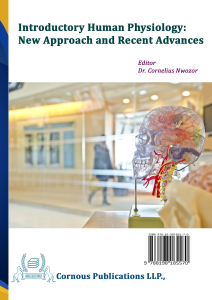
Book Title: Introductory Human Physiology: New Approach and Recent Advances
OPEN ACCESS | Published on : 11-Feb-2026 | Pages: 78-92 | Doi : 10.37446/edibook172025/78-92
Physiology of Swallowing and Eating Disorders
- Renu Rajguru
- Professor and Head, Department of ENT & HNS, AIIMS, Raipur, India.
- Monalisa Jati
- Speech and Language therapist, Department of ENT & HNS, AIIMS Raipur, India.
Abstract
Swallowing is a complex human activity that depends on the precise coordination of the actions of the oral cavity, pharynx, larynx, and oesophagus, under the control of an integrated neural network. Understanding the physiology and neural regulation of swallowing is crucial for comprehending the fundamental mechanisms that govern this process and for appreciating its inherent complexity. Swallowing is mediated by coordinated interactions between cortical, subcortical, and brainstem structures, which integrate sensory input and generate organised motor output to ensure efficient bolus transport and airway protection. The swallowing sequence is traditionally divided into distinct stages, each characterised by specific food management behaviours. To describe these events, commonly used models of drinking and eating provide complementary frameworks for understanding normal swallowing function and for identifying abnormalities relevant to experimental investigation and clinical management.
Keywords
Oral cavity, Pharynx, Larynx, Oesophagus, Neural regulation
References
Abu-Ghanem, S., Chen, S., & Amin, M. R. (2020). Oropharyngeal dysphagia in the elderly. Current Otorhinolaryngology Reports, 8, 34–42. https://doi.org/10.1007/s40136-020-00258-x
Arshavsky, Y., Deliagina, T., & Orlovsky, G. (1997). Pattern generation. Current Opinion in Neurobiology, 7, 781–789.
Babaei, A., Ward, B. D., Siwiec, R. M., et al. (2013). Functional connectivity of the cortical swallowing network in humans. NeuroImage, 76, 33–44. https://doi.org/10.1016/j.neuroimage.2013.01.037
Blonsky, E., Logemann, J. A., Boshes, B., et al. (1975). Comparison of speech and swallowing function in patients with tremor disorders and in normal geriatric patients: A cinefluorographic study. Journal of Gerontology, 30(3), 299–303.
Bolser, D. C., Gestreau, C., Morris, K. F., Davenport, P. W., & Pitts, T. E. (2013). Central neural circuits for coordination of swallowing, breathing, and coughing. Otolaryngologic Clinics of North America, 46(6), 957–964. https://doi.org/10.1016/j.otc.2013.09.013
Cichero, J. A. Y. (2018). Dysphagia: Evaluation and treatment.
Clavé, P., & Shaker, R. (2015). Dysphagia: Current reality and scope of the problem. Nature Reviews Gastroenterology & Hepatology, 12(5), 259–270.
Cook, I. J., Dodds, W. J., Dantas, R. O., et al. (1989). Opening mechanisms of the human upper oesophageal sphincter. American Journal of Physiology, 257(5 Pt 1), G748–G759. https://doi.org/10.1152/ajpgi.1989.257.5.G748
Costa, M. M. B. (2018). Neural control of swallowing. Arquivos de Gastroenterologia, 55(Suppl 1), 61–75. https://doi.org/10.1590/S0004-2803.201800000-45
Daniels, S. K., & Foundas, A. L. (1997). The role of the insular cortex in dysphagia. Dysphagia, 12(3), 146–156. https://doi.org/10.1007/PL00009529
Dodds, W. J., Stewart, E. T., & Logemann, J. A. (1990). Physiology and radiology of the normal oral and pharyngeal phases of swallowing. American Journal of Roentgenology, 154(5), 953–963. https://doi.org/10.2214/ajr.154.5.2108569
Ekberg, O., & Sigurjónsson, S. V. (1982). Movement of the epiglottis during deglutition: A cineradiographic study. Gastrointestinal Radiology, 7(2), 101–107. https://doi.org/10.1007/BF01887619
Ertekin, C., & Aydoğdu, İ. (2023). History of oropharyngeal organs and swallowing. Turkish Journal of Neurology, 29(3), 165–168. https://doi.org/10.4274/tnd.2023.76301
Ertekin, C., & Aydogdu, I. (2003). Neurophysiology of swallowing. Clinical Neurophysiology, 114(12), 2226–2244. https://doi.org/10.1016/S1388-2457(03)00237-2
Fyke, F. E., Jr., & Code, C. F. (1955). Resting and deglutition pressures in the pharyngoesophageal region. Gastroenterology, 29, 24–34.
Goyal, R. K., & Chaudhury, A. (2008). Physiology of normal esophageal motility. Journal of Clinical Gastroenterology, 42(5), 610–619. https://doi.org/10.1097/MCG.0b013e31816b444d
Hamdy, S., Aziz, Q., Rothwell, J. C., et al. (1998). Recovery of swallowing after dysphagic stroke relates to functional reorganization in the intact motor cortex. Gastroenterology, 115(5), 1104–1112. https://doi.org/10.1016/S0016-5085(98)70081-2
Humbert, I. A., & Robbins, J. (2008). Dysphagia in the elderly. Physical Medicine and Rehabilitation Clinics of North America, 19(4), 853–870. https://doi.org/10.1016/j.pmr.2008.06.002
Ingervall, B. (1978). Activity of temporal and lip muscles during swallowing and chewing. Journal of Oral Rehabilitation, 5, 329–337.
Jani, K. K., Vidhyadharan, S., & Iyer, S. (2018). Physiology of swallowing. In K. Thankappan, S. Iyer, & J. Menon (Eds.), Dysphagia management in head and neck cancers (pp. 19–36). https://doi.org/10.1007/978-981-10-8282-5_2
Jean, A. (2001). Brain stem control of swallowing: Neuronal network and cellular mechanisms. Physiological Reviews, 81(2), 929–969. https://doi.org/10.1152/physrev.2001.81.2.929
Jean, A. (1990). Brainstem control of swallowing: Localization and organization of the central pattern generator. In A. Taylor (Ed.), Neurophysiology of the jaws and teeth (pp. 294–321).
Kagaya, H., Yokoyama, M., Saitoh, E., et al. (2015). Isolated pharyngeal swallow exists during normal human feeding. Tohoku Journal of Experimental Medicine, 236(1), 39–43. https://doi.org/10.1620/tjem.236.39
Kahrilas, P. J., Dodds, W. J., Dent, J., Logemann, J. A., & Shaker, R. (1988). Upper esophageal sphincter function during deglutition. Gastroenterology, 95(1), 52–62. https://doi.org/10.1016/0016-5085(88)90290-9
Kahrilas, P. J., Logemann, J. A., Lin, S., & Ergun, G. A. (1992). Pharyngeal clearance during swallowing: A combined manometric and videofluoroscopic study. Gastroenterology, 103(1), 128–136. https://doi.org/10.1016/0016-5085(92)91105-D
Labeit, B., Muhle, P., Ogawa, M., et al. (2019). FEES-based assessment of pharyngeal hypesthesia: Proposal and validation of a new test procedure. Neurogastroenterology & Motility, 31, e13690.
Lang, I. M. (2009). Brain stem control of the phases of swallowing. Dysphagia, 24(3), 333–348. https://doi.org/10.1007/s00455-009-9211-6
Lapa, S., Claus, I., Reitz, S. C., et al. (2020). Effect of thalamic deep brain stimulation on swallowing in patients with essential tremor. Annals of Clinical and Translational Neurology, 7(7), 1174–1180. https://doi.org/10.1002/acn3.51099
Larson, C., & Sutton, D. (1978). Effects of cerebellar lesions on monkey jaw-force control: Implications for understanding ataxic dysarthria. Journal of Speech and Hearing Research, 21, 295–311.
Leiguarda, R., Merello, M., Balej, J., et al. (2000). Disruption of spatial organization and interjoint coordination in Parkinson’s disease, progressive supranuclear palsy, and multiple system atrophy. Movement Disorders, 15(4), 627–640.
Leonard, R., & Kendall, K. (2014). Dysphagia assessment and treatment planning: A team approach (3rd ed.).
Leslie, P., & McHanwell, S. (2008). Physiology of swallowing. In M. Green (Ed.), Scott-Brown’s otorhinolaryngology, head and neck surgery (7th ed., pp. 1954–1963).
Logemann, J. A. (1998). Evaluation and treatment of swallowing disorders (2nd ed.).
Logemann, J. A. (2015). Mechanisms of normal and abnormal swallowing. In P. W. Flint, B. H. Haughey, V. Lund, et al. (Eds.), Cummings otolaryngology—Head and neck surgery (6th ed., pp. 1500–1506).
Logemann, J. A. (2006). Upper digestive tract anatomy and physiology. In B. J. Bailey, J. T. Johnson, & S. D. Newlands (Eds.), Head & neck surgery—Otolaryngology (4th ed., pp. 685–692). Lippincott Williams & Wilkins.
Mandelstam, P., & Lieber, A. (1970). Cineradiographic evaluation of the oesophagus in normal adults. Gastroenterology, 58, 32–39.
Matsuo, K., & Fujishima, I. (2020). Textural changes by mastication and proper food texture for patients with oropharyngeal dysphagia. Nutrients, 12(6), 1613. https://doi.org/10.3390/nu12061613
Matsuo, K., & Palmer, J. B. (2008). Anatomy and physiology of feeding and swallowing: Normal and abnormal. Physical Medicine and Rehabilitation Clinics of North America, 19(4), 691–707. https://doi.org/10.1016/j.pmr.2008.06.001
McCoy, Y. M., & Varindani, D. R. (2018). Presbyphagia versus dysphagia. Perspectives of the ASHA Special Interest Groups, 3(15), 15–21. https://doi.org/10.1044/persp3.SIG15.15
Michou, E., & Hamdy, S. (2009). Cortical input in control of swallowing. Current Opinion in Otolaryngology & Head and Neck Surgery, 17, 166–171.
Miller, A. J. (1972). Characteristics of the swallowing reflex induced by peripheral nerve and brainstem stimulation. Experimental Neurology, 34, 210–222.
Miller, A. J. (1982). Deglutition. Physiological Reviews, 62(1), 129–184. https://doi.org/10.1152/physrev.1982.62.1.129
Miller, A. J. (2008). The neurobiology of swallowing and dysphagia. Developmental Disabilities Research Reviews, 14, 77–86.
Miller, A. J. (1999). The neuroscientific principles of swallowing and dysphagia. Singular Publishing Group.
Nikaki, K., Sawada, A., Ustaoglu, A., et al. (2019). Neuronal control of esophageal peristalsis and its role in esophageal disease. Current Gastroenterology Reports, 21, 59. https://doi.org/10.1007/s11894-019-0728-z
Nishino, T. (2013). The swallowing reflex and its significance as an airway defensive reflex. Frontiers in Physiology, 3, 489.
Ott, D. J., & Levine, M. S. (2015). Motility disorders of the esophagus. In R. M. Gore & M. S. Levine (Eds.), Textbook of gastrointestinal radiology (4th ed., pp. 279–290). W.B. Saunders.
Palmer, J. B., Rudin, N. J., Lara, G., & Crompton, A. W. (1992). Coordination of mastication and swallowing. Dysphagia, 7(4), 187–200. https://doi.org/10.1007/BF02493469
Panara, K., Ramezanpour Ahangar, E., & Padalia, D. (2023). Physiology, swallowing. In StatPearls.
Pitts, T., & Iceman, K. E. (2023). Deglutition and the regulation of the swallow motor pattern. Physiology, 38(1), 1–14. https://doi.org/10.1152/physiol.00005.2021
Rosen, R. D., & Winters, R. (2023). Physiology, lower esophageal sphincter. In StatPearls.
Sessle, B. J., & Hannan, A. G. (Eds.). (1976). Mastication and swallowing (pp. 22–36). University of Toronto Press.
Shaker, R., Kern, M., Bardan, E., et al. (1997). Augmentation of deglutitive upper oesophageal sphincter opening in the elderly by exercise. American Journal of Physiology, 272(6 Pt 1), G1518–G1522. https://doi.org/10.1152/ajpgi.1997.272.6.G1518
Steele, C. M., et al. (2019). Mealtime and swallowing difficulties in neurological disorders. Handbook of Clinical Neurology, 165, 159–180.
Steele, C. M., & Miller, A. J. (2010). Sensory input pathways and mechanisms in swallowing: A review. Dysphagia, 25(4), 323–333. https://doi.org/10.1007/s00455-010-9301-5
Tack, J., & Pandolfino, J. E. (2018). Pathophysiology of gastroesophageal reflux disease. Gastroenterology, 154(2), 277–288. https://doi.org/10.1053/j.gastro.2017.09.047
Walshe, M. (2019). Swallowing and ageing. Speech, Language and Hearing, 22(1), 2–8. https://doi.org/10.1080/2050571X.2019.1567898
Westemeyer, R. M., & Dietsch, A. M. (2024). Comparing taste perception across modalities in healthy adults. Dysphagia, 39(1), 52–62. https://doi.org/10.1007/s00455-023-10592-z
Wilmskoetter, J., Daniels, S. K., & Miller, A. J. (2020). Cortical and subcortical control of swallowing. American Journal of Speech-Language Pathology, 29(2S), 1030–1043. https://doi.org/10.1044/2019_AJSLP-19-00068
Yuan, X. D., Zhou, L. F., Wang, S. J., et al. (2015). Compensatory recombination phenomena of neurological functions in central dysphagia patients. Neural Regeneration Research, 10(3), 490–497. https://doi.org/10.4103/1673-5374.153701
Zainaee, S., Archer, B., Scherer, R., Bingman, V., & Ghasemi, M. (2025). Revealing goal-directed neural control of the pharyngeal phase of swallowing. Dysphagia, 40(3), 528–540. https://doi.org/10.1007/s00455-024-10758-3.
Indexing In




Types of Books We Publish




Uniqueness of our Publication

DOI Assignment

ISBN Registration

Online Publication

High Visibility

Open & Closed Access
DOI Assignment
ISBN Registration
Online Publication
High Visibility