Editorial Book
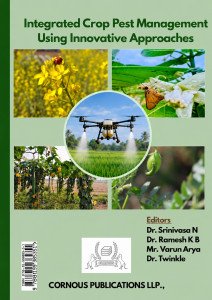
Book Title: Integrated Crop Pest Management Using Innovative Approaches
OPEN ACCESS | Published on : 26-Mar-2026 | Pages: 16-28 | Doi : 10.37446/edibook252025/16-28
New approaches for sustainable management of the melon fruit fly, Zeugodacus cucurbitae Coquillett
- Varun Arya
- Department of Entomology and Agricultural Zoology, Institute of Agricultural Sciences, Banaras Hindu University, Varanasi, Uttar Pradesh, India.
- Srinivasa N
- Department of Entomology and Agricultural Zoology, Institute of Agricultural Sciences, Banaras Hindu University, Varanasi, Uttar Pradesh, India.
- Parmanand Kumar Maurya
- Department of Entomology and Agricultural Zoology, Institute of Agricultural Sciences, Banaras Hindu University, Varanasi, Uttar Pradesh, India.
- Nikhil Khemrajji Hatwar
- Department of Entomology and Agricultural Zoology, Institute of Agricultural Sciences, Banaras Hindu University, Varanasi, Uttar Pradesh, India.
- Divyansh Jain
- Department of Entomology and Agricultural Zoology, Institute of Agricultural Sciences, Banaras Hindu University, Varanasi, Uttar Pradesh, India.
Abstract
The melon fruit fly, Zeugodacus cucurbitae (Coquillett), is one of the most destructive pests of cucurbits, causing significant yield losses in India and across tropical and subtropical regions. Belonging to the tribe Dacini of the family Tephritidae, Z. cucurbitae is polyphagous, highly fecund, and widely distributed, with infestations reported in all cucurbitaceous crops. Larvae feed internally, forming galleries in fruit pulp, which results in pre and post-harvest damage, fruit distortion, rotting, and increased susceptibility to secondary infections. Effective management requires an integrated approach. Cultural practices, including field sanitation, destruction of fallen and infested fruits, and use of resistant cultivars, disrupt the pest’s life cycle. Mechanical control, such as fruit bagging and pheromone-based male annihilation techniques, reduces adult population and oviposition. Biological control agents, including entomopathogenic nematodes, fungi, and parasitoids, provide eco-friendly suppression of larval and pupal stages. Recent biotechnological interventions, such as RNA interference (RNAi) and CRISPR/Cas-9-mediated gene editing, offer species-specific, heritable, and environmentally safe alternatives, targeting genes involved in reproduction, development, and pigmentation. Chemical control remains a last resort due to limited effectiveness against internal feeders and concerns over pesticide residues. A combination of these strategies, tailored to local agro-ecological conditions, forms the basis of a sustainable Integrated Pest Management (IPM) program for melon fruit fly, ensuring reduced crop losses and safer cucurbit production.
Keywords
Zeugodacus cucurbitae, Integrated pest management, Male attractant lures, Biotechnological tools, Pest biology, Pesticides
References
Aarthi, R., Kavitha, Z., Vijayaraghavan, C., Shanthi, M., Srinivasan, G., & Madhavan, M. L. (2024). A comprehensive review of melon fruit fly, Zeugodacus cucurbitae Coquillett (Diptera: Tephritidae). Plant Science Today, 11, 5887. https://doi.org/10.14719/pst.5887
Afroz, M., Amin, M. R., Miah, M. R. U., Hossain, M. M., & Suh, S. J. (2021). Exploring biochemical basis of resistance to fruit fly infestation in sweet gourd crops. Serangga, 26(3), 1–12.
Ahmad, S., Jamil, M., Fahim, M., Zhang, S., Ullah, F., Lyu, B., & Luo, Y. (2021). RNAi-mediated knockdown of imaginal disc growth factor (IDGF) genes causes developmental malformation and mortality in melon fly, Zeugodacus cucurbitae. Frontiers in Genetics, 12, 691382. https://doi.org/10.3389/fgene.2021.691382
Ahmad, S., Jamil, M., Jaworski, C. C., & Luo, Y. (2024). Double-stranded RNA degrading nuclease affects RNAi efficiency in the melon fly, Zeugodacus cucurbitae. Journal of Pest Science, 97(1), 397–409. https://doi.org/10.1007/s10340-023-01637-1
Am, M., Sridharan, C. S., & Awasthi, N. S. (2017). Varying infestation of fruit fly, Bactrocera cucurbitae (Coquillett) in different cucurbit crops. Journal of Entomology and Zoology Studies, 5(3), 1419–1421.
Anant, P., Painkra, K. L., Painkra, G. P., Tiwari, J. K., & Bhagat, P. K. (2019). Seasonal incidence and extent of damage by cucurbit fruit fly, Bactrocera cucurbitae (Coq.) on spine gourd (Momordica dioica Roxb.). Journal of Plant Development Sciences, 11(9), 543–546.
Arya, V., Srinivasa, N., Tyagi, S., & Raju, S. V. S. (2022). A guide to prepare cue-lure for Bactrocera cucurbitae (Coquillett) management in cucurbits. Indian Entomologist, 3(1), 45–47.
Badii, K. B., Billah, M. K., Afreh-Nuamah, K., Obeng-Ofori, D., & Nyarko, G. (2015). Review of the pest status, economic impact and management of fruit-infesting flies (Diptera: Tephritidae) in Africa. African Journal of Agricultural Research, 10(12), 1488–1498. https://doi.org/10.5897/AJAR2014.9278
Baloch, N., Khuhro, N. H., & Akbar, W. (2017). Efficacy of protein bait sprays in controlling melon fruit fly (Bactrocera cucurbitae [Coquillett]) in vegetable agro-ecosystems. Proceedings of the Pakistan Academy of Sciences B: Life and Environmental Sciences, 54(2), 111–115.
Barma, P., & Jha, S. (2011). Biology and seasonal activity of fruit fly (Bactrocera cucurbitae Coq.) on pointed gourd (Trichosanthes dioica Roxb.) and its relation with weather. Journal of Plant Protection Sciences, 3(1), 48–53.
Baum, J. A., & Roberts, J. K. (2014). Progress towards RNAi-mediated insect pest management. In S. T. Dhadialla & S. S. Gill (Eds.), Advances in insect physiology (Vol. 47, pp. 249–295). Academic Press. https://doi.org/10.1016/B978-0-12-800197-4.00005-1
Bhowmik, P., Devi, L., Chatterjee, M., & Mandal, D. (2014). Seasonal bionomics of melon fruit fly, Bactrocera cucurbitae Coquillett on bottle gourd under laboratory conditions. The Ecoscan, 8(1–2), 157–162.
Boopathi, T., Singh, S. B., Manju, T., Chowdhury, S., Singh, A. R., Dutta, S. K., Dayal, V., Behere, G. T., Ngachan, S. V., Hazarika, S., & Rahman, S. M. A. (2017). First report of economic injury to tomato due to Zeugodacus tau (Diptera: Tephritidae): Relative abundance and effects of cultivar and season on injury. Florida Entomologist, 100(1), 63–69. https://doi.org/10.1653/024.100.0111
Çelik, S., Kunç, Ş., & Aşan, T. (1995). Degradation of some pesticides in the field and effect of processing. Analyst, 120(6), 1739–1743. https://doi.org/10.1039/AN9952001739
Chaudhary, P., Arya, V., Narayana, S., & Maurya, P. K. (2025). Better concentration of cue-lure and sticky trap combination for monitoring and mass trapping of melon fly, Zeugodacus cucurbitae (Coquillett). Plant Science Today, 12(3), 1–5. https://doi.org/10.14719/pst.7769
Central Insecticides Board & Registration Committee (CIBRC). (2025). Major uses of pesticides (insecticides) as on 31.03.2025. Government of India, Ministry of Agriculture & Farmers Welfare. https://ppqs.gov.in/sites/default/files/1._mup_insecticide_03.04.2025.pdf
Department of Agriculture & Farmers Welfare (DA&FW). (2025). Annual report 2024–2025. https://agriwelfare.gov.in/Documents/AR_Eng_2024_25.pdf
David, K. J., & Ramani, S. (2019). New species, redescriptions and phylogenetic revision of tribe Dacini (Diptera: Tephritidae: Dacinae) from India based on morphological characters. Zootaxa, 4551(2), 101–146. https://doi.org/10.11646/zootaxa.4551.2.1
David, K. J., Abhishek, V., Kennedy, N., Ajaykumara, K. M., Gracy, R. G., & Hissay, C. B. (2024). Four new species of Zeugodacus Hendel (Diptera: Tephritidae: Dacinae: Dacini) and new records of dacines from India. ZooKeys, 1188, https://doi.org/10.3897/zookeys.1188.114031
Dhillon, M. K., Singh, R., Naresh, J. S., & Sharma, H. C. (2005). The melon fruit fly, Bactrocera cucurbitae: A review of its biology and management. Journal of Insect Science, 5(1), 40. https://doi.org/10.1093/jis/5.1.40
Diksha, Mahajan, E., Singh, S., & Sohal, S. K. (2022). Potential biological control agents of Zeugodacus cucurbitae (Coquillett): A review. Journal of Applied Entomology, 146(8), 917–929. https://doi.org/10.1111/jen.13044
Donkor, A., Osei-Fosu, P., Dubey, B., Kingsford-Adaboh, R., Ziwu, C., & Asante, I. (2016). Pesticide residues in fruits and vegetables in Ghana: A review. Environmental Science and Pollution Research, 23(19), 18966–18987. https://doi.org/10.1007/s11356-016-7317-6
Drew, R. A. I., & Hancock, D. L. (2022). Biogeography, speciation and taxonomy within the genus Bactrocera Macquart with application to the Bactrocera dorsalis (Hendel) complex of fruit flies (Diptera: Tephritidae: Dacinae). Zootaxa, 5190(3), 333–360. https://doi.org/10.11646/zootaxa.5190.3.2
El-Gendy, I. R., & AbdAllah, A. M. (2019). Effect of soil type and soil water content levels on pupal mortality of the peach fruit fly (Bactrocera zonata [Saunders]) (Diptera: Tephritidae). International Journal of Pest Management, 65(2), 154–160. https://doi.org/10.1080/09670874.2018.1485988
El-Sheikh, E. S. A., Ramadan, M. M., El-Sobki, A. E., Shalaby, A. A., McCoy, M. R., Hamed, I. A., Ashour, M. B., & Hammock, B. D. (2022). Pesticide residues in vegetables and fruits from farmer markets and associated dietary risks. Molecules, 27(22), 8072. https://doi.org/10.3390/molecules27228072
Food and Agriculture Organization (FAO). (2019). The state of food and agriculture 2019: Moving forward on food loss and waste reduction. https://openknowledge.fao.org/server/api/core/bitstreams/11f9288f-dc78-4171-8d02-92235b8d7dc7/content
Gautam, M., Poudel, S., Dhungana, N., & Bhusal, N. (2021). Comparative efficacy of different insecticides against cucurbit fruit fly (Bactrocera cucurbitae) on bottle gourd (Lagenaria siceraria) in Sarlahi District, Nepal. International Journal of Natural Resource Ecology and Management, 6(2), 27–37. https://doi.org/10.11648/j.ijnrem.20210602.11
Ghodekar, K. S., Yendrembam, K. D., Sonawane, V. K., Longkumer, I. Y., & Ibrahim, M. M. (2025). Biology and development of the melon fruit fly, Zeugodacus cucurbitae (Coq.), on various cucurbit hosts. New Zealand Journal of Crop and Horticultural Science, 1–16. https://doi.org/10.1080/01140671.2025.2499240
Godjo, A., Chabi, N., Zadji, L., Dossou, P., Batcho, O., Baimey, H., Bonou, W., Sinzogan, A. A. C., Bokonon-Ganta, A., Decraemer, W., Willems, A., & Afouda, L. (2021). Evaluation of indigenous nematode isolates (Heterorhabditis taysearae and Steinernema kandii) to control mango fruit fly Bactrocera dorsalis under laboratory, semi-field and field conditions in northern Benin. Crop Protection, 149, 105754. https://doi.org/10.1016/j.cropro.2021.105754
Haldhar, S. M., Choudhary, B. R., Bhargava, R., & Gurjar, K. (2015). Host plant resistance traits of ridge gourd (Luffa acutangula [Roxb.] L.) against melon fruit fly (Bactrocera cucurbitae [Coquillett]) in hot arid region of India. Scientia Horticulturae, 194, 168–174. https://doi.org/10.1016/j.scienta.2015.08.001
Hancock, D. L., & Drew, R. A. I. (2018). A review of the subgenus Zeugodacus Hendel of Bactrocera Macquart (Diptera: Tephritidae: Dacinae): An integrative approach. The Australian Entomologist, 45(3), 251–272.
Jakhar, S., Kumar, V., Choudhary, P. K., & Lal, B. (2020). Estimation of losses due to fruit fly, Bactrocera cucurbitae (Coquillett) on long melon in a semi-arid region of Rajasthan. Journal of Entomology and Zoology Studies, 8(6), 632–635.
Kamali, S., Karimi, J., Hosseini, M., Campos-Herrera, R., & Duncan, L. W. (2013). Biocontrol potential of the entomopathogenic nematodes Heterorhabditis bacteriophora and Steinernema carpocapsae on cucurbit fly, Dacus ciliatus (Diptera: Tephritidae). Biocontrol Science and Technology, 23(11), 1307–1323. https://doi.org/10.1080/09583157.2013.835790
Keikotlhaile, B. M., & Spanoghe, P. (2011). Pesticide residues in fruits and vegetables. In M. Stoytcheva (Ed.), Pesticides-Formulations, effects (pp. 243–252). InTech.
Khan, I., Usman, A., & Khan, R. (2020). Mortality rate of pupae and adults of fruit fly Bactrocera cucurbitae (Coquillett) (Diptera: Tephritidae) affected by different submerging time and soil types under laboratory conditions. Sarhad Journal of Agriculture, 36(3), 815–822. https://doi.org/10.17582/journal.sja/2020/36.3.815.822
Khan, M. A., Gogi, D. A., Khaliq, A., Subhani, M. N., & Ali, A. (2010). Efficacy of methyl eugenol and cue-lure traps for monitoring melon fruit fly in relation to environmental conditions in bitter gourd. Journal of Agricultural Research, 48(4), 525–530.
Khursheed, S., & Raj, D. (2012). Bio-efficacy of certain insecticides and biopesticides against melon fruit flies, Bactrocera spp. Pest Management in Horticultural Ecosystems, 18(2), 143–148.
Lad, S. S., Naik, K. V., & Golvankar, G. M. (2020). Efficacy of some insecticides against melon fruit fly, Bactrocera spp. on bitter gourd. Journal of Experimental Zoology India, 23(1), 635–641.
Maharjan, R., Regmi, R., & Poudel, K. (2015). Monitoring and varietal screening of cucurbit fruit fly, Bactrocera cucurbitae (Coquillett) (Diptera: Tephritidae) on cucumber in Bhaktapur and Kathmandu, Nepal. International Journal of Applied Sciences and Biotechnology, 3(4), 714–720. https://doi.org/10.3126/ijasbt.v3i4.13988
Mallikarjunarao, K., Tripathy, B., & Dalai, S. (2020). Screening of bitter gourd genotypes against infestation of fruit fly (Bactrocera cucurbitae Coquillett). International Journal of Chemical Studies, 8(3), 2976–2978. https://doi.org/10.22271/chemi.2020.v8.i3aq.9664
Mir, S. H., Dar, S. A., Mir, G. M., & Ahmad, S. B. (2014). Biology of Bactrocera cucurbitae (Diptera: Tephritidae) on cucumber. Florida Entomologist, 97(2), 753–758. https://doi.org/10.1653/024.097.0257
Miyatake, T. (1997). Genetic trade-off between early fecundity and longevity in Bactrocera cucurbitae (Diptera: Tephritidae). Heredity, 78(1), 93–100. https://doi.org/10.1038/hdy.1997.11
Miyatake, T., Irabu, T., & Higa, R. (1993). Oviposition punctures in cucurbit fruits and their economic damage caused by sterile female melon fly, Bactrocera cucurbitae Coquillett. In Proceedings of the Association for Plant Protection of Kyushu (Vol. 39, pp. 102–105).
Moon, T. T., Maliha, I. J., Khan, A. A. M., Chakraborty, M., Uddin, M. S., Amin, M. R., & Islam, T. (2022). CRISPR-Cas genome editing for insect pest stress management in crop plants. Stresses, 2(4), 493–514. https://doi.org/10.3390/stresses2040034
Mukherjee, S., Tithi, D. A., Bachchu, A. A., Ara, R., & Amin, M. R. (2007). Life history and management of cucurbit fruit fly Bactrocera cucurbitae on sweet gourd. Journal of Science and Technology, 17–27.
Mwatawala, M. W., De Meyer, M., Makundi, R. H., & Maerere, A. P. (2009). An overview of Bactrocera (Diptera: Tephritidae) invasions and their speculated dominance over native fruit fly species in Tanzania. Journal of Entomology, 6(1), 18–27. https://doi.org/10.3923/je.2009.18.27
Nair, N., Chatterjee, M., Das, K., Sehgal, M., & Meenakshi, M. (2021). Fruit fly species complex infesting cucurbits in India and their management. International Journal of Agriculture, Environment and Sustainability, 3(2), 8–17.
National Bureau of Agricultural Insect Resources (NBAIR). (2021). True fruit flies of India (Diptera: Tephritoidea: Tephritidae). https://databases.nbair.res.in/fruit_flies/about.php
Pape, T., Blagoderov, V., & Mostovski, M. B. (2011). Order Diptera Linnaeus, 1758. In Z.-Q. Zhang (Ed.), Animal biodiversity: An outline of higher-level classification and survey of taxonomic richness. Zootaxa, 3148(1), 222–229. https://doi.org/10.11646/zootaxa.3148.1.42
Paulo, D. F., Nguyen, T. N., Ward, C. M., Corpuz, R. L., Kauwe, A. N., Rendon, P., Ruano, R. E. Y., Cardoso, A. A. S., Gouvi, G., Fung, E., Crisp, P., Okada, A., Choo, A., Stauffer, C., Bourtzis, K., Sim, S. B., Baxter, S. W., & Geib, S. M. (2025). Functional genomics implicates ebony in the black pupae phenotype of tephritid fruit flies. Communications Biology, 8(1), 60. https://doi.org/10.1038/s42003-025-07489-y
Pokhrel, S. (2019). Fruit bagging with cloth bag: An eco-friendly and cost-effective management method of cucurbit fruit fly (Bactrocera cucurbitae Coq.) on bitter gourd (Momordica charantia L.) in Kathmandu, Nepal. Journal of Agriculture and Forestry University, 3, 49.
Prabhakar, C. S., Choudhary, J. S., Singh, R. S., Ray, S. N., Managanvi, K., Kumari, M., Hadapah, A. B., & Hire, R. S. (2019). Genetic lineage of Zeugodacus caudatus (Diptera: Tephritidae) detected with mtCOI gene analysis from India. Current Science, 117(8), 1368–1375.
Prabhakar, C. S., Sood, P., & Mehta, P. K. (2012). Fruit fly (Diptera: Tephritidae) diversity in cucurbit fields and surrounding forest areas of Himachal Pradesh, a north-western Himalayan state of India. Archives of Phytopathology and Plant Protection, 45(10), 1210–1217. https://doi.org/10.1080/03235408.2012.660612
Reddy, K. V., Devi, Y. K., & Komala, G. (2020). Management strategies for fruit flies in fruit crops: A review. Journal of Emerging Technologies and Innovative Research, 7(12), 1472–1480.
Ken Research. (2024, March 14). Major trends transforming India’s vegetable market in 2024. https://www.kenresearch.com/blog/emerging-trends-in-india-vegetable-market
Sahoo, K. C., & Tripathy, A. (2021). First record of Gastrozona fasciventris Macquart (Diptera: Tephritidae) from Odisha, India. Insect Environment, 24(3), 393–394.
Sapkota, R., Dahal, K. C., & Thapa, R. B. (2010). Damage assessment and management of cucurbit fruit flies in spring-summer squash. Journal of Entomology and Nematology, 2(1), 7–12.
Sarkar, R., Das, S., Kamal, M. M., Islam, K. S., & Jahan, M. (2017). Efficacy of management approaches against cucurbit fruit fly (Bactrocera cucurbitae Coquillett) of bitter gourd. Bangladesh Journal of Agricultural Research, 42(4), 757–766. https://doi.org/10.3329/bjar.v42i4.35803
Schutze, M. K., Virgilio, M., Norrbom, A., & Clarke, A. R. (2017). Tephritid integrative taxonomy: Where we are now, with a focus on the resolution of three tropical fruit fly species complexes. Annual Review of Entomology, 62, 147–164. https://doi.org/10.1146/annurev-ento-031616-035518
Sen, K., Dhar, P. P., & Samanta, A. (2019). Field screening of different genotypes of bitter gourd for infestation with the melon fruit fly, Bactrocera cucurbitae (Coquillett) in two agro-climatic zones of West Bengal, India. International Journal of Tropical Insect Science, 39(4), 273–282. https://doi.org/10.1007/s42690-019-00035-4
Sharma, D. R., Adhikari, D., & Tiwari, D. B. (2015). Fruit fly surveillance in Nepal. Agricultural and Biological Sciences Journal, 1(3), 121–125.
Shinde, V. M., Kabre, G. B., & Pawar, S. A. (2021). Surveillance of fruit fly, Bactrocera cucurbitae (Coquillett) on ridge gourd in relation to abiotic factors. The Pharma Innovation Journal, 10(7), 861–864.
Shivangi, L., & Swami, H. (2017). Bio-intensive management of fruit fly, Bactrocera cucurbitae (Coquillett) in cucumber. Journal of Entomology and Zoology Studies, 5(3), 1823–1826.
Singh, S. P., Agrawal, N., Singh, R. K., & Singh, S. (2020). Management of fruit flies in mango, guava and vegetables using basil plants (Ocimum sanctum L.) as attractant. Journal of Entomology and Zoology Studies, 8(4), 687–689.
Singh, S., Rahangdale, S., Pandita, S., Saxena, G., Upadhyay, S. K., Mishra, G., & Verma, P. C. (2022). CRISPR/Cas9 for insect pest management: A comprehensive review of advances and applications. Agriculture, 12(11), 1896. https://doi.org/10.3390/agriculture12111896
Sohrab, W. H., & Prasad, C. S. (2018). Investigation on level of infestation and management of cucurbit fruit fly, Bactrocera cucurbitae (Coquillett) in different cucurbit crops. International Journal of Pure and Applied Bioscience (Special Issue), 6(1), 184–196. https://doi.org/10.18782/2320-7051.1124
Soltani, N., Kellouche, A., & Mazouzi, F. (2007). Effects of soil texture and larval burial depth on biological parameters of Ceratitis capitata (Diptera: Tephritidae). African Journal of Agricultural Research, 2(3), 105–111.
Su, H., Yu, H., Xu, L., Zhang, M., Qi, Y., & Lu, Y. (2025). N-β-alanyl-dopamine synthetase gene (ebony) regulates pigmentation and reproduction in the melon fly, Zeugodacus cucurbitae. Pest Management Science, 81(7), 3878–3888. https://doi.org/10.1002/ps.8754
Subedi, K., Regmi, R., Thapa, R. B., & Tiwari, S. (2021). Evaluation of net house and mulching effects on cucurbit fruit fly (Bactrocera cucurbitae Coquillett) on cucumber (Cucumis sativus L.). Journal of Agriculture and Food Research, 3, 100103. https://doi.org/10.1016/j.jafr.2021.100103
Sunda, S., Arya, V., Narayana, S., Venkateshaih, A., & Divekar, P. (2024). Evaluation of different concentrations of cue-lure for effective management of melon fruit fly, Zeugodacus cucurbitae (Coquillett), in cucurbit ecosystems. Journal of Environmental Biology, 45(3), 268–276. https://doi.org/10.22438/jeb/45/3/MRN-5223
Susanto, A., Faradilla, M. G., Sumekar, Y., Yudistira, D. H., Murdita, W., Permana, A. D., Djaya, L., & Subakti Putri, S. N. (2022). Effect of various pupation depths on adult emergence of interspecific hybrids of Bactrocera carambolae and Bactrocera dorsalis. Scientific Reports, 12(1), 4235. https://doi.org/10.1038/s41598-022-08295-w
Usman, M., Wakil, W., & Shapiro-Ilan, D. I. (2021). Entomopathogenic nematodes as biological control agents against Bactrocera zonata and Bactrocera dorsalis (Diptera: Tephritidae). Biological Control, 163, 104706. https://doi.org/10.1016/j.biocontrol.2021.104706
Vadivelu, K. (2014). Biology and management of ber fruit fly, Carpomyia vesuviana Costa (Diptera: Tephritidae): A review. African Journal of Agricultural Research, 9(16), 1310–1317. https://doi.org/10.5897/AJAR2013.8001
Vargas, R. I., Piñero, J. C., & Leblanc, L. (2015). An overview of pest species of Bactrocera fruit flies (Diptera: Tephritidae) and integration of biopesticides with other biological approaches for their management, with a focus on the Pacific region. Insects, 6(2), 297–318. https://doi.org/10.3390/insects6020297
Vargas, R. I., Shelly, T. E., Leblanc, L., & Piñero, J. C. (2010). Recent advances in methyl eugenol and cue-lure technologies for fruit fly detection, monitoring, and control in Hawaii. Vitamins & Hormones, 83, 575–595. https://doi.org/10.1016/S0083-6729(10)83023-7
Verghese, A., Madhura, H. S., Kamala Jayanthi, P. D., & Stonehouse, J. M. (2002). Fruit flies of economic significance in India, with special reference to Bactrocera dorsalis (Hendel). In Proceedings of the 6th International Fruit Fly Symposium (pp. 6–10).
Virgilio, M., Delatte, H., Backeljau, T., & De Meyer, M. (2010). Macrogeographic population structuring in the cosmopolitan agricultural pest Bactrocera cucurbitae (Diptera: Tephritidae). Molecular Ecology, 19(13), 2713–2724. https://doi.org/10.1111/j.1365-294X.2010.04662.x
Wang, Y., Xu, H. Q., Han, H. L., Chen, D., Jiang, H., Smagghe, G., Wang, J. J., & Wei, D. (2024). CRISPR/Cas9-mediated knockout of a male accessory gland-specific gene (takeout1) decreases fecundity in Zeugodacus cucurbitae females. Pest Management Science, 80(9), 4399–4409. https://doi.org/10.1002/ps.8145
White, I. M., & Elson-Harris, M. M. (1992). Fruit flies of economic significance: Their identification and bionomics. CAB International.
Yan, S., Ren, B., Zeng, B., & Shen, J. (2020). Improving RNAi efficiency for pest control in crop species. BioTechniques, 68(5), 283–290. https://doi.org/10.2144/btn-2019-0171.
Indexing In




Types of Books We Publish




Uniqueness of our Publication

DOI Assignment

ISBN Registration

Online Publication

High Visibility

Open & Closed Access
DOI Assignment
ISBN Registration
Online Publication
High Visibility