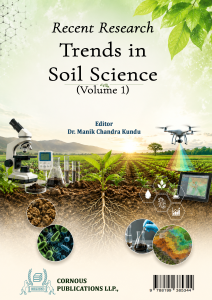
Editorial Book
Book Title: Recent Research Trends in Soil Science (Volume 1)
PAID ACCESS | Published on : 25-May-2026 | Pages: 21-36 |
Nanotechnology - Sustainable nutrient management for modern agriculture
- Koushik Ghosh
- Uttar Banga Krishi Viswavidyalaya, Pundibari, Cooch Behar, West Bengal, India.
- Amrit Tamang
- Uttar Banga Krishi Viswavidyalaya, Pundibari, Cooch Behar, West Bengal, India.
- Mandira Saha
- Uttar Banga Krishi Viswavidyalaya, Pundibari, Cooch Behar, West Bengal, India.
- Sagar Tamang
- Purba Medinipur Krishi Vigyan Kendra, BCKV, Mohanpur, Nadia, West Bengal, India.
- Tarik Mitran
- National Remote Sensing Centre, Balanagar, Hyderabad, India.
- Hriday Kamal Tarafder
- Uttar Banga Krishi Viswavidyalaya, Pundibari, Cooch Behar, West Bengal, India.
Abstract
Sustainable agriculture has become essential for optimum food supply in a growing population and minimizing environmental damage. Nanotechnology has the potential for many solutions for sustainable agriculture. It is a science that benefits at the nanoscale. Research on modern nanotechnology-based nanofertilizers shows their ability to enhance crop production, improve the use efficiency of nutrients, and also maintain environmental sustainability. The established research suggested that nanofertilizers have the potential of around 25-50% to substitute the conventional fertiliser for crop production, furthermore reducing the environmental pollution compared to conventional fertiliser. The technology also provides better nutrient use, i.e. approximately 30%, and also enhances crop yields by around 20% over inorganic fertilisers. This chapter will explicate the principles of nanotechnology, characteristics of nanomaterials and its production techniques. Aside from this, we cover the nanofertilizers, their controlled release mechanisms, application techniques, absorption pathways, as well as impact on crops, soil, and the environment. We examined the influence of nanofertilizers on crop yield and soil health using research data and case studies. Considering the fact that in an era where environmental issues are paramount, nano-agrochemicals can cut 27–35% greenhouse gas (GHG) emissions and improve physical properties of soil through nanoclays and hydrogels fulfilling rising food demand while maintaining a sustainable environment. This chapter basically bridges the gap between molecular-scale nutrient delivery and macro scale food security by replacing bulk inputs and offers a fresh perspective by framing nanotechnology not just as yield booster but as a critical tool for soil health restoration reversing the damage caused by decades of conventional chemical overuse.
Keywords
Crop productivity, Environment, Nanofertilizers, Nanotechnology, Plant nutrition
References
Abdallah, E., Gaballah, M., & Zaghloul, S. (2017). Role of silicon dioxide nano fertilizer in mitigating salt stress on growth, yield and chemical composition of cucumber (Cucumis sativus L.). International Journal of Agricultural Research, 22, 130-135.
Abid, N., Khan, A. M., Shujait, S., Chaudhary, K., Ikram, M., Imran, M., Haider, J., Khan, M., Khan, Q., & Maqbool, M. (2022). Synthesis of nanomaterials using various top-down and bottom-up approaches, influencing factors, advantages, and disadvantages: A review. Advances in Colloid and Interface Science, 300, 102597.
Ahmadian, K., Jalilian, J., & Pirzad, A. (2021). Nano-fertilizers improved drought tolerance in wheat under deficit irrigation. Agricultural Water Management, 244, 106544.
Ahmed, B., Rizvi, A., Ali, K., Lee, J., Zaidi, A., Khan, M. S., & Musarrat, J. (2021). Nanoparticles in the soil–plant system: A review. Environmental Chemistry Letters, 19, 1545-1609.
Ahmed, B., Shahid, M., Khan, M. S., & Musarrat, J. (2018). Chromosomal aberrations, cell suppression and oxidative stress generation induced by metal oxide nanoparticles in onion (Allium cepa) bulb. Metallomics, 10, 1315-1327.
Aravinth, K. V., Mohanapriya, R., Venkatesan, V., & Ramesh, T. (2022). Nanotechnology for crop nutrient management. In Advances in agronomy. https://doi.org/10.22271/ed.book.1797
Asgari, S., Moradi, H., & Afshari, H. (2014). Evaluation of some physiological and morphological characteristics of Narcissus tazetta under BA treatment and nano-potassium fertilizer. Journal of Chemical Health Risks, 4, 63-70.
Ashkavand, P., et al. (2018). Application of SiO₂ nanoparticles as pretreatment alleviates the impact of drought on the physiological performance of Prunus mahaleb (Rosaceae). Boletín de la Sociedad Argentina de Botánica, 53, 207–219.
Bayda, S., Adeel, M., Tuccinardi, T., Cordani, M., & Rizzolio, F. (2019). The history of nanoscience and nanotechnology: From chemical-physical applications to nanomedicine. Molecules, 25(1), 112.
Behera, A., Mohapatra, S. S., & Verma, D. K. (2019). Nanomaterials: Fundamental principles and applications. In Nanotechnology and nanomaterial applications in food, health, and biomedical sciences (pp. 163-194). Apple Academic Press.
Bharti, A., Jain, U., & Chauhan, N. (2024). From lab to field: Nano-biosensors for real-time plant nutrient tracking. Plant Nano Biology, Article 100079.
Brennan, B. (2012). Nanobiotechnology in agriculture. Strategic Business Insights.
Cameán, A. M., Cacho, J. F., Cepeda, A., Farré, R., Vidal, M. C., Jos, A., López, R., & Grupo de Trabajo. (2010). Informe del Comité Científico de la Agencia Española de Seguridad Alimentaria y Nutrición (AESAN) en relación al uso de la nanotecnología en la industria alimentaria. Revista del Comité Científico de la AESAN, 11, 29-46.
Channab, B.-E., Idrissi, A. E., Ammar, A., Dardari, O., Marrane, S. E., El-Gharrak, A., Akil, A., Essemlali, Y., & Zahouily, M. (2024). Recent advances in nano-fertilizers: Synthesis, crop yield impact, and economic analysis. Nanoscale, 16, 4484-4513.
Chaudhary, S., Prasanna, D., Trivedi, P., Nandy, R., Prasad, S. S., Sunitha, S., & Panigrahi, C. K. (2025). Nanotechnology applications in agriculture for crop protection and nutrient delivery: A review. International Journal of Plant & Soil Science, 37(9), 106-119.
Chausali, N., Saxena, J. and Prasad, R. (2023). Nanotechnology as a sustainable approach for combating the environmental effects of climate change. Journal of Agriculture and Food Research. Volume 12, 2666-1543. https://doi.org/10.1016/j.jafr.2023.100541.
Chavan, S., Sarangdhar, V., & Nadanathangam, V. (2020). Toxicological effects of TiO₂ nanoparticles on plant growth-promoting soil bacteria. Emerging Contaminants, 6, 87–92.
Chen, X., Zhou, B., Wang, Q., Tao, W., & Lin, H. (2020). Nano-biochar reduced soil erosion and nitrate loss in sloping fields on the Loess Plateau of China. CATENA, 187, 104346.
Chowdhury, M., Kushwah, A., Satpute, A. N., Singh, S. K., & Patil, A. K. (2023). A comprehensive review on potential application of nanomaterials in the field of agricultural engineering. Journal of Biosystems Engineering, 48(4), 457-477.
Do Espírito Santo Pereira, A., Caixeta Oliveira, H., Fernandes Fraceto, L., & Santaella, C. (2021). Nanotechnology potential in seed priming for sustainable agriculture. Nanomaterials, 11(2), 267.
Dutta, S., Roy, M., Ghosh, K., & Chakraborty, S. (2026). Nano fertilizers in modern agriculture. Agriculture Bulletin, 2(3), 145-150.
Ealias, A. M., & Saravanakumar, M. P. (2017). A review on the classification, characterization, synthesis of nanoparticles and their application. IOP Conference Series: Materials Science and Engineering, 263(3), 032019.
Eichert, T., Kurtz, A., Steiner, U., & Goldbach, H. E. (2008). Size exclusion limits and lateral heterogeneity of the stomatal foliar uptake pathway for aqueous solutes and water-suspended nanoparticles. Physiologia Plantarum, 134(1), 151–160.
Fellet, G., Pilotto, L., Marchiol, L., & Braidot, E. (2021). Tools for nano-enabled agriculture: Fertilizers based on calcium phosphate, silicon, and chitosan nanostructures. Agronomy, 11(7), 1239. https://doi.org/10.3390/agronomy11071239
Gade, A., Ingle, P., Nimbalkar, U., Rai, M., Raut, R., Vedpathak, M., Jagtap, P., & Abd-Elsalam, K. A. (2023). Nanofertilizers: The next generation of agrochemicals for long-term impact on sustainability in farming systems. Agrochemicals, 2(2), 257–278.
Grün, A.-L., Manz, W., Kohl, Y. L., Meier, F., Straskraba, S., Jost, C., Drexel, R., & Emmerling, C. (2019). Impact of silver nanoparticles (AgNPs) on soil microbial community depending on functionalization, concentration, exposure time, and soil texture. Environmental Sciences Europe, 31, 15.
Hong, J., Wang, C., Wagner, D. C., Gardea-Torresdey, J. L., He, F., & Rico, C. M. (2021). Foliar application of nanoparticles: Mechanisms of absorption, transfer, and multiple impacts. Environmental Science: Nano, 8(5), 1196-1210.
Janmohammadi, M., Amanzadeh, T., Sabaghnia, N., & Dashti, S. (2016). Impact of foliar application of nano micronutrient fertilizers and titanium dioxide nanoparticles on the growth and yield components of barley under supplemental irrigation. Acta Agriculturae Slovenica, 107, 265-276.
Jithendar, B., Kumar, R., & Rana, N. (2024). Revolutionizing crop nutrition: Exploring nano fertilizers in agriculture. International Journal of Plant & Soil Science, 36, 327-339.
Kah, M. (2015). Nanopesticides and nanofertilizers: Emerging contaminants or opportunities for risk mitigation? Frontiers in Chemistry, 3, Article 64. https://doi.org/10.3389/fchem.2015.00064.
Kalwani, M., Chakdar, H., Srivastava, A., Pabbi, S., & Shukla, P. (2022). Effects of nanofertilizers on soil and plant-associated microbial communities: Emerging trends and perspectives. Chemosphere, 287, 132107.
Kekeli, M. A., Wang, Q., & Rui, Y. (2025). The role of nano-fertilizers in sustainable agriculture: Boosting crop yields and enhancing quality. Plants, 14(4), 554.
Kolahalam, L. A., Kasi Viswanath, I. V., Diwakar, B. S., Govindh, B., Reddy, V., & Murthy, Y. L. N. (2019). Review on nanomaterials: Synthesis and applications. Materials Today: Proceedings, 18, 2182-2190.
Kopittke, P. M., Lombi, E., Wang, P., Schjoerring, J. K., & Husted, S. (2019). Nanomaterials as fertilizers for improving plant mineral nutrition and environmental outcomes. Environmental Science: Nano, 6, 3513-3524.
Kumar, N., Samota, S. R., Venkatesh, K., & Tripathi, S. (2023). Global trends in use of nano-fertilizers for crop production: Advantages and constraints-A review. Soil and Tillage Research, 228, 105645.
Kumar, Y., Tiwari, K. N., Singh, T., Sain, N. K., Laxmi, S., Verma, R., Sharma, G. C., & Raliya, R. (2020). Nanofertilizers for enhancing nutrient use efficiency, crop productivity and economic returns in winter season crops of Rajasthan. Annals of Plant and Soil Research, 22(4), 324-335.
Kumari, M., Mukherjee, A., & Chandrasekaran, N. (2009). Genotoxicity of silver nanoparticles in Allium cepa. Science of the Total Environment, 407(19), 5243–5246.
Kurczyńska, E., Godel-Jędrychowska, K., Sala, K., & Milewska-Hendel, A. (2021). Nanoparticles–plant interaction: What we know, where we are? Applied Sciences, 11(12), 5473.
Liao, Y., Xu, D., Cao, Y., & Zhu, Y.-G. (2023). Advancing sustainable agriculture: Enhancing crop nutrition with next-generation nanotech-based fertilizers. Nano Research, 16, 13205-13225.
Liu, R., & Lal, R. (2015). Potentials of engineered nanoparticles as fertilizers for increasing agronomic productions. Science of the Total Environment, 514, 131–139. https://doi.org/10.1016/j.scitotenv.2015.01.104
López-Moreno, M. L., Cassé, C., & Correa-Torres, S. N. (2018). Engineered nanomaterials interactions with living plants: Benefits, hazards and regulatory policies. Current Opinion in Environmental Science & Health, 6, 36–41.
Lovatt, C. J. (2013). Properly timing foliar-applied fertilizers increases efficacy: A review and update on timing foliar nutrient applications to citrus and avocado. Hort. Technology, 23, 536-541.
Mekuye, B., & Abera, B. (2023). Nanomaterials: An overview of synthesis, classification, characterization, and applications. Nano Select, 4(8), 486-501.
Melkani, S., Panoura, L., Chamoli, M., & Sharma, T. (2020). Employing engineered nanoparticles to improve nutrient use efficiency. International Journal of Chemical Studies, 8(SP-6), 110-115.
Mridha, D., Lamsal, B., & Antonangelo, J. A. (2025). Nanotechnology in agriculture: Innovations for sustainability and greenhouse gas mitigation-A review. Science of the Total Environment, 995, 180065.
Nair, P. M. G. (2018). Toxicological impact of carbon nanomaterials on plants. In Nanotechnology, food security and water treatment (pp. 163–183). Springer.
Nile, S. H., Thiruvengadam, M., Wang, Y., Samynathan, R., Shariati, M. A., Rebezov, M., Nile, A., Sun, M., Venkidasamy, B., Xiao, J., & Kai, G. (2022). Nano-priming as emerging seed priming technology for sustainable agriculture-Recent developments and future perspectives. Journal of Nanobiotechnology, 20(1), 254.
Pandorf, M., Pourzahedi, L., Gilbertson, L., Lowry, G. V., Herckes, P., & Westerhoff, P. (2020). Graphite nanoparticle addition to fertilizers reduces nitrate leaching in growth of lettuce (Lactuca sativa). Environmental Science: Nano, 7, 127-138.
Raliya, R., Tarafdar, J. C., & Biswas, P. (2016). Enhancing the mobilization of native phosphorus in the mung bean rhizosphere using ZnO nanoparticles synthesized by soil fungi. Journal of Agricultural and Food Chemistry, 64, 3111-3118.
Rathnayaka, R., Mahendran, S., Iqbal, Y., & Rifnas, L. (2018). Influence of urea and nano-nitrogen fertilizers on the growth and yield of rice (Oryza sativa L.) cultivar Bg 250. International Journal of Research Publications, 5, 1-10.
Rautela, I., Dheer, P., Thapliyal, P., Shah, D., Joshi, M., Upadhyay, S., Gururani, P., Sinha, V. B., Gaurav, N., & Sharma, M. D. (2021). Current scenario and future perspectives of nanotechnology in sustainable agriculture and food production. Plant Cell Biotechnology and Molecular Biology, 22, 99–121.
Saleh, T. A. (2020). Nanomaterials: Classification, properties, and environmental toxicities. Environmental Technology & Innovation, 20, Article 101067.
Saurabh, K., Prakash, V., Dubey, A. K., Ghosh, S., Kumari, A., Sundaram, P. K., Jeet, P., Sarkar, B., Upadhyaya, A., Das, A., Kumar, S., Makarana, G., Kumar, U., Kumar, A., & Singh, R. R. (2024). Enhancing sustainability in agriculture with nanofertilizers. Discover Applied Sciences. Advance online publication.
Seleiman, M. F., Almutairi, K. F., Alotaibi, M., Shami, A., Alhammad, B. A., & Battaglia, M. L. (2020). Nano-fertilization as an emerging fertilization technique: Why can modern agriculture benefit from its use? Plants, 10, 2.
Serena, P. (2016). Guía específica de trabajo sobre nanotecnología para la revolución urbana: Ciudades inteligentes.
Shelar, A., Nile, S. H., Singh, A. V., Rothenstein, D., Bill, J., Xiao, J., Chaskar, M., Kai, G., & Patil, R. (2023). Recent advances in nano-enabled seed treatment strategies for sustainable agriculture: Challenges, risk assessment, and future perspectives. Nano-Micro Letters, 15(1), 54.
Singh, L., Sadawarti, R., Menon, S., Minkina, T., & Sushkova, S. (2023). Impact of nano-fertilizers and nutrient management on growth and yield of strawberry. Russian Journal of Earth Sciences, 23, 0215.
Solanki, P., Bhargava, A., Chhipa, H., Jain, N., & Panwar, J. (2015). Nanofertilizers and their smart delivery systems. In M. Rai, C. Ribeiro, L. Mattoso, & N. Duran (Eds.), Nanotechnologies in food and agriculture (pp. 81-101). Springer.
Srisha, V., & Prasad, V. (2022). Effect of NPK and nano fertilizers on plant growth, yield and quality of gladiolus (Gladiolus grandiflorus L.). International Journal of Plant & Soil Science, 34, 1529-1534.
Subramanian, K. S., Karthika, V., Praghadeesh, M., & Lakshmanan, A. (2020). Nanotechnology for mitigation of global warming impacts. In Global climate change: Resilient and smart agriculture. https://doi.org/10.1007/978-981-32-9856-9_15.
Tantawy, A., Salama, Y., El-Nemr, M., & Abdel-Mawgoud, A. (2015). Nano silicon application improves salinity tolerance of sweet pepper plants. International Journal of Chemical Technology Research, 8, 11-17.
Tarafdar, J. C. (2015). Nanoparticle production, characterization and its application to horticultural crops. In Winter School on “Utilization of Degraded Land and Soil through Horticultural Crops for Agricultural Productivity and Environmental Quality” (p. 222). ICAR-National Research Centre on Seed Spices.
Tarafdar, J. C. (2015). Nanoparticle production, characterization and its application to horticultural crops. In Winter School on “Utilization of Degraded Land and Soil through Horticultural Crops for Agricultural Productivity and Environmental Quality” (pp. 222). ICAR-National Research Centre on Seed Spices.
Thakur, P., & Thakur, A. (2022). Introduction to nanotechnology. In Synthesis and applications of nanoparticles (pp. 1-17).
The Royal Society, & The Royal Academy of Engineering. (2004). Nanoscience and nanotechnologies: Opportunities and uncertainties. Clyvedon Press.
Trenkel, M. E. (2010). Slow and controlled release and stabilized fertilizers: An option for enhancing nutrient use efficiency in agriculture (pp. 1-162). International Fertilizer Industry Association.
Umar, W., Czinkota, I., Gulyás, M., Aziz, T., & Hameed, M. K. (2022). Development and characterization of slow-release N and Zn fertilizer by coating urea with Zn-fortified nano-bentonite and ZnO nanoparticles using various binders. Environmental Technology & Innovation, 26, 102250.
Wang, X., Xie, H., Wang, P., & Yin, H. (2023). Nanoparticles in plants: Uptake, transport and physiological activity in leaf and root. Materials, 16(8), 3097.
Yang, Y., Ye, C., Zhao, M., Li, J., Zhang, X., Yang, Z., Yang, Z., Algopishi, U. B., & Ahmed, W. (2025). Nanoparticles in sustainable agriculture: Enhancing nutrient use efficiency and abiotic stress resilience under climate change. Journal of Cleaner Production, 467, 142944.
Indexing In




Types of Books We Publish



Uniqueness of our Publication

DOI Assignment

ISBN Registration

Online Publication

High Visibility

Open & Closed Access
DOI Assignment
ISBN Registration
Online Publication
High Visibility