Editorial Book
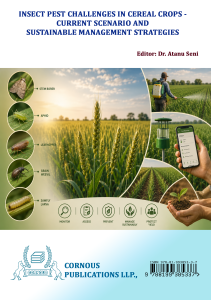
Book Title: Insect Pest Challenges in Cereal Crops - Current Scenario and Sustainable Management Strategies
PAID ACCESS | Published on : 06-Nov-2026 | Pages: 120-141 | Doi : https://doi.org/10.37446/edibook212025/120-141
Invasion Dynamics of Emerging Insect Pests in North African Agroecosystems: Establishment, Spread, and Climatic Drivers
- Mohamed El Aalaoui
- National Institute of Agricultural Research (INRA), Avenue Ennasr, BP 415 Rabat Principal, 10090 Rabat, Morocco.
- Mohamed Sbaghi
- National Institute of Agricultural Research (INRA), Avenue Ennasr, BP 415 Rabat Principal, 10090 Rabat, Morocco.
Abstract
Invasive insect pests continue to emerge and spread across North Africa, a region strategically positioned between sub-Saharan Africa, the Middle East, and Europe, and characterized by a diverse mosaic of irrigated oases, Mediterranean coastal plains, and semi-arid interior rangelands. Major threats include Tuta absoluta Meyrick (Lepidoptera: Gelechiidae), Spodoptera frugiperda (J. E. Smith) (Lepidoptera: Noctuidae), Rhynchophorus ferrugineus (Olivier) (Coleoptera: Dryophthoridae), Dactylopius opuntiae (Cockerell) (Hemiptera: Dactylopiidae), Bactrocera zonata (Saunders) (Diptera: Tephritidae), Trioza erytreae (Del Guercio) (Hemiptera: Triozidae), and Drosophila suzukii (Matsumura) (Diptera: Drosophilidae), each of which has substantially reshaped regional pest-management priorities since establishment. Their introduction, establishment, and subsequent spread are jointly shaped by climate, host-plant availability, irrigation, agricultural intensification, and trade networks. CLIMEX and MaxEnt species distribution models applied across these case studies reveal contrasting climatic constraints on establishment, with mild Mediterranean winters favoring warm-adapted invaders while summer heat and aridity restrict humidity-dependent species from the continental interior.We further assess emerging threats already established in Mediterranean Europe and poised to complete an invasion corridor into North Africa, namely Aleurocanthus spiniferus (Quaintance) (Hemiptera: Aleyrodidae), Popillia japonica Newman (Coleoptera: Scarabaeidae), and Halyomorpha halys (Stål) (Hemiptera: Pentatomidae), alongside the native migratory desert locust as an instructive institutional counter-case. Drawing on these comparisons, we highlight recurring invasion pathways, propagule-pressure dynamics, and persistent gaps in regional surveillance and cross-border cooperation, and emphasize the need to integrate climate matching, irrigation patterns, host distribution, trade connectivity, and coordinated monitoring to strengthen early-warning capacity and support harmonized integrated pest management strategies across North African agroecosystems.
Keywords
Species distribution modeling, Propagule pressure, Biosecurity, Mediterranean Basin, Integrated pest management, Phytosanitary surveillance
References
Aldobai, S., & Ferry, M. (2017). Proposed multidisciplinary and multiregional strategy for the management of red palm weevil. Paper presented at the Scientific Consultation and High-Level Meeting on Red Palm Weevil Management, organized by FAO and CIHEAM, Rome, Italy, March 29–31, 2017.
Allouche, O., Tsoar, A., & Kadmon, R. (2006). Assessing the accuracy of species distribution models: Prevalence, kappa and the true skill statistic (TSS). Journal of Applied Ecology, 43, 1223–1232.
Ally, H. M., El Hamss, H., Simiand, C., Maruthi, M. N., Colvin, J., & Delatte, H. (2023). Genetic diversity, distribution, and structure of Bemisia tabaci whitefly species in potential invasion and hybridization regions of East Africa. PLOS ONE, 18, Article e0285967.
Amarasekare, K. G., Chong, J. H., Epsky, N. D., & Mannion, C. M. (2008). Effect of temperature on the life history of the mealybug Paracoccus marginatus (Hemiptera: Pseudococcidae). Journal of Economic Entomology, 101, 1798–1804.
Andow, D. A., Kareiva, P. M., Levin, S. A., & Okubo, A. (1990). Spread of invading organisms. Landscape Ecology, 4, 177–188.
Aouari, M., Hamimed, M., Baba-Aissa, K., Mimeche, F., & Doumandji, S. (2022). First record of the agricultural pest Drosophila suzukii (Matsumura, 1931) (Diptera: Drosophilidae) in Algeria. EPPO Bulletin, 52, 471–478.
Araújo, M. B., & New, M. (2007). Ensemble forecasting of species distributions. Trends in Ecology & Evolution, 22, 42–47.
Awad, M., Ben Gharsa, H., ElKraly, O. A., Leclerque, A., & Elnagdy, S. M. (2023). COI haplotyping and comparative microbiomics of the peach fruit fly, an emerging pest of Egyptian olive orchards. Biology, 12, Article 27.
Bahouq, M., Bahouq, H., & Soulaymani, A. (2024). Prickly pear cochineal (Dactylopius opuntiae) in Morocco: Vigilance and perspectives. Plants, 12(4), 126–130.
Bellard, C., Thuiller, W., Leroy, B., Genovesi, P., Bakkenes, M., & Courchamp, F. (2013). Will climate change promote future invasions? Global Change Biology, 19, 3740–3748.
Bertelsmeier, C., Bonnamour, A., Garnas, J. R., Liu, T., Perreault, R., & Ollier, S. (2025). Temporal dynamics and global flows of insect invasions in an era of globalization. Nature Reviews Biodiversity, 1, 90–103.
Blackburn, T. M., Essl, F., Evans, T., Hulme, P. E., Jeschke, J. M., Kühn, I., Kumschick, S., Marková, Z., Mrugała, A., Nentwig, W., Pergl, J., Pyšek, P., Rabitsch, W., Ricciardi, A., Richardson, D. M., Sendek, A., Vilà, M., Wilson, J. R. U., Winter, M., Genovesi, P., & Bacher, S. (2014). A unified classification of alien species based on the magnitude of their environmental impacts. PLOS Biology, 12, Article e1001850.
Blackburn, T. M., Pyšek, P., Bacher, S., Carlton, J. T., Duncan, R. P., Jarošík, V., Wilson, J. R. U., & Richardson, D. M. (2011). A proposed unified framework for biological invasions. Trends in Ecology & Evolution, 26, 333–339.
Boughdad, A., Haddi, K., El Bouazzati, N., Tahiri, A., El Anbri, C., Eddaya, T., & Biondi, A. (2021). First record of the invasive spotted wing Drosophila infesting berry crops in Africa. Journal of Pest Science, 94, 261–271.
Bouharroud, R., Amarraque, A., & Qessaoui, R. (2016). First report of the Opuntia cochineal scale Dactylopius opuntiae in Morocco. EPPO Bulletin, 46(2), 308–310.
Calabria, G., Máca, J., Bächli, G., Serra, L., & Pascual, M. (2012). First records of the potential pest species Drosophila suzukii (Diptera: Drosophilidae) in Europe. Journal of Applied Entomology, 136, 139–147.
Caltagirone, L. E., & Doutt, R. L. (1989). The history of the vedalia beetle importation to California and its impact on the development of biological control. Annual Review of Entomology, 34, 1–16.
Catling, H. D., & Green, G. C. (1972). The influence of weather on the survival and population fluctuations of Trioza erytreae (Del Guercio) –a vector of greening. International Organization of Citrus Virologists Conference Proceedings, 5(5). https://escholarship.org/uc/item/4w3015zq
Cesari, M., Maistrello, L., Ganzerli, F., Dioli, P., Rebecchi, L., & Guidetti, R. (2018). Genetic diversity of the brown marmorated stink bug Halyomorpha halys in the invaded territories of Europe and its patterns of diffusion in Italy. Biological Invasions, 20, 1073–1092.
Chuai, H. Y., Shi, M. Z., Li, J. Y., Zheng, L. Z., & Fu, J. W. (2022). Fitness of the papaya mealybug, Paracoccus marginatus (Hemiptera: Pseudococcidae), after transferring from Solanum tuberosum to Carica papaya, Ipomoea batatas, and Alternanthera philoxeroides. Insects, 13, Article 804.
Cioffi, M., Cornara, D., Corrado, I., Jansen, M. G. M., & Porcelli, F. (2013). The status of Aleurocanthus spiniferus from its unwanted introduction in Italy to date. Bulletin of Insectology, 66, 273–281.
Colautti, R. I., & MacIsaac, H. J. (2004). A neutral terminology to define “invasive” species. Diversity and Distributions, 10, 135–141.
Cressman, K. (2021). Technical innovations in global early warning in support of desert locust area-wide management. In J. Hendrichs, R. Pereira, & M. J. B. Vreysen (Eds.), Area-wide integrated pest management: Development and field application (pp. 765–778). CRC Press.
Cressman, K., & Stefanski, R. (2016). Weather and desert locusts (WMO-No. 1175). World Meteorological Organization & Food and Agriculture Organization of the United Nations.
Cui, S., Zhang, H., Liu, L., Lyu, W., Xu, L., Zhang, Z., & Han, Y. (2024). Hypervolume niche dynamics and global invasion risk of Phenacoccus solenopsis under climate change. Insects, 15, Article 250.
De Barro, P. J., Liu, S. S., Boykin, L. M., & Dinsdale, A. B. (2011). Bemisia tabaci: A statement of species status. Annual Review of Entomology, 56, 1–19.
Desneux, N., Wajnberg, E., Wyckhuys, K. A. G., Burgio, G., Arpaia, S., Narváez-Vasquez, C. A., González-Cabrera, J., Catalán Ruescas, D., Tabone, E., Frandon, J., Pizzol, J., Poncet, C., Cabello, T., & Urbaneja, A. (2010). Biological invasion of European tomato crops by Tuta absoluta: Ecology, geographic expansion and prospects for biological control. Journal of Pest Science, 83, 197–215.
Deutsch, C. A., Tewksbury, J. J., Tigchelaar, M., Battisti, D. S., Merrill, S. C., Huey, R. B., & Naylor, R. L. (2018). Increase in crop losses to insect pests in a warming climate. Science, 361, 916–919.
Diagne, C., Leroy, B., Vaissière, A.-C., Gozlan, R. E., Roiz, D., Jarić, I., Salles, J. M., Bradshaw, C. J. A., & Courchamp, F. (2021a). High and rising economic costs of biological invasions worldwide. Nature, 592, 571–576.
Diagne, C., Turbelin, A., Moodley, D., Novoa, A., Leroy, B., Angulo, E., Adamjy, T., Dia, C. A., Taheri, A., Tambo, J., Dobigny, G., & Courchamp, F. (2021b). The economic costs of biological invasions in Africa: A growing but neglected threat? NeoBiota, 67, 11–51.
Draz, K. A., Tabikha, R. M., El-Aw, M. A., & Darwish, H. F. (2016). Impact of gamma radiation doses on sperm competitiveness, fecundity and morphometric characters of peach fruit fly Bactrocera zonata (Saunders) (Diptera: Tephritidae). Journal of Radiation Research and Applied Sciences, 9(3), 352–362.
Early, R., Bradley, B. A., Dukes, J. S., Lawler, J. J., Olden, J. D., Blumenthal, D. M., Gonzalez, P., Grosholz, E. D., Ibáñez, I., Miller, L. P., Sorte, C. J. B., & Tatem, A. J. (2016). Global threats from invasive alien species in the twenty-first century and national response capacities. Nature Communications, 7, Article 12485.
El Aalaoui, M., Bouharroud, R., Sbaghi, M., El Bouhssini, M., Hilali, L., & Dari, K. (2019). First study of the biology of Cryptolaemus montrouzieri and its potential to feed on the mealybug Dactylopius opuntiae under laboratory conditions in Morocco. Archives of Phytopathology and Plant Protection, 52, 1112–1124.
El Fakhouri, K., Ramdani, C., Aasfar, A., Boulamtat, R., Sijilmassi, B., El Bouhssini, M., & Meftah Kadmiri, I. (2023). Isolation, identification and pathogenicity of local entomopathogenic bacteria as biological control agents against the wild cochineal Dactylopius opuntiae on cactus pear in Morocco. Scientific Reports, 13, Article 21678.
El-Gendy, I. R., & Nassar, A. M. (2014). Delimiting survey and seasonal activity of peach fruit fly, Bactrocera zonata, and Mediterranean fruit fly, Ceratitis capitata (Diptera: Tephritidae), at El-Beheira Governorate, Egypt. Egyptian Academic Journal of Biological Sciences, A: Entomology, 7(2), 157–169.
Elith, J., & Leathwick, J. R. (2009). Species distribution models: Ecological explanation and prediction across space and time. Annual Review of Ecology, Evolution, and Systematics, 40, 677–697.
El-Mergawy, R. A. A. M., Faure, N., Nasr, M. I., Avand-Faghih, A., Rochat, D., & Silvain, J.-F. (2011). Mitochondrial genetic variation and invasion history of red palm weevil, Rhynchophorus ferrugineus (Coleoptera: Curculionidae), in Middle-East and Mediterranean Basin. International Journal of Agriculture and Biology, 13, 631–637.
Elnagar, S., El-Sheikh, M., Hashem, A., & Afia, Y. (2010). Recent invasion by Bactrocera zonata as a new pest competing with Ceratitis capitata in attacking fruits in Egypt. Aspects of Applied Biology, 104, 97–102.
El-Sabea, A. M. R., Faleiro, J. R., & Abo-El-Saad, M. M. (2009). The threat of red palm weevil Rhynchophorus ferrugineus to date plantations of the Gulf region in the Middle East: An economic perspective. Outlooks on Pest Management, 20(3), 131–134.
El-Shafie, H. A. F. (2014). Area-wide integrated management of red palm weevil Rhynchophorus ferrugineus in date palm plantations: A review. Persian Gulf Crop Protection, 3, 92–118.
Elton, C. S. (1958). The ecology of invasions by animals and plants. Methuen.
El-Zahi, E. Z., Aref, S. S., & Korish, S. K. M. (2016). The cotton mealybug, Phenacoccus solenopsis Tinsley (Hemiptera: Pseudococcidae), as a new menace to cotton in Egypt and its chemical control. Journal of Plant Protection Research, 56, 111–115.
Eschen, R., Beale, T., Bonnin, J. M., Constantine, K. L., Duah, S., Finch, E. A., Makale, F., Nunda, W., Ogunmodede, A., Pratt, C. F., Thompson, E., Williams, F., Witt, A., & Taylor, B. (2021). Towards estimating the economic cost of invasive alien species to African crop and livestock production. CABI Agriculture and Bioscience, 2, Article 18.
European and Mediterranean Plant Protection Organization. (2002). Bactrocera zonata in the EPPO region and its recognition. EPPO Reporting Service.
European and Mediterranean Plant Protection Organization. (2008/2009). First report of Tuta absoluta in Morocco/Tunisia. EPPO Reporting Service.
European and Mediterranean Plant Protection Organization. (2021). Fall armyworm, Spodoptera frugiperda. EPPO short note, Plant Quarantine Data Sheets.
Faleiro, J. R., Ben Abdallah, A., El-Bellaj, M., Al Ajlan, A. M., & Oihabi, A. (2012). Threat of the red palm weevil, Rhynchophorus ferrugineus, to date palm plantations in North Africa. Arab Journal of Plant Protection, 30, 274–280.
Food and Agriculture Organization of the United Nations. (2021). FAOSTAT statistical database: Crops and livestock products. https://www.fao.org/faostat/en/#data/QCL
Food and Agriculture Organization of the United Nations. (2025). Desert locust outbreak persists in northwestern Africa: Control measures must increase to avoid further spread in 2026. https://www.fao.org/plant-production-protection/news-and-events/news/news-detail/desert-locust-outbreak-persists-in-northwestern-africa-control-measures-must-increase-to-avoid-further-spread-in-2026/en
Gariepy, T. D., Bruin, A., Haye, T., Milonas, P., & Vétek, G. (2015). Occurrence and genetic diversity of new populations of Halyomorpha halys in Europe. Journal of Pest Science, 88, 451–460.
Gariepy, T. D., Bruin, A., Konopka, J., Scott-Dupree, C., Fraser, H., Bon, M.-C., & Talamas, E. (2017). Global invasion network of the brown marmorated stink bug, Halyomorpha halys. Scientific Reports, 7, Article 8630.
Georgopoulou, I. A., Papachristos, D. P., Milonas, P. G., Alkafy Baldi, S., & Kriticos, D. J. (2025). Climate change impacts on the potential global distribution of Maconellicoccus hirsutus. Biological Invasions, 27, Article 21.
Goergen, G., Kumar, P. L., Sankung, S. B., Togola, A., & Tamò, M. (2016). First report of outbreaks of the fall armyworm Spodoptera frugiperda, a new alien invasive pest in West and Central Africa. PLOS ONE, 11, Article e0165632.
Goldshtein, E., Soroker, V., Sadeh, A., & Cohen, Y. (2025). Canary palms in rural areas as invasion bridges: Exploring simulated red palm weevil spread across date palm plantations. Ecological Modelling, 503, Article 111071.
Gotta, P., Ciampitti, M., Cavagna, B., Bosio, G., Gilioli, G., Alma, A., Battisti, A., Mori, N., Mazza, G., Torrini, G., Paoli, F., Santoiemma, G., Simonetto, A., Lessio, F., Sperandio, G., Giacometto, E., Bianchi, A., Roversi, P. F., & Marianelli, L. (2023). Popillia japonica–Italian outbreak management. Frontiers in Insect Science, 3, Article 1175138.
Guedes, R. N. C., Roditakis, E., Campos, M. R., Haddi, K., Bielza, P., Siqueira, H. A. A., Tsagkarakou, A., Vontas, J., & Nauen, R. (2019). Insecticide resistance in the tomato pinworm Tuta absoluta: Patterns, spread, mechanisms, management and outlook. Journal of Pest Science, 92(4), 1329–1342.
Guisan, A., & Zimmermann, N. E. (2000). Predictive habitat distribution models in ecology. Ecological Modelling, 135, 147–186.
Hall, W. J. (1926). The hibiscus mealybug (Phenacoccus hirsutus, Green) in Egypt in 1925, with notes on the introduction of Cryptolaemus montrouzieri (Bulletin No. 70). Ministry of Agriculture, Egypt, Technical and Scientific Service.
Hardke, J. T., Lorenz, G. M., III, & Leonard, B. R. (2015). Fall armyworm (Lepidoptera: Noctuidae) ecology in southeastern cotton. Journal of Integrated Pest Management, 6(1), Article 10.
Haye, T., Gariepy, T., Hoelmer, K., Rossi, J. P., Streito, J. C., Tassus, X., & Desneux, N. (2015). Range expansion of the invasive brown marmorated stink bug, Halyomorpha halys: An increasing threat to field, fruit and vegetable crops worldwide. Journal of Pest Science, 88, 665–672.
Heinoun, K., Muhammad, E., Abdullah Smadi, H., Annahhas, D., & Abou Kubaa, R. (2021). First record of fall armyworm (Spodoptera frugiperda) in Syria. EPPO Bulletin, 51, 213–215.
Hortidaily. (2024). Results from our ToBRFV-resistant tomato varieties exceed expectations. https://www.hortidaily.com/article/9589524/results-from-our-tobrfv-resistant-tomato-varieties-exceed-expectations/
Hulme, P. E. (2009). Trade, transport and trouble: Managing invasive species pathways in an era of globalization. Journal of Applied Ecology, 46, 10–18.
Javal, M., Ndiaye, A., Loiseau, A., Bocar, B. A., Garba, M., Brévault, T., & Gauthier, N. (2025). Tuta absoluta's population genetic structure across Africa: Two well-delineated but weakly differentiated groups suggesting few introductions and significant gene flow. Agricultural and Forest Entomology, 27(2), 223–240.
Kenis, M., Nacambo, S., Leuthardt, F. L. G., Di Domenico, F., & Haye, T. (2013). The box tree moth, Cydalima perspectalis, in Europe: Horticultural pest or environmental disaster? Aliens: The Invasive Species Bulletin, 33, 38–41.
Khan, H. A. A., Sayyed, A. H., Akram, W., Raza, S., & Ali, M. (2012). Predatory potential of Chrysoperla carnea and Cryptolaemus montrouzieri larvae on different stages of the mealybug, Phenacoccus solenopsis: A threat to cotton in South Asia. Journal of Insect Science, 12, Article 147.
Kistner-Thomas, E. J. (2019). The potential global distribution and voltinism of the Japanese beetle (Coleoptera: Scarabaeidae) under current and future climates. Journal of Insect Science, 19, Article 9.
Kriticos, D. J., Kean, J. M., Phillips, C. B., Senay, S. D., Acosta, H., & Haye, T. (2017). The potential global distribution of the brown marmorated stink bug, Halyomorpha halys, a critical threat to plant biosecurity. Journal of Pest Science, 90, 1033–1043.
Lockwood, J. L., Cassey, P., & Blackburn, T. M. (2005). The role of propagule pressure in explaining species invasions. Trends in Ecology & Evolution, 20, 223–228.
López, C., Las Heras, S., Garrido-Jurado, I., Quesada-Moraga, E., & Eizaguirre, M. (2022). Survey of natural enemies of the invasive boxwood moth Cydalima perspectalis in southwestern Mediterranean Europe and biocontrol potential of a native Beauveria bassiana strain. Insects, 13, Article 781.
Mahmoud, M. E., Mohamed, S. A., Ndlela, S., Azrag, A. G., Khamis, F. M., Bashir, M. A., & Ekesi, S. (2020). Distribution, relative abundance, and level of infestation of the invasive peach fruit fly Bactrocera zonata (Saunders) (Diptera: Tephritidae) and its associated natural enemies in Sudan. Phytoparasitica, 48(4), 589–605.
Mansour, R., Cherif, A., Attia-Barhoumi, S., Zappalà, L., & Grissa-Lebdi, K. (2019). Tuta absoluta in Tunisia: Ten years of invasion and pest management. Phytoparasitica, 47(4), 461–474.
Mazzeo, G., Nucifora, S., Russo, A., & Suma, P. (2019). Dactylopius opuntiae, a new prickly pear cactus pest in the Mediterranean: An overview. Entomologia Experimentalis et Applicata, 167, 59–72.
Mendel, Z., Protasov, A., Golan, O., Bensimon, D., Kolodny, O., & Suma, P. (2024). Navigating challenges in the management of Dactylopius opuntiae (Cockerell): Transitioning from “introduction biological control” to artificial natural enemy seeding and preemptive strategy. Biological Control, 196, Article 105582.
Mendel, Z., Protasov, A., Vanegas-Rico, J. M., Lomeli-Flores, J. R., Suma, P., & Rodríguez-Leyva, E. (2020). Classical and fortuitous biological control of the prickly pear cochineal, Dactylopius opuntiae, in Israel. Biological Control, 142, Article 104157.
Moussa, S., Sharma, A., Baiomy, F., & El-Adl, F. E. (2013). The status of tomato leafminer Tuta absoluta (Meyrick) (Lepidoptera: Gelechiidae) in Egypt and potential effective pesticides. Academic Journal of Entomology, 6(3), 110–115.
Murphy, S. T., & Briscoe, B. R. (1999). The red palm weevil as an alien invasive: Biology and the prospects for biological control as a component of IPM. Biocontrol News and Information, 20, 35N–46N.
Nacambo, S., Leuthardt, F. L. G., Wan, H., Li, H., Haye, T., Baur, B., Weiss, R. M., & Kenis, M. (2014). Development characteristics of the box-tree moth Cydalima perspectalis and its potential distribution in Europe. Journal of Applied Entomology, 138(1–2), 14–26.
Nardi, F., Boschi, S., Funari, R., Cucini, C., Cardaioli, E., Potter, D., Asano, S.-I., Toubarro, D., Meier, M., Paoli, F., Carapelli, A., & Frati, F. (2024). The direction, timing and demography of Popillia japonica (Coleoptera) invasion reconstructed using complete mitochondrial genomes. Scientific Reports, 14, Article 7120.
Near East Plant Protection Organization. (2009). Agreement for the establishment of the Near East Plant Protection Organization. https://www.ippc.int/en/ippc-community/regional-plant-protection-organizations/neppo/
Nugnes, F., Laudonia, S., Jesu, G., Jansen, M. G. M., Bernardo, U., & Porcelli, F. (2020). Aleurocanthus spiniferus (Hemiptera: Aleyrodidae) in some European countries: Diffusion, hosts, molecular characterization, and natural enemies. Insects, 11, Article 42.
Ouantar, M., Anfora, G., Bouharroud, R., & Chebli, B. (2020). First report of Drosophila suzukii (Diptera: Drosophilidae) in North Africa. Moroccan Journal of Agricultural Sciences, 1, 277–279.
Pérez-Rodríguez, J., Krüger, K., Pérez-Hedo, M., Ruíz-Rivero, O., Urbaneja, A., & Tena, A. (2019). Classical biological control of the African citrus psyllid Trioza erytreae, a major threat to the European citrus industry. Scientific Reports, 9, Article 9440.
Phillips, S. J., Anderson, R. P., & Schapire, R. E. (2006). Maximum entropy modeling of species geographic distributions. Ecological Modelling, 190, 231–259.
Poggi, S., Desneux, N., Jactel, H., Tayeh, C., & Verheggen, F. (2022). A nationwide pest risk analysis in the context of the ongoing Japanese beetle invasion in continental Europe: The case of metropolitan France. Frontiers in Insect Science, 2, Article 1079756.
Ramdani, C., El Fakhouri, K., Sbaghi, M., Bouharroud, R., Boulamtat, R., Aasfar, A., … El Bouhssini, M. (2021). Chemical composition and insecticidal potential of six essential oils from Morocco against Dactylopius opuntiae under field and laboratory conditions. Insects, 12, Article 1007.
Rapisarda, C., & Longo, S. (2021). First report from Sicily (Italy) of the orange spiny whitefly, Aleurocanthus spiniferus (Quaintance) (Hemiptera: Aleyrodidae), and its potential risk for the Italian citrus industry. EPPO Bulletin, 51, 329–332.
Reynaud, B., Turpin, P., Molinari, F. M., Grondin, M., Roque, S., Chiroleu, F., Fereres, A., & Delatte, H. (2022). The African citrus psyllid Trioza erytreae: An efficient vector of Candidatus Liberibacter asiaticus. Frontiers in Plant Science, 13, Article 1089762.
Roltsch, W. J., Meyerdirk, D. E., Warkentin, R., Andress, E. R., & Carrera, K. (2006). Classical biological control of the pink hibiscus mealybug, Maconellicoccus hirsutus (Green), in southern California. Biological Control, 37, 155–166.
Rot, M., Maistrello, L., Costi, E., & Trdan, S. (2022). Biological parameters, phenology and temperature requirements of Halyomorpha halys in the sub-Mediterranean climate of western Slovenia. Insects, 13, Article 956.
Rugman-Jones, P. F., Hoddle, C. D., Hoddle, M. S., & Stouthamer, R. (2013). The lesser of two weevils: Molecular-genetics of pest palm weevil populations confirm Rhynchophorus vulneratus (Panzer 1798) as a valid species distinct from R. ferrugineus (Olivier 1790), and reveal the global extent of both. PLOS ONE, 8, Article e78379.
Rwomushana, I., Beale, T., Chipabika, G., Day, R., González-Moreno, P., Lamontagne-Godwin, J., Makale, F., Pratt, C., & Tambo, J. (2019). Tomato leafminer (Tuta absoluta): Impacts and coping strategies for Africa (CABI Working Paper 12). CABI.
Salama, H. S. A., Ismail, I. A., Fouda, M., Ebadah, I., & Shehata, I. (2015). Some ecological and behavioural aspects of the tomato leaf miner Tuta absoluta (Meyrick) (Lepidoptera: Gelechiidae). Journal of Balkan Ecology, 7, 35–44.
Seebens, H., Blackburn, T. M., Dyer, E. E., Genovesi, P., Hulme, P. E., Jeschke, J. M., … Essl, F. (2017). No saturation in the accumulation of alien species worldwide. Nature Communications, 8, Article 14435.
Seman-Kamarulzaman, A.-F., Pariamiskal, F. A., Azidi, A. N., & Hassan, M. (2023). A review on digestive system of Rhynchophorus ferrugineus as potential target to develop control strategies. Insects, 14, Article 506.
Skellam, J. G. (1951). Random dispersal in theoretical populations. Biometrika, 38, 196–218.
Skendžić, S., Zovko, M., Pajač Živković, I., Lešić, V., & Lemić, D. (2021). The impact of climate change on agricultural insect pests. Insects, 12, Article 440.
Sutherst, R. W., & Maywald, G. F. (1985). A computerised system for matching climates in ecology. Agriculture, Ecosystems & Environment, 13, 281–299.
Timilsena, P. B., Niassy, S., Kimathi, E., Abdel-Rahman, E. M., Seidl-Adams, I., Wamalwa, M., … Subramanian, S. (2022). Potential distribution of fall armyworm in Africa and beyond, considering climate change and irrigation patterns. Scientific Reports, 12, Article 539.
Tonnang, H. E. Z., Mohamed, S. F., Khamis, F., & Ekesi, S. (2015). Identification and risk assessment for worldwide invasion and spread of Tuta absoluta with a focus on sub-Saharan Africa: Implications for phytosanitary measures and management. PLOS ONE, 10, Article e0135283.
Tozlu, E., Tozlu, G., Kotan, R., Tekiner, N., & Dadaşoğlu, F. (2022). Eco-friendly control method against invasive pest box tree moth (Cydalima perspectalis (Walker) (Lepidoptera: Crambidae)). Egyptian Journal of Biological Pest Control, 32, Article 96.
Valentin, R. E., Nielsen, A. L., Wiman, N. G., Lee, D. H., & Fonseca, D. M. (2017). Global invasion network of the brown marmorated stink bug, Halyomorpha halys. Scientific Reports, 7, Article 9866.
Vanegas-Rico, J. M., Lomelí-Flores, J. R., Rodríguez-Leyva, E., & Mora-Aguilera, G. (2010). Natural enemies of Dactylopius opuntiae (Cockerell) in Opuntia ficus-indica (L.) Miller in central Mexico. Acta Zoológica Mexicana (Nueva Serie), 26, 415–433.
Walther, G.-R., Roques, A., Hulme, P. E., Sykes, M. T., Pyšek, P., Kühn, I., Zobel, M., Bacher, S., Botta-Dukát, Z., Bugmann, H., Czúcz, B., Dauber, J., Hickler, T., Jarošík, V., Kenis, M., Klotz, S., Minchin, D., Moora, M., Nentwig, W., Ott, J., … Settele, J. (2009). Alien species in a warmer world: Risks and opportunities. Trends in Ecology & Evolution, 24, 686–693.
Wang, R., Zhang, X., Ma, J., Chen, Y., & Xu, D. (2023). Migration risk of fall armyworm Spodoptera frugiperda from North Africa to Southern Europe. Frontiers in Plant Science, 14, Article 1141470.
Westbrook, J. K., & Sparks, A. N. (1986). The role of atmospheric transport in the economic fall armyworm outbreaks. Bulletin of the Entomological Society of America, 32, 230–241.
Xu, J., Fonseca, D. M., Hamilton, G. C., Hoelmer, K. A., & Nielsen, A. L. (2014). Tracing the origin of US brown marmorated stink bugs, Halyomorpha halys. Biological Invasions, 16, 153–166.
Zdruli, P. (2011). Land resources of the Mediterranean: Status, pressures, trends and impacts on future regional development. Land Degradation & Development, 25, 373–384.
Zhang, L., Lecoq, M., Latchininsky, A., & Hunter, D. (2019). Locust and grasshopper management. Annual Review of Entomology, 64, 15–34.
Zhao, Z., Carey, J. R., & Li, Z. (2024). The global epidemic of Bactrocera pests: Mixed-species invasions and risk assessment. Annual Review of Entomology, 69, 219–237.
Zingore, K. M., Sithole, G., Abdel-Rahman, E. M., Mohamed, S. A., Ekesi, S., Tanga, C. M., & Mahmoud, M. E. E. (2020). Global risk of invasion by Bactrocera zonata: Implications on horticultural crop production under changing climatic conditions. PLOS ONE, 15, Article e0243047.
Indexing In




Types of Books We Publish




Uniqueness of our Publication

DOI Assignment

ISBN Registration

Online Publication

High Visibility

Open & Closed Access
DOI Assignment
ISBN Registration
Online Publication
High Visibility