Editorial Book
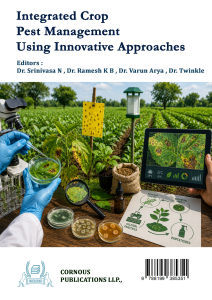
Book Title: Integrated Crop Pest Management Using Innovative Approaches
OPEN ACCESS | Published on : 15-Sep-2026 | Pages: 163-179 |
Innovative Approaches in Pest Management
- Sneha Sharma
- Institute of Agricultural Sciences, Banaras Hindu University, Varanasi – 221005, Uttar Pradesh, India.
- Tanusree Ghosh
- Institute of Agricultural Sciences, Banaras Hindu University, Varanasi – 221005, Uttar Pradesh, India.
- Rittik Sarkar
- Institute of Agricultural Sciences, Banaras Hindu University, Varanasi – 221005, Uttar Pradesh, India.
- Chethankumar M
- Division of Crop Protection, ICAR–Indian Institute of Horticultural Research, Bengaluru – 560089, Karnataka, India.
- Vishaw Deep Sharma
- Dr. Yashwant Singh Parmar University of Horticulture and Forestry, Nauni, Solan – 173230, Himachal Pradesh, India.
Abstract
As the pest population is rising, the impact of an over-reliance on pesticides has made sustainable and innovative pest management more important. This review will draw attention to present developments in pest management technology which improve the productivity of pest control, particularly those that allow reduction of the eco-invading impact of pest control. Precision agriculture equipment including Unmanned Aerial Vehicles (UAVs)/drones, Remote sensing, Machine Learning (ML), Geographic Information System (GIS), Artificial Intelligence (AI) and Internet of Things (IoT) based surveillance systems for pest identification and interventions early in their life cycle. A discussion of semiochemical-based technologies (SPLAT), nanotechnology-enabled pesticide formulations, and botanical and essential oil based nanoformulations that enhance stability, controlled release and efficacy of actives is also included in the review. They examine novel strategies and approaches of storing grain and managing pests within storage facilities, which include hermetic storage systems, innovative smart packaging system and use of AI in pest monitoring. They compare biotechnological methods including transgenic crops, gene silencing, gene transformations, lectins approaches, proteins inhibitors as possible ways to help us control the pests sustainably. These Integrated pest management (IPM) will assist us in promoting sustainable, ethical and resilient systems in agriculture.
Keywords
Precision agriculture, Biotechnology, IPM, Innovative tools, Drones
References
Abbas, M. S. T. (2018). Genetically engineered (modified) crops (Bacillus thuringiensis crops) and the world controversy on their safety. Egyptian Journal of Biological Pest Control, 28(1), 1–12. https://doi.org/10.1186/s41938-018-0051-2
Adak, T., Barik, N., Patil, N. B., Govindharaj, G. P. P., Gadratagi, B. G., Annamalai, M., Mukherjee, A. K., & Rath, P. C. (2020). Nanoemulsion of eucalyptus oil: An alternative to synthetic pesticides against two major storage insects (Sitophilus oryzae (L.) and Tribolium castaneum (Herbst)) of rice. Industrial Crops and Products, 143, 111849. https://doi.org/10.1016/j.indcrop.2019.111849
Albuquerque, L. P. D., Procópio, T. F., Guedes, C. C. D. S., Pontual, E. V., Paiva, P. M. G., & Napoleão, T. H. (2020). Antinutritional effects of the chitin-binding lectin from Microgramma vaccinifolia rhizome (MvRL) on Sitophilus zeamais. Journal of Stored Products Research, 88, 101652. https://doi.org/10.1016/j.jspr.2020.101652
Araujo, S. O., Peres, R. S., Ramalho, J. C., Lidon, F., & Barata, J. (2023). Machine learning applications in agriculture: Current trends, challenges, and future perspectives. Agronomy, 13(12), 2976.
Aziz, D., Rafiq, S., Saini, P., Ahad, I., Gonal, B., Rehman, S. A., Rashid, S., Saini, P., Rohela, G. K., Aalum, K., Singh, G., Gnanesh, B. N., & Nabila Iliya, M. (2025). Remote sensing and artificial intelligence: Revolutionizing pest management in agriculture. Frontiers in Sustainable Food Systems, 9, 1551460. https://doi.org/10.3389/fsufs.2025.1551460
Badari Prasad, P. R., Sreenivas, A. G., Guruprasad, G. S., Divan, J. R., Harischandra Naik, R., Veeranagouda, M., & Ashoka, J. (2023). Management of yellow stem borer in a paddy ecosystem using SPLAT mating disruption techniques. Cereal Research Communications, 51(2), 495–508.
Belfort, M., & Bonocora, R. P. (2014). Homing endonucleases: From genetic anomalies to programmable genomic clippers. In Homing endonucleases (pp. 1–26). Springer. https://doi.org/10.1007/978-1-62703-968-0_1
Biglia, A., Grella, M., Bloise, N., Comba, L., Mozzanini, E., Sopegno, A., Pittarello, M., Dicembrini, E., Alcatrão, L. E., Guglieri, G., Balsari, P., Aimonino, D. R., & Gay, P. (2022). UAV-spray application in vineyards: Flight modes and spray system adjustment effects on canopy deposit, coverage, and off-target losses. Science of the Total Environment, 845, 157292.
Birkett, M. A., & Pickett, J. A. (2014). Prospects of genetic engineering for robust insect resistance. Current Opinion in Plant Biology, 19, 59–67.
Borah, S. K., Padhiary, M., Sethi, L. N., Kumar, A., & Saikia, P. (2025). Precision farming with drone sprayers: A review of auto navigation and vision-based optimization. Journal of Biosystems Engineering, 50(2), 255–273.
Bortesi, L., & Fischer, R. (2015). The CRISPR/Cas9 system for plant genome editing and beyond. Biotechnology Advances, 33(1), 41–52. https://doi.org/10.1016/j.biotechadv.2014.12.006
Chandel, A. K., Khot, L. R., Molaei, B., Peters, R. T., Stöckle, C. O., & Jacoby, P. W. (2021). High-resolution spatiotemporal water use mapping of surface and direct-root-zone drip-irrigated grapevines using UAS-based thermal and multispectral remote sensing. Remote Sensing, 13(5), 954.
Chowdappa, P., Kumar, N. B., Madhura, S., Kumar, M. S., Myers, K. L., & Fry, W. E. (2013). Emergence of blue lineage of Phytophthora infestans was responsible for severe outbreaks of late blight on tomato in Southwest India. Journal of Phytopathology, 161, 49–58.
Damalas, C. A., & Koutroubas, S. D. (2020). Botanical pesticides for eco-friendly pest management: Drawbacks and limitations. In Pesticides in crop production: Physiological and biochemical action (pp. 181–193).
Das, G., Patra, J. K., & Baek, K.-H. (2017). Insight into MAS: A molecular tool for development of stress resistant and quality of rice through gene stacking. Frontiers in Plant Science, 8, 985.
de Sousa, I. G., Oliveira, J., Mexia, A., Barros, G., Almeida, C., Brazinha, C., Vega, A., & Brites, C. (2023). Advances in environmentally friendly techniques and circular economy approaches for insect infestation management in stored rice grains. Foods, 12(3), 511. https://doi.org/10.3390/foods12030511
Dey, S., Dhar, A., Mondal, S., Adak, S., Bhaduri, A., & Chatterjee, S. (2025). Impacts of drones on enhancing the precision, efficiency, and sustainability of agricultural systems. Vigyan Varta, 6(2), 213–222.
Diawara, M. M., Trumble, J. T., Lacy, M. L., White, K. K., & Carson, W. G. (1996). Potential of somaclonal celeries for use in integrated pest management. Journal of Economic Entomology, 89(1), 218–223. https://doi.org/10.1093/jee/89.1.218
Franco, O. L., Rigden, D. J., & colleagues. (2025). Exploring plant α-amylase inhibitors: Mechanisms and prospects for sustainable crop protection. Biotechnology Journal. Advance online publication. https://doi.org/10.1002/biot.70098
García-Cruz, K. V., Arce-Vázquez, M. B., Cruz-Monterrosa, R. G., Aguilar-Toalá, J. E., Rosas-Espejel, M., Hernández-Rodríguez, M., & Pérez-Ruiz, R. V. (2026). Cry proteins from Bacillus thuringiensis: From natural insecticide to biotechnological tool for agricultural pest control. Agro Productividad, 19(1), 23–37. https://doi.org/10.32854/px8wvj39
Gatehouse, J. A. (2013). Genetic engineering of crops for insect resistance. In P. Christou, R. Savin, B. A. Costa-Pierce, I. Misztal, & C. B. A. Whitelaw (Eds.), Sustainable food production (pp. 259–268). Springer.
Giese, B., Klaessig, F., Park, B., Kaegi, R., Steinfeldt, M., Wigger, H., von Gleich, A., & Gottschalk, F. (2018). Risks, release and concentrations of engineered nanomaterial in the environment. Scientific Reports, 8(1), 1565.
Gupta, M., Kumar, H., & Kaur, S. (2021). Vegetative insecticidal protein (Vip): A potential contender from Bacillus thuringiensis for efficient management of various detrimental agricultural pests. Frontiers in Microbiology, 12, 659736. https://doi.org/10.3389/fmicb.2021.659736
Gupta, M., Kumar, H., Debbarma, A., & Kaur, S. (2025). Unraveling the abundance of vip3-type genes in Indian Bacillus thuringiensis across the agroclimatic landscape and impact of amino acid substitutions for safer agriculture. Gene, 933, 148953. https://doi.org/10.1016/j.gene.2024.148953
Hu, J., Li, X., Wu, C., Yang, C., Hua, H., Gao, G., et al. (2012). Pyramiding and evaluation of the brown planthopper resistance genes Bph14 and Bph15 in hybrid rice. Molecular Breeding, 29(1), 61–69.
Iost Filho, F. H., Pazini, J. D. B., Alves, T. M., Koch, R. L., & Yamamoto, P. T. (2022). How does the digital transformation of agriculture affect the implementation of integrated pest management? Frontiers in Sustainable Food Systems, 6, 972213.
Jerobin, J., Sureshkumar, R. S., Anjali, C. H., Mukherjee, A., & Chandrasekaran, N. (2012). Biodegradable polymer-based encapsulation of neem oil nanoemulsion for controlled release of Aza-A. Carbohydrate Polymers, 90(4), 1750–1756. https://doi.org/10.1016/j.carbpol.2012.07.064
Juturu, V. N., Mekala, G. K., & Kirti, P. B. (2015). Current status of tissue culture and genetic transformation research in cotton (Gossypium spp.). Plant Cell, Tissue and Organ Culture, 120(3), 813–839. https://doi.org/10.1007/s11240-015-0723-5
Kamthan, A., Chaudhuri, A., Kamthan, M., & Datta, A. (2015). Small RNAs in plants: Recent development and application for crop improvement. Frontiers in Plant Science, 6, 208. https://doi.org/10.3389/fpls.2015.00208
Kannan, M., Bojan, N., Swaminathan, J., Zicarelli, G., Hemalatha, D., Zhang, Y., Ramesh, M., & Faggio, C. (2023). Nanopesticides in agricultural pest management and their environmental risks: A review. International Journal of Environmental Science and Technology, 20(9), 10507–10532.
Kariyanna, B., & Sowjanya, M. (2025). Unravelling the use of nanotechnology for crop pest management as a green and sustainable agriculture. The Journal of Basic and Applied Zoology, 86(1), 51.
Katoch, R., Sethi, A., Thakur, N., & Murdock, L. L. (2013). RNAi for insect control: Current perspective and future challenges. Applied Biochemistry and Biotechnology, 171(4), 847–873. https://doi.org/10.1007/s12010-013-0399-4
Keerthana, M., Reddy, M. S. S., Naik, Y. D., et al. (2026). Fusion protein–based strategies for developing insect-resistant crops. Functional & Integrative Genomics, 26, 77. https://doi.org/10.1007/s10142-026-01861-9
Kumar, S., Nehra, M., Dilbaghi, N., Marrazza, G., Hassan, A. A., & Kim, K. H. (2019). Nano-based smart pesticide formulations: Emerging opportunities for agriculture. Journal of Controlled Release, 294, 131–153.
Kumari, P., Jasrotia, P., Kumar, D., Kashyap, P. L., Kumar, S., Mishra, C. N., Kumar, S., & Singh, G. P. (2022). Biotechnological approaches for host plant resistance to insect pests. Frontiers in Genetics, 13, 914029. https://doi.org/10.3389/fgene.2022.914029
Lillesand, T., Kiefer, R. W., & Chipman, J. (2015). Remote sensing and image interpretation. John Wiley & Sons.
Liu, L., Gao, M., Yang, S., Liu, S., Wu, Y., Carrière, Y., & Yang, Y. (2017). Resistance to Bacillus thuringiensis toxin Cry2Ab and survival on single-toxin and pyramided cotton in cotton bollworm from China. Evolutionary Applications, 10(2), 170–179. https://doi.org/10.1111/eva.12438
Liu, Y., Chen, L., Liu, Y., Dai, H., He, J., & Kang, H. (2016). Marker-assisted pyramiding of two brown planthopper resistance genes, Bph3 and Bph27(t), into elite rice cultivars. Rice, 9(1), 1–7.
Majumdar, S., & Keller, A. A. (2021). Omics to address the opportunities and challenges of nanotechnology in agriculture. Critical Reviews in Environmental Science and Technology, 51(22), 2595–2636.
Martos, V., Ahmad, A., Cartujo, P., & Ordoñez, J. (2021). Ensuring agricultural sustainability through remote sensing in the era of Agriculture 5.0. Applied Sciences, 11(13), 5911.
Mishra, R., Tripathi, P., Kumar, P., Rajpoot, P. K., Verma, S., & Aman, A. S. (2024). Innovations and future trends in storage pest management. Journal of Experimental Agriculture International, 46(5), 155–165.
Mishra, S., Sharma, S., & Roy, A. (2022). Plant lectins as potential bioinsecticides: Recent advances and future prospects. Journal of Plant Growth Regulation, 41, 3060–3078.
Mossa, A. T. H., Mohamed, R. I., & Mohafrash, S. M. (2022). Development of a “green” nanoformulation of neem oil-based nanoemulsion for controlling mosquitoes in the sustainable ecosystem. Biocatalysis and Agricultural Biotechnology, 46, 102541. https://doi.org/10.1016/j.bcab.2022.102541
N’Guessan, F. K., Quisenberry, S. S., & Croughan, T. P. (1994). Evaluation of rice anther culture lines for tolerance to the rice water weevil (Coleoptera: Curculionidae). Environmental Entomology, 23(2), 331–336. https://doi.org/10.1093/ee/23.2.331
Nansen, C., Ribeiro, L. P., Dadour, I., & Roberts, J. D. (2015). Detection of temporal changes in insect body reflectance in response to killing agents. PLoS ONE, 10(4), e0124866.
Ni, M., Ma, W., Wang, X., Gao, M., Dai, Y., Wei, X., et al. (2017). Next-generation transgenic cotton: Pyramiding RNAi and Bt counters insect resistance. Plant Biotechnology Journal, 15(9), 1204–1213. https://doi.org/10.1111/pbi.12709
Okolo, C. A., Chukwu, O., Adejumo, B. A., & Haruna, S. A. (2017). Hermetic storage technology: The way forward in solving numerous cereal grains storage challenges in developing countries. International Journal of Engineering Research & Technology, 6.
Osman, G. H., Assem, S. K., Alreedy, R. M., El-Ghareeb, D. K., Basry, M. A., Rastogi, A., et al. (2016). Erratum: Development of insect resistant maize plants expressing a chitinase gene from the cotton leaf worm, Spodoptera littoralis. Scientific Reports, 6, 20449. https://doi.org/10.1038/srep20449
Oyeleye, A., & Normi, Y. M. (2018). Chitinase: Diversity, limitations, and trends in engineering for suitable applications. Bioscience Reports, 38(4), 1–21. https://doi.org/10.1042/BSR20180323
Oyewole, O. S., Abdulbaki, M. K., Adisa, A., Adebiyi, A., Raji, M. A., Balogun, B., Ajao, T. O., Ibitoye, O., & Aremu, M. B. (2025). Purdue Improved Crop Storage (PICS) bags: An innovative hermetic storage technology for postharvest crop management in developing countries. African Journal of Agricultural Science and Food Research, 20(1), 83–103. https://doi.org/10.62154/ajasfr.2025.020.0101
Park, H.-S., Baek, S.-H., Kim, W.-J., Jeung, J.-U., Lee, J.-H., Ha, K.-Y., et al. (2014). Development of multi-resistant lines to brown planthopper, bacterial blight, and rice stripe virus using anther culture in rice. Korean Journal of Breeding Science, 46(1), 78–89. https://doi.org/10.9787/kjbs.2014.46.1.078
Paul, D. C., & Bhattacharjee, M. (2024). Revisiting the significance of natural protease inhibitors: A comprehensive review. International Journal of Biological Macromolecules, 280(Part 3), 135899. https://doi.org/10.1016/j.ijbiomac.2024.135899
Pawar, U. A., Shinde, Y. A., & Datkhile, R. V. (2022). Specialized Pheromone and Lure Application Technology (SPLAT): A new horizon in pest management. In Y. A. Shinde (Ed.), Advances in agricultural and horticultural sciences (pp. 94–103).
Prabhakar, M., Prasad, Y. G., & Rao, M. N. (2012). Remote sensing of biotic stress in crop plants and its applications for pest management. In Crop stress and its management: Perspectives and strategies (pp. 517–545). Springer Netherlands. https://doi.org/10.1007/978-94-007-2220-0_16945
Qiu, L., Sun, Y., Jiang, Z., Yang, P., Liu, H., Zhou, H., et al. (2019). The midgut V-ATPase subunit A gene is associated with toxicity to crystal 2Aa and crystal 1Ca-expressing transgenic rice in Chilo suppressalis. Insect Molecular Biology, 28(4), 520–527. https://doi.org/10.1111/imb.12570
Raju, S. V. S. (2019). Recent trends in insect pest management. AkiNik Publications.
Rasmussen, M. K., Pedersen, J. N., & Marie, R. (2020). Size and surface charge characterization of nanoparticles with a salt gradient. Nature Communications, 11(1), 2337. https://doi.org/10.1038/s41467-020-15889-3
Saran, S., Hiremath, S. S., Kumar, A., Ashoka, P., Singh, H., Chakraborty, S., Kashyap, V., Tiwari, A. K., & Pandey, S. K. (2025). Remote sensing and automated monitoring systems for insect pest detection and surveillance. Uttar Pradesh Journal of Zoology, 46(2), 155–171. https://doi.org/10.56557/upjoz/2025/v46i24771
Sharma, K., & Shivandu, S. K. (2024). Integrating artificial intelligence and Internet of Things (IoT) for enhanced crop monitoring and management in precision agriculture. Sensors International, 5, 100292. https://doi.org/10.1016/j.sintl.2024.100292
Shen, Y., An, C., Jiang, J., Huang, B., Li, N., Sun, C., Wang, C., Zhan, S., Li, X., Gao, F., & Zhao, X. (2022). Temperature-dependent nanogel for pesticide smart delivery with improved foliar dispersion and bioactivity for efficient control of multiple pests. ACS Nano, 16(12), 20622–20632.
Sheng, C. F., Xuan, W. J., & Jiao, X. G. (2002). Causes, trend and control strategies of disaster of rice borers in China. Journal of Natural Disasters, 11(3), 103–108.
Singh, E., Pratap, A., Mehta, U., & Azid, S. I. (2024). Smart agriculture drone for crop spraying using image-processing and machine learning techniques: Experimental validation. IoT, 5(2), 250–270.
Singh, R., & Singh, S. (2025). A review of Indian-based drones in the agriculture sector: Issues, challenges, and solutions. Sensors, 25(15), 4876. https://doi.org/10.3390/s25154876
Singh, S., Singh, A., Kumar, S., Mittal, P., & Singh, I. K. (2020). Protease inhibitors: Recent advancement in its usage as a potential biocontrol agent for insect pest management. Insect Science, 27(2), 186–201. https://doi.org/10.1111/1744-7917.12641
Song, X. P., Liang, Y. J., Zhang, X. Q., Qin, Z. Q., Wei, J. J., Li, Y. R., & Wu, J. M. (2020). Intrusion of fall armyworm (Spodoptera frugiperda) in sugarcane and its control by drone in China. Sugar Tech, 22(4), 734–737.
Soujanya, P. L., Sekhar, J. C., Suby, S. B., Sujay Rakshit, S. R., Susmitha, G. S., & Mallavadhani, U. V. (2018). Biopesticide treated double layered bags: Novel method of application of botanicals for Sitophilus oryzae L. management in stored maize. Maydica, 63, 1–6.
Srishailam, B., Sailaja, V., Nikhitha, A., & Kiran, P. K. (2022). Promoting start-ups in agriculture: An innovative approach for transforming agriculture to agri-business. Vigyan Varta, 3(4), 73–81.
Syed, T., Askari, M., Meng, Z., Li, Y., Abid, M. A., Wei, Y., et al. (2020). Current insights on vegetative insecticidal proteins (Vip) as next generation pest killers. Toxins, 12(8), 522. https://doi.org/10.3390/toxins12080522
Tremblay, J., Goulet, M. C., Vorster, J., Goulet, C., & Michaud, D. (2022). Harnessing the functional diversity of plant cystatins to design inhibitor variants highly active against herbivorous arthropod digestive proteases. The FEBS Journal, 289(7), 1827–1841. https://doi.org/10.1111/febs.16288
Vandenborre, G., Smagghe, G., & Van Damme, E. J. M. (2011). Plant lectins as defense proteins against phytophagous insects. Phytochemistry, 72(13), 1538–1550. https://doi.org/10.1016/j.phytochem.2011.02.024
Vargas, R. I., Stark, J. D., Hertlein, M., Mafra Neto, A., Coler, R., & Piñero, J. C. (2008). Evaluation of SPLAT with spinosad and methyl eugenol or cue-lure for “attract-and-kill” of oriental and melon fruit flies (Diptera: Tephritidae) in Hawaii. Journal of Economic Entomology, 101(3), 759–768.
Wang, D., Saleh, N. B., Byro, A., Zepp, R., Sahle-Demessie, E., Luxton, T. P., Ho, K. T., Burgess, R. M., Flury, M., White, J. C., & Su, C. (2022). Nano-enabled pesticides for sustainable agriculture and global food security. Nature Nanotechnology, 17(4), 347–360.
Wang, X., Xu, Y., Huang, J., Jin, W., Yang, Y., & Wu, Y. (2020b). CRISPR-mediated knockout of the ABCC2 gene in Ostrinia furnacalis confers high-level resistance to the Bacillus thuringiensis Cry1Fa toxin. Toxins, 12(4), 246. https://doi.org/10.3390/toxins12040246
Yadav, M., Vashisht, B. B., Vullaganti, N., Jalota, S. K., Yadav, S. L., Singh, G., Kumar, A., & Kothiyal, S. (2024). IoT-enabled unmanned aerial vehicle: An emerging trend in precision farming. In Artificial intelligence and smart agriculture: Technology and applications (pp. 271–292).
Zhang, J., Khan, S. A., Hasse, C., Ruf, S., Heckel, D. G., & Bock, R. (2015). Full crop protection from an insect pest by expression of long double-stranded RNAs in plastids. Science, 347(6225), 991–994. https://doi.org/10.1126/science.1261680
Indexing In




Types of Books We Publish




Uniqueness of our Publication

DOI Assignment

ISBN Registration

Online Publication

High Visibility

Open & Closed Access
DOI Assignment
ISBN Registration
Online Publication
High Visibility