Editorial Book
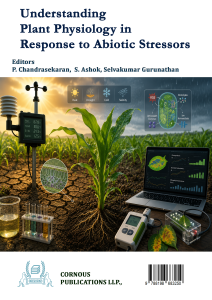
Book Title: Understanding Plant Physiology in Response to Abiotic Stressors
PAID ACCESS | Published on : 27-Feb-2025 | Pages: 23-32 | Doi : 10.37446/edibook242025/23-32
High and low temperature stresses - effects and adaptive mechanisms
- Rithika Jayaveer P
- PG Scholar, SRM College of Agricultural Sciences, Department of Genetics and Plant Breeding, Baburayanpettai, Chengalpattu, Tamil Nadu, India.
- Jayasakthi P
- PG Scholar, SRM College of Agricultural Sciences, Department of Genetics and Plant Breeding, Baburayanpettai, Chengalpattu, Tamil Nadu, India.
- Hariharan B
- PG Scholar, SRM College of Agricultural Sciences, Department of Genetics and Plant Breeding, Baburayanpettai, Chengalpattu, Tamil Nadu, India.
Abstract
Extreme temperatures, both high and low, pose significant challenges to organisms, impacting their physiological processes, growth, and survival. This explores the detrimental effects of temperature extremes and the adaptive mechanisms employed by organisms to mitigate these stresses. High temperatures can disrupt cellular homeostasis, leading to protein denaturation, oxidative stress, and impaired metabolic functions. Organisms respond to heat stress through various strategies, including heat shock proteins, antioxidant systems, and altered gene expression. These mechanisms help maintain protein stability, neutralize reactive oxygen species, and regulate metabolic pathways. Low temperatures can slow down metabolic processes, alter membrane fluidity, and damage cellular structures. Organisms adapt to cold stress by producing antifreeze proteins, increasing membrane fluidity, and altering gene expression to promote cold tolerance. These adaptations enable organisms to survive and function in suboptimal temperature conditions. Understanding the effects of temperature extremes and the adaptive mechanisms employed by organisms is crucial for tackling the difficulties brought on by climate change. By studying these processes, we can develop strategies to protect vulnerable species and improve agricultural productivity in the face of increasing temperature variability.
Keywords
High temperature, HSP’s, Adaptations, Control practices, ROS
References
Hu, H., & Xiong, L. (2014). Genetic engineering and breeding of drought-resistant crops. Annual Review of Plant Biology, 65, 715–741. https://doi.org/10.1146/annurev-arplant-050213-040000.
Mittler, R. (2006). Abiotic stress, the field environment and stress combination. Trends in Plant Science, 11(1), 15–19. https://doi.org/10.1016/j.tplants.2005.11.002.
Pareek, A., Khurana, A., Sharma, A. K., & Kumar, R. (2017). Regulating the regulators: The control of transcription factors in plant responses to abiotic stresses. Frontiers in Plant Science, 8, 70. https://doi.org/10.3389/fpls.2017.00070.
Thomashow, M. F. (1999). Plant cold acclimation: Freezing tolerance genes and regulatory mechanisms. Annual Review of Plant Physiology and Plant Molecular Biology, 50, 571–599. https://doi.org/10.1146/annurev.arplant.50.1.571.
Wahid, A., Gelani, S., Ashraf, M., & Foolad, M. R. (2007). Heat tolerance in plants: An overview. Environmental and Experimental Botany, 61(3), 199–223. https://doi.org/10.1016/j.envexpbot.2007.05.011.
Zhu, J. K. (2016). Abiotic stress signaling and responses in plants. Cell, 167(2), 313–324. https://doi.org/10.1016/j.cell.2016.08.029.
Indexing In




Types of Books We Publish




Uniqueness of our Publication

DOI Assignment

ISBN Registration

Online Publication

High Visibility

Open & Closed Access
DOI Assignment
ISBN Registration
Online Publication
High Visibility