Editorial Book
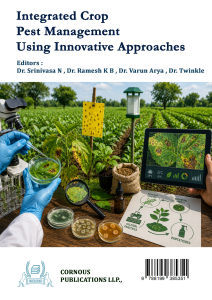
Book Title: Integrated Crop Pest Management Using Innovative Approaches
OPEN ACCESS | Published on : 15-Sep-2026 | Pages: 139-162 |
An Overview of Mites in Plantation Crops with Emphasis on Sustainable Management
- Payel Kar
- Department of Agricultural Entomology, Bidhan Chandra Krishi Viswavidyalaya, Mohanpur, Nadia, West Bengal, India.
- Pritha Bandyopadhyay
- Division of Entomology, ICAR-National Institute of Biotic Stress Management, Raipur, India.
- Soumita Bera
- Department of Entomology and Agricultural Zoology, Institute of Agricultural Sciences, Banaras Hindu University, Varanasi, Uttar Pradesh, India.
- Rittik Sarkar
- Department of Entomology and Agricultural Zoology, Institute of Agricultural Sciences, Banaras Hindu University, Varanasi, Uttar Pradesh, India.
Abstract
Mites are tiny, ubiquitous arthropod organisms distributed in a wide array of habits and habitats. In agroecosystems, mites have multifaceted roles, from pests to predators and even the soil engineers. The phytophagous mites of families, mainly Tetranychidae, Tenuipalpidae, Tarsonemidae and Eriphyiodae wreak havoc on the crop plants by feeding on the plant tissues, transmitting viruses and eventually killing the plant in the long run. Their microscopic nature helps them to avoid early detection, usually their population is visible after they have crossed the ETL. Many of these mites have polyphagous nature and are able to feed on a wide array of host plants, making their control even more difficult. But not all mites are harmful, predatory mites of families Phytoseiidae, Laelapidae, Bdellidae etc., feed on other mites and soft bodied insects, reducing their populations. The soil-inhabiting mites, in addition to killing soil pests, also help to improve soil quality and structure by forming soil aggregates. This chapter deals with the different roles mites play in Agroecosystems, focusing mainly on the plantation and fruit crops.
Keywords
Mites, Crop Pest, Biocontrol, IPM, Sustainable Agriculture
References
Abdallah, A. A., El-Saiedy, E. M. A., El-Fatih, M. M., & Shoula, M. E. (2012). Effect of some biological and biochemical control agents against certain squash pests. Archives of Phytopathology and Plant Protection, 45(1), 73–82.
Ballal, C. R., Gupta, S. K., Gupta, T., & Varshney, R. (2021). A simple protocol for rearing a native predatory mite Neoseiulus indicus. Current Science, 120(12), 1923–1926.
Beaulieu, F., & Weeks, A. R. (2007). Free-living mesostigmatic mites in Australia: Their roles in biological control and bioindication. Australian Journal of Experimental Agriculture, 47(4), 460–478.
Beretta, G. M., Deere, J. A., & Messelink, G. J. (2022). Review: Predatory soil mites as biocontrol agents of above- and below-ground plant pests. Experimental and Applied Acarology, 87, 143–162.
Berndt, O., Meyhöfer, R., & Poehling, H. M. (2004). The edaphic phase in the ontogenesis of Frankliniella occidentalis and comparison of Hypoaspis miles and Hypoaspis aculeifer as predators of soil-dwelling thrips stages. Biological Control, 30, 17–24. https://doi.org/10.1016/j.biocontrol.2003.09.009
Biswas, S., Bhullar, M. B., Karmakar, K., & Kaur, P. (2022). Seven new records and distribution of phytoseiid (Acari: Mesostigmata) mite fauna associated with agri-horticultural crops in Northern India. International Journal of Tropical Insect Science, 42(3), 2425–2442.
Borah, D. C., & Rai, P. S. (1989). Potentiality of Amblyseius ovalis (Acari: Phytoseiidae) as a biological control agent on Bemisia tabaci (Homoptera: Aleyrodidae). In Progress in acarology (Vol. 2, p. 375).
CABI. (2022). Epitrimerus pyri (pear rust mite) [Data sheet]. CABI Compendium. https://doi.org/10.1079/cabicompendium.21546
Castilho, R. C., Venancio, R., & Narita, J. P. Z. (2015). Mesostigmata as biological control agents, with emphasis on Rhodacaroidea and Parasitoidea. In Prospects for biological control of plant feeding mites and other harmful organisms (pp. 1–31).
Chen, C. N., Cheng, C. C., & Hsiao, K. C. (1979). Bionomics of Steneotarsonemus spinki attacking rice plants in Taiwan. In J. G. Rodriguez (Ed.), Recent advances in acarology (Vol. 1, pp. 111–117). Academic Press.
Daniel, M. (1979). Survey of the indigenous predators of arecanut phytophagous mites. In Proceedings of the Second Annual Symposium on Plantation Crops (PLACROSYM II): Entomology, microbiology, nematology, plant pathology and rodentology of plantation crops (pp. 227–236). Indian Society for Plantation Crops.
Daniel, M. (1981). Bionomics of the predaceous mite Amblyseius channabasavanni (Acari: Phytoseiidae), predaceous on the palm mite. In G. P. Channabasavanna (Ed.), Contributions to acarology in India: Proceedings of the I All India Symposium in Acarology (pp. 1–?). Acarological Society of India.
Daud, R. D., Feres, R. J. F., & Hernandes, F. A. (2012). Seasonal suitability of three rubber tree clones to Calacarus heveae (Acari, Eriophyidae). Experimental and Applied Acarology, 58(1), 1–12.
Debnath, P., & Karmakar, K. (2013). Garlic mite, Aceria tulipae (Keifer) (Acari: Eriophyoidea)–A threat for garlic in West Bengal, India. International Journal of Acarology, 39(2), 89–96.
Dhileepan, K. (2017). Biological control of Ziziphus mauritiana (Rhamnaceae): Feasibility, prospective agents and research gaps. Annals of Applied Biology, 170(3), 287–300.
Dhooria, M. S. (1981). Studies on ovipositional preference, host-range and seasonal availability of mite, Eutetranychus orientalis (Klein) in Delhi. Indian Journal of Acarology, 6, 77–83.
Dhooria, M. S., & Bhullar, M. B. (2007). Of phytophagous mites. In Entomology: Novel approaches (p. 461).
Dowling, A. P. G., Bauchan, G. R., Gerson, U., & Skvarla, M. (2012). Sixteen new species of Raoiella (Acari: Tenuipalpidae) from Australia and surrounding regions, with a discussion of Raoiella species distribution patterns. International Journal of Acarology, 38(2), 132–159.
Druciarek, T. Z., Rojas, A. J., & Tzanetakis, I. E. (2026). Rose rosette emaravirus dynamics in eriophyoid mites: Implications for virus transmission. Experimental and Applied Acarology, 96(4), 45.
Fathipour, Y., & Maleknia, B. (2016). Mite predators. In Ecofriendly pest management for food security (pp. 329–366). Academic Press.
Gerson, U., & Weintraub, P. G. (2007). Mites for the control of pests in protected cultivation. Pest Management Science, 63, 658–676.
Gerson, U., Smiley, R. L., & Ochoa, R. (2003). Mites (Acari) for pest control (Vol. 558). Blackwell Science.
Ghosh, D., Debnath, N., & Chakrabarti, S. (1987). Predatory mites (Acari) in association with aphids (Homoptera) in India [Abstract]. First National Seminar on Acarology, Kalyani, India, 29–31 October 1987, 4–5.
Giliomee, J. H., & Ueckermann, E. A. (2016). First record of the invasive red palm mite Raoiella indica Hirst (Acari: Tenuipalpidae) in Namibia. African Entomology, 24(2), 530–532.
Gupta, S. K. (1985). Plant mites of India. Zoological Survey of India.
Gupta, S. K. (2002). A monograph on plant inhabiting predatory mites of India: Part 1: Orders Prostigmata, Astigmata and Cryptostigmata. Zoological Survey of India.
Gupta, S. K. (2010). Acari: Their importance and status in India and highlights of gaps in knowledge. In International Symposium-cum-Workshop in Acarology (pp. 22–25). BCKV.
Gupta, S. K., & David, H. (1990). A new Eryngiopus Summers (Acari: Stigmaeidae) from India. Entomon, 15(3–4), 281–282.
Gupta, S. K., & Dhooria, M. S. (1972). Some new records of grape vine mite-pests and their predators in India. Current Science.
Gupta, S. K., & Kumar, P. S. (2018). The underestimated worth of predatory and parasitic mites in India: Does it really have to import exotic species for biological control? CABI Reviews, 2018, 1–17.
Halliday, R. B., OConnor, B. M., & Baker, A. S. (2000). Global diversity of mites. In P. H. Raven & T. Williams (Eds.), Nature and human society (pp. 192–203). National Academy Press.
Haq, M. A., & Shereef, A. M. (1992). Postembryonic development of a species of Galumna von Heyden (Acari: Oribatei). In Man, mites and environment (pp. 155–160). Anjengo Publications.
Howard, F. W., Moore, D., Abreu, E., & Gallo, S. (2007). Acaro del coco, Aceria guerreronis Keifer (Arácnidae: Acari: Eriophyidae): EENY-405/IN744. EDIS, 2007(19).
Hwang, H. S., Jung, D. O., Park, J., & Lee, K. Y. (2019). Simple mass-rearing technique of a predatory mite Gaeolaelaps aculeifer (Canestrini) (Acari: Laelapidae). Entomological Research, 49(12), 529–533.
Jeppson, L. R., Keifer, H. H., & Baker, E. W. (1975). Mites injurious to economic plants. University of California Press.
Kachhawa, D., & Kumawat, K. (2018). Oligonychus coffeae: Red spider mite of tea: A review. Journal of Entomology and Zoology Studies, 6(3), 519–524.
Karmakar, K., & Bhattacharya, B. (2005). Threat of chilli mite, Polyphagotarsonemus latus (Banks), on production of green chilli under coastal zone of West Bengal. In National Seminar on Coastal Resources and Their Sustainable Management: Issues and Strategies. BCKV.
Karmakar, K., & Gupta, S. K. (2011). Predatory mite fauna associated with agri-horticultural crops and weeds from the Gangetic Plains of West Bengal, India. Zoosymposia, 6, 62–67.
Knapp, M., van Houten, Y., van Baal, E., & Groot, T. (2018). Use of predatory mites in commercial biocontrol: Current status and future prospects. Acarologia, 58(Suppl.), 72–82.
Maheswary, J., Haseena Bhaskar, H. B., & Gowda, C. C. (2015). Phytoseiid mite fauna associated with major vegetable crops of Thrissur District, Kerala.
Manners, A. G., Dembowski, B. R., & Healey, M. A. (2013). Biological control of western flower thrips, Frankliniella occidentalis (Pergande) (Thysanoptera: Thripidae), in gerberas, chrysanthemums and roses. Australian Journal of Entomology, 52, 246–258.
Messelink, G. J., & Holstein-Saj, R. V. (2008). Improving thrips control by the soil-dwelling predatory mite Macrocheles robustulus (Berlese). IOBC/WPRS Bulletin, 32, 135–138.
Mohanasundaram, M., & Parameswaran, S. (1989). Mites infesting the grasshoppers occurring in different ecosystems in Coimbatore.
Morales-Ramos, J. A., & Rojas, M. G. (2014). A modular cage system design for continuous medium to large scale in vivo rearing of predatory mites (Acari: Phytoseiidae). Psyche: A Journal of Entomology, 2014, Article 915084.
Mukherjee, A. B., & Somchoudhury, A. K. (1981). Observations on predators found in association with spider mites in West Bengal. In G. P. Channabasavanna (Ed.), Contributions to acarology in India: Proceedings of the I All India Symposium in Acarology. Acarological Society of India.
Naranjo, S. E., Ellsworth, P. C., & Frisvold, G. B. (2015). Economic value of biological control in integrated pest management of managed plant systems. Annual Review of Entomology, 60, 621–645.
Navia, D., Gondim, M. G. C., Jr., Aratchige, N. S., & de Moraes, G. J. (2013). A review of the status of the coconut mite, Aceria guerreronis (Acari: Eriophyidae), a major tropical mite pest. Experimental and Applied Acarology, 59(1–2), 67–94.
Nomikou, M., Janssen, A., Schraag, R., & Sabelis, M. W. (2001). Phytoseiid predators as potential biological control agents for Bemisia tabaci. Experimental and Applied Acarology, 25, 271–291.
Nuvoloni, F. M., de Castro, E. B., & Feres, R. J. F. (2014). The role of native vegetation on infection rates of Calacarus heveae (Acari: Eriophyidae) by Hirsutella thompsonii (Ascomycota: Ophiocordycipitaceae). Experimental and Applied Acarology, 63(2), 157–169.
Onzo, A., Hauedokoho, A. F., & Hanna, R. (2012). Potential of the predatory mite, Amblyseius swirskii, to suppress the broad mite, Polyphagotarsonemus latus, on the gboma eggplant Solanum macrocarpon. Journal of Insect Science, 12, 1–11.
Pilkington, L. J., Messelink, G., van Lenteren, J. C., & Le Mottee, K. (2010). “Protected biological control” –Biological pest management in the greenhouse industry. Biological Control, 52, 216–220.
Pozzebon, A., Boaria, A., & Duso, C. (2015). Single and combined releases of biological control agents against canopy- and soil-dwelling stages of Frankliniella occidentalis in cyclamen. BioControl, 60, 341–350.
Ramos-González, P. L., Dias Arena, G., Tassi, A. D., Chabi-Jesus, C., Kitajima, E. W., & Freitas-Astúa, J. (2023). Kitaviruses: A window to atypical plant viruses causing nonsystemic diseases. Annual Review of Phytopathology, 61, 97–118.
Raut, S. K., & Bhattacharya, S. S. (1989). Ecology of predatory mite, Tencateia sp. (Prostigmata: Anystidae), in betelvine orchards in West Bengal, India. In Progress in acarology (Vol. 2, p. 191).
Raveendran, V., & Haq, M. A. (1993). Incidence of nematophagy in oribatid mites [Abstract]. IV National Symposium on Soil Biology and Ecology, Bangalore, India, 17–19 February 1993, p. 68.
Roy, S., Muraleedharan, N., & Mukhopadhyay, A. (2014). The red spider mite, Oligonychus coffeae (Nietner) (Acari: Tetranychidae): Its status, biology, ecology and management in tea plantations. Experimental and Applied Acarology, 63(4), 431–463.
Rueda-Ramírez, D., Palevsky, E., & Ruess, L. (2023). Soil nematodes as a means of conservation of soil predatory mites for biocontrol. Agronomy, 13(1), 32.
Singh, J., & Raghuraman, M. (2011). Emerging scenario of important mite pests in North India. Zoosymposia, 6, 170–179.
Skendžić, S., Zovko, M., Živković, I. P., Lešić, V., & Lemić, D. (2021). The impact of climate change on agricultural insect pests. Insects, 12(5), 440.
Somchoudhury, A. K. (1981). Seasonal fluctuations of Amblyseius delhiensis (Acari: Phytoseiidae), a predator on eggs of cotton jassid. In G. P. Channabasavanna (Ed.), Contributions to acarology in India: Proceedings of the I All India Symposium in Acarology. Acarological Society of India.
Sridhar, V., Jayashankar, M., & Vinesh, L. S. (2013). Incidence of parasitic mite, Bochartia sp., on zoophytophagous mirid bug, Nesidiocoris tenuis Reuter (Heteroptera: Miridae), at tetra-trophic level on tomato in India.
Taylor, B., Rahman, P. M., Murphy, S. T., & Sudheendrakumar, V. V. (2011). Within-season dynamics of red palm mite (Raoiella indica) and phytoseiid predators on two host palm species in south-west India. Experimental and Applied Acarology, 55(3), 227–241.
Van Leeuwen, T., Tirry, L., Yamamoto, A., Nauen, R., & Dermauw, W. (2015). The economic importance of acaricides in the control of phytophagous mites and an update on recent acaricide mode of action research. Pesticide Biochemistry and Physiology, 121, 12–21.
Wiethoff, J., Poehling, H. M., & Meyhöfer, R. (2004). Combining plant- and soil-dwelling predatory mites to optimise biological control of thrips. Experimental and Applied Acarology, 34, 239–261.
Wu, Y., Li, X., Zhang, Q., Zhou, X., Qiu, H., & Wang, P. (2023). Recognition of spider mite infestations in jujube trees based on spectral-spatial clustering of hyperspectral images from UAVs. Frontiers in Plant Science, 14, 1078676.
Zhang, Z.-Q. (2003). Mites of greenhouses: Identification, biology and control. CABI Publishing.
Indexing In




Types of Books We Publish




Uniqueness of our Publication

DOI Assignment

ISBN Registration

Online Publication

High Visibility

Open & Closed Access
DOI Assignment
ISBN Registration
Online Publication
High Visibility