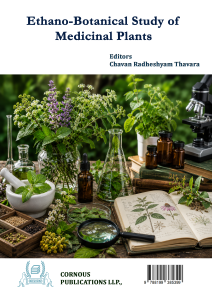
Editorial Book
Book Title: Ethano-Botanical Study of Medicinal Plants
PAID ACCESS | Published on : 23-Jan-2026 | Pages: 65-75 | Doi : 10.37446/edibook182024/65-75
An Ethno-Medico - botanical study of native plant remedies against Gynaecological diseases
- Neeraja Tutakne
- Associate Professor in Botany, SIES College (Empowered Autonomous), Sion (West) Mumbai, India.
- Sakshi .
- Assistant Professor in Botany, SIES College (Empowered Autonomous), Sion (West) Mumbai, India.
Abstract
India is home for a wide variety of medicinal plants and possesses a rich history of traditional healing systems. Many of these plants have been used in ethnogynaecology and have further highlighted the potential of ethnomedicinal flora for strengthening women's reproductive health. Ethnogynaecology is a branch of ethnobotany and medical anthropology that mainly deals with the use of folklore knowledge about the local plants and cultural practices to treat the gynaecological problems such as menstrual irregularities, infertility, sexually transmitted infections and so on. It has considered the cultural beliefs, practices, and social structures that shape women's health knowledge and practices. This chapter provides a broad overview of ethnobotanical remedies using native plants against gynecological diseases, highlighting the importance of preserving and integrating tribal knowledge with modern medical research.
Keywords
Ethnobotany, Ethno gynaecology, Tribals, Ethnomedicines, Folklore medicinal plants, Traditional knowledge
References
Adnan, M., Tariq, A., Mussarat, S., Begum, S., AbdElsalam, N. M., & Ullah, R. (2015). Ethnogynaecological assessment of medicinal plants in Pashtun’s tribal society. BioMed Research International, 2015, 196475. https://doi.org/10.1155/2015/196475
Augustine, J., Sreejesh, K. R., & Bijeshmon, P. P. (2010). Ethnogynecological uses of plants prevalent among the tribes of Periyar Tiger Reserve, Western Ghats. Indian Journal of Traditional Knowledge, 9(1), 73–76.
Bhattarai, S., Chaudhary, R. P., Quave, C. L., & Taylor, R. S. L. (2010). Use of medicinal plants in the trans-Himalayan arid zone of Mustang district, Nepal. Journal of Ethnobiology and Ethnomedicine, 6, 14. https://doi.org/10.1186/1746-4269-6-14
Borah, P., & Saikia, M. (2022). Ethnobotanical study of medicinal plants used by the different tribal communities in Nilakh-Sripani area of Dhemaji district, Assam. International Journal of Pharmaceutical Sciences and Research, 13(11), 4586–4607. https://doi.org/10.13040/IJPSR.0975-8232.13(11).4586-07
Claeson, U. P., Malmfors, T., Wikman, G., & Bruhn, J. G. (2000). Adhatoda vasica: A critical review of ethnopharmacological and toxicological data. Journal of Ethnopharmacology, 72(1–2), 1–20. https://doi.org/10.1016/S0378-8741(00)00225-7
Dogani, M., Askari, N., & Kalantari Hesari, A. (2023). A diet enriched with Pistacia atlantica fruits improves the female rats' reproductive system. Journal of Traditional and Complementary Medicine, 14(3), 335–342. https://doi.org/10.1016/j.jtcme.2023.09.004
Garaniya, N., & Bapodra, A. (2014). Ethnobotanical and phytopharmacological potential of Abrus precatorius L.: A review. Asian Pacific Journal of Tropical Biomedicine, 4(Suppl 1), S27–S34. https://doi.org/10.12980/APJTB.4.2014C1069
Jan, H. A., Jan, S., Bussmann, R. W., Ahmad, L., Wali, S., & Ahmad, N. (2020). Ethnomedicinal survey of the plants used for gynecological disorders by the indigenous community of district Buner, Pakistan. Ethnobotany Research and Applications, 19, 1–18. https://doi.org/10.32859/era.19.26.1-18
Katewa, S. S., Chaudhary, B. L., & Jain, A. (2004). Folk herbal medicines from tribal area of Rajasthan, India. Journal of Ethnopharmacology, 92(1), 41–46. https://doi.org/10.1016/j.jep.2004.01.011
Khadim, S., Malik, K., Qureshi, R., Misbah, & Rehman, S. (2023). Ethnogynaecological study of traditional therapeutic plants used by the indigenous communities: A case study from District Gujrat, Punjab, Pakistan. Ethnobotany Research and Applications, 26, 1–23. https://doi.org/10.32859/era.26.2.1-23
Khattak, N. S., Nouroz, F., Ur Rahman, I., & Noreen, S. (2015). Ethno-veterinary uses of medicinal plants of district Karak, Pakistan. Journal of Ethnopharmacology, 171, 273–279. https://doi.org/10.1016/j.jep.2015.05.048
Kulkarni, R. N., & Durge, P. M. (2005). A study of leucorrhoea in reproductive age group women of Nagpur city. Indian Journal of Public Health, 49(4), 238–239.
Lawal, I. O., Amao, A. O., Lawal, K. O., Alamu, O. T., & Sowunmi, I. L. (2013). Phytotherapy approach for the treatment of gynaecological disorder among women in Ido Local Government Area of Ibadan, Oyo State, Nigeria. Journal of Advanced Scientific Research, 4(3), 41–44.
Meena, K. L., & Yadav, B. L. (2010). Some ethnomedicinal plants of Southern Rajasthan. Indian Journal of Traditional Knowledge, 9(1), 169–172.
Motti, R., Bonanomi, G., Emrick, S., & Lanzotti, V. (2019). Traditional herbal remedies used in women’s health care in Italy: A review. Human Ecology, 47(6), 941–972. https://doi.org/10.1007/s10745-019-00125-4
Perinchery, A. (2020, February 24). Forests that heal: Medicinal plants as an ecosystem service. Mongabay India. https://india.mongabay.com/2020/02/forests-that-heal-medicinal-plants-as-an-ecosystem-service/
Priya, & Kumar, M. (2024). Ethno-gynecological knowledge of medicinal plants used by rural people of villages of Gurugram district, Haryana, India. International Journal of Pharmaceutical Sciences and Research, 15(7), 2153–2160. https://doi.org/10.13040/IJPSR.0975-8232.15(7).2153-60
Qureshi, R. A., & Ghufran, M. A. (2005). Medicinal value of some important roses and allied species of the northern area of Pakistan. Pakistan Rose Annual, 24–29.
Rahman, A. H. M. M. (2014). Ethno-gynecological study of traditional medicinal plants used by Santals of Joypurhat district, Bangladesh. Biomedicine and Biotechnology, 2(1), 10–13.
Rahman, A. H. M. M., Jahan-E-Gulsan, S. M., & Naderuzzaman, A. T. M. (2014). Ethno-gynecological disorders of folk medicinal plants used by Santhals of Dinajpur district, Bangladesh. Frontiers of Biological and Life Sciences, 2(3), 62–66.
Rajeswari, R., & Murugesh, S. (2019). Ethnogynaecological disorders of medicinal plants used by tribal people in Gedamalai, Namakkal District, Southern Eastern Ghats, Tamil Nadu. International Journal of Pharmaceutical Sciences and Research, 10(12), 5559–5564. https://doi.org/10.13040/IJPSR.0975-8232.10(12).5559-64
Rehman, S., Iqbal, Z., Qureshi, R., Ur Rahman, I., Khan, M. A., Elshaer, M. M. A., Al Farraj, D. A., Elshikh, M. S., Younas, M., Sakhi, S., Nawaz, G., Ali, N., Rahim, F., Ali, H., Khan, I., Ur Rahman, S., & Elsaid, N. M. A. B. (2022). Ethnogynaecological knowledge of traditional medicinal plants used by the indigenous communities of North Waziristan, Pakistan. Evidence-Based Complementary and Alternative Medicine, 2022, 6528264. https://doi.org/10.1155/2022/6528264
Sadeghi, Z., & Mahmood, A. (2014). Ethno-gynecological knowledge of medicinal plants used by Baluch tribes, southeast of Baluchistan, Iran. Revista Brasileira de Farmacognosia, 24(6), 706–715. https://doi.org/10.1016/j.bjp.2014.11.006
Sarath Lal, P. S., Thirumal, M., & Ajith Babu, T. K. (2023). An overview of Flueggea leucopyrus: Physical attributes, phytochemical composition, and pharmacological activity. International Journal of Pharmaceutical Research and Applications, 8(6), 1139–1150.
Schippmann, U., Leaman, D. J., & Cunningham, A. B. (2002). Impact of cultivation and gathering of medicinal plants on biodiversity: Global trends and issues. In Biodiversity and the ecosystem approach in agriculture, forestry and fisheries (pp. 675–706). Quebec, Canada.
Selvi, P., & Murugesh, S. (2019). Survey of ethnomedicinal plants used for gynaecological disorders by rural people of Kanjamalai, Southern Eastern Ghats, Salem District. Journal of Emerging Technologies and Innovative Research, 6(1), 583–585.
Sharma, H., & Kumar, A. (2011). Ethnobotanical studies on medicinal plants of Rajasthan (India): A review. Journal of Medicinal Plants Research, 5(7), 1107–1112.
Singh, D., Bagchi, D., Pathak, R., Beohar, P., Chaturvedi, P., & Ahirwar, L. (2022). Ethno-botanical study of medicinal plants used by tribes in the Dindori District of Madhya Pradesh, India. Egyptian Journal of Botany, 62(2), 389–398. https://doi.org/10.21608/ejbo.2022.95570.1785
Surendran, S., Prasannan, P., Jeyaram, Y., Palanivel, V., Pandian, A., & Ramasubbu, R. (2023). Knowledge on ethnogynaecology of Indian tribes: A comprehensive review. Journal of Ethnopharmacology, 303, 115880. https://doi.org/10.1016/j.jep.2022.115880
World Health Organization. (2002). WHO traditional medicine strategy 2002–2005 (WHO/EDM/TRM/2002.1). World Health Organization. http://apps.who.int/medicinedocs/en/d/Js2297e/.
Indexing In




Types of Books We Publish




Uniqueness of our Publication

DOI Assignment

ISBN Registration

Online Publication

High Visibility

Open & Closed Access
DOI Assignment
ISBN Registration
Online Publication
High Visibility